Spiral Classifier | Closed-Circuit Grinding Classification and Return-Sand Recirculation Equipment for Gold Ore Processing
The spiral classifier is a classic mechanical classification machine that forms a closed-circuit grinding system with ball mills and other grinding equipment in the concentrator. Based on differences in the settling velocity of mineral particles in a liquid, it separates the ground product into overflow (qualified fine product) and return sand (oversize, unqualified product): the settled coarse sand is lifted mechanically by rotating spiral flights and returned to the mill for regrinding, while the fine fraction discharges over the overflow weir and passes to downstream concentration. In gold ore processing it directly determines grinding fineness, the first variable of gold recovery: undergrinding leaves gold minerals in auriferous quartz veins and altered rock locked in silicified gangue without liberating them as individual particles, while overgrinding causes slime coating and losses to tailings, reducing both concentrate grade and overall recovery. Native gold also has a high density (15.6–19.3) and settles very rapidly, so it preferentially concentrates in the return sand and is reground repeatedly; control of gold in the return sand and early recovery of coarse gold must be resolved precisely at this classification stage. With simple structure, easy operation, reliable running and no need for additional pressure feed, plus a steep classification trough angle that allows gravity-flow connection to the mill, the spiral classifier is the most widely used mechanical classifier. Besides preliminary and control classification, it also performs washing, desliming and dewatering of clayey ores. GoldProcessingPlant focuses on gold mining and processing equipment and processes, and offers combined gold ore processing flowsheet integration, supplying high-weir or submerged spiral classifier selection, trough inclination and lifting-device configuration, and complete-line solutions covering crushing, grinding, classification, gravity concentration, flotation and thickening with water recirculation.
Product Overview
The spiral classifier is a traditional mechanical classification machine widely used in concentrators to form a closed-circuit grinding system with a mill. Its main function is to divide the ground product, according to differences in the settling velocity of mineral particles in liquid, into overflow (qualified fine product) and return sand (unqualified coarse product). Its essential role is lifting the settled coarse sand mechanically with spiral flights and returning it to the mill for regrinding, while the fine fraction discharges as overflow to downstream concentration. Besides being used mainly for preliminary and control classification, it can also carry out washing, desliming and dewatering of clayey ores.
In a gold processing plant the spiral classifier has a very clear position—immediately after the ball mill discharge, forming a closed circuit with it. The slurry discharged by the ball mill enters the classification trough; qualified fines leave as overflow and enter the gravity separation circuit for hard-rock gold ore, feeding jig concentrators, automatic centrifugal separators, 6-S shaking tables and other gravity operations, or BF/JJF/XCF-KYF flotation machines, while the coarse return sand is lifted up the inclined trough and flows back by gravity to the ball mill for regrinding. At the same time it performs three key functions for gold: ① grinding-fineness control—maintaining overflow fineness in the range required for individual liberation of gold minerals (auriferous quartz veins and altered rock usually require 60%–80% passing 200 mesh, according to testwork), ensuring liberation without overgrinding and slime coating; ② return-sand volume and gold content control—coarse native gold and auriferous heavy minerals settle rapidly and concentrate in the return sand; a high gold content in the return indicates that gold is "idling in the circuit", calling for inspection of the return launder and consideration of coarse-gold recovery; ③ simultaneous desliming and dewatering—settling and lifting in the trough remove part of the slimes and water, providing a more stable density feed to downstream gravity separation and flotation.
Compared with the hydrocyclone, which also performs classification, the biggest difference of the spiral classifier is that it needs no sand pump for pressure feed: slurry enters the trough by gravity, energy consumption is concentrated in the spiral drive, and operation is stable and simple. It is especially suitable for gold plants combining several of these conditions: treatment of relatively coarse material (classification size above 0.15 mm), a requirement for simultaneous desliming and dewatering, limited electrical capacity or an unstable grid, and upgrade projects using an existing drop for gravity-flow layout. Although hydrocyclones have tended to replace it in fine classification in recent years, the spiral classifier, with its stable operation, simple handling and absence of additional pressure, remains irreplaceable in many gold plants.
Main Structure and Working Principle
1. Structural composition
- Inclined rectangular trough: the body of classification; the bottom slope is usually 12° to 18.5°, with a semicircular lower section. The steep angle ensures that settled coarse sand can be conveyed upward along the bottom and dewatered, and facilitates gravity-flow connection with the mill, eliminating additional conveyors. In mountainous and sloping gold mines this use of the site drop noticeably shortens process lines.
- Spiral shaft: one or two longitudinal shafts with continuous spiral flights are installed in the trough. The flights of the double spiral rotate outward; the two shafts turn in opposite directions to push settled sand uniformly toward the centre of the trough and lift it, avoiding accumulation on one side. Large-capacity gold plants prefer the double spiral, while small plants and test lines can use the single spiral.
- Drive mechanism: located at the upper end of the machine, driving the spiral shaft. This upper arrangement keeps drive parts away from slurry and mud, reduces flooding and wear, and offers high reliability in dusty, wet mining environments; only periodic checks of reducer and bearing lubrication are needed.
- Lifting device: mounted on the frame at the lower end of the trough, it allows the spiral shaft to be raised when the machine is stopped to prevent sand from burying the flights, and also adjusts the clearance between flights and trough bottom. This device has direct economic significance for gold plants: batch production, ore fluctuations and frequent stops are common in gold mining (especially low-grade and seasonal operations). With the lifting device, a temporary stop requires no emptying of the trough—no buried shaft, no burned-out motor and no loss of already enriched auriferous sand—saving water and labour while protecting recovery.
2. Working principle
Slurry enters the trough from the side, forming a settling and classification zone in the lower part:
- Coarse particles: settle quickly, fall to the trough bottom and are pushed by the rotating spiral flights toward the upper end of the inclined trough; after dewatering during transport they discharge as return sand to the mill for regrinding. In gold production the return sand should be a priority sampling point—native gold and auriferous heavy minerals have high density and settle rapidly; if the return sand is clearly enriched in gold, coarse gold is circulating repeatedly in the circuit. This can be reduced by adjusting overflow-weir height, feed rate and classification density, or by adding coarse-gold recovery (jig or coarse classification) in the return launder to cut needless regrinding and wear.
- Fine particles: settle slowly, never reach the bottom and are carried by the surface slurry current, leaving through the overflow weir at the trough end as overflow product for the next processing stage. Overflow fineness is the "qualified product" indicator of the gold grinding circuit and directly determines the degree of individual gold liberation; if the overflow carries slime and coarse particles (turbid overflow), classification efficiency falls and gold and auriferous fines are lost with the tailings.
The whole classification process is accomplished solely by gravity settling and mechanical lifting, with no reagents and no pressure feed, and only three operating parameters—feed rate, classification density and overflow-weir height—giving great flexibility and easy stabilization of indices. This is the fundamental reason for its persistence in gold plants, especially small, medium and remote mines with limited technical staff.
High-Weir, Submerged and Low-Weir Spiral Classifiers
According to the overflow-weir height (i.e. the classification liquid level), spiral classifiers are divided into three types. For gold ore, the choice depends on the required classification size: coarse classification and easily liberated ores use the high-weir type; fine grinding circuits (high 200-mesh content) use the submerged type; the low-weir type does not classify but serves only for washing and desliming.
Gold selection guide: ① for alluvial gold, residual hillside gold and easily dressed auriferous quartz veins, or when the ground product is coarse (only desliming above 0.15 mm is needed before gravity separation), choose the high weir—the simplest structure, good return-sand dewatering, low water use and the most common configuration in gold plants; ② for strongly silicified altered rock and auriferous pyrite/arsenopyrite ores with tightly locked gold needing grinding to over 70% passing 200 mesh for liberation, choose the submerged type—large classification area, stable level, little agitation, accurate fine classification and high overflow productivity, reducing regrinding and slime coating of qualified fines returning with the sand; ③ if the aim is washing and desliming rather than classification (high clay content, clay balls enclosing gold), choose the low weir or a double-screw washing machine directly; in gold plants the two are often arranged in series as "wash first, classify second".
Choosing Between Spiral Classifier, Hydrocyclone and Double-Screw Washing Machine
All three appear at the "classification/pre-treatment" stage of a gold plant, but their principles and positions differ: the spiral classifier relies on gravity settling plus mechanical lifting of return sand and forms a gravity closed circuit with the mill; the hydrocyclone works by centrifugal settling and requires a pressure sand pump; the double-screw washing machine acts by mechanical scrubbing plus hydraulic desliming, targeting "slime" rather than "particle size". The typical gold plant arrangement is wash first, then grind and classify, with the classification machine chosen from two options according to size requirements or combined in stages.
Simple criterion: if the classification size is above 0.15 mm, you want to avoid a sand pump and pressure feed and also need desliming and dewatering, choose the high-weir spiral classifier; if you require fine classification and strict 200-mesh control with limited space, choose the submerged spiral classifier or a hydrocyclone; if the ore is wet, sticky and rich in slime enclosing gold, install a double-screw washing machine first to remove slime, then enter the grinding and classification circuit. For a 1,000 t/d gold plant, GoldProcessingPlant often adopts the staged combination of "coarse classification by spiral classifier plus fine classification by cyclone", combining return-sand conveying capacity with fineness accuracy; for small, medium and remote gold mines it tends to use the spiral classifier throughout the circuit, obtaining more stable indices with less power and simpler operation.
Specifications, Selection and Configuration Reference
Spiral classifier specifications are standardized by trough width (spiral diameter) and trough length, combined into a complete range by single/double spiral and high-weir/submerged/low-weir designs. The table below gives typical calculation dimensions and recommended configurations for gold plant selection; capacity and installed power vary widely with trough width and length, classification density and mill model, so they are typical reference values, with the final result based on testwork and grinding-circuit calculation and no uniform commitment.
Four essential data items for selection: ① ball mill model, discharge density and flow rate (determine trough width and length); ② required overflow classification size or 200-mesh content (determines high-weir/submerged); ③ ore type and density composition (auriferous quartz vein, altered rock, alluvial gold, clay content, deciding whether desliming is also needed); ④ site drop, electrical capacity and water conditions (determining gravity-flow layout and lifting-device model). GoldProcessingPlant can freely calculate spiral classifier specification, unit count and trough inclination from grinding-classification tests and real plant data, and can also provide metallurgical balance sampling-point recommendations for return sand and overflow, helping gold plants minimize gold losses in tailings.
Main Application Fields
- Closed-circuit grinding classification (main use): forms a closed circuit with the ball mill as control classification, regulating the fineness of the ground product and mechanically returning coarse sand for regrinding. In gold production this is the key link determining the degree of individual gold liberation—insufficient fineness leaves locked gold unliberated and lost to tailings, while overgrinding causes slime coating and lowers both concentrate grade and recovery. Measurements by GoldProcessingPlant at several auriferous quartz vein and altered-rock plants show that stabilizing overflow fineness within the window defined by testwork is the lowest-cost measure for raising overall gold recovery.
- Preliminary classification: pre-separates qualified fines from crushed product before the ball mill, reducing needless regrinding, increasing mill unit capacity and lowering power and steel consumption per tonne.
- Washing and desliming: when treating clayey ores, removes slimy fines by settling and overflow in the trough, creating qualified feed conditions for jig concentrators, automatic centrifugal separators, 6-S shaking tables and BF/JJF/XCF-KYF flotation machines, and reducing reagent and cyanide consumption caused by slime coating.
- Dewatering and pulp-density adjustment: return sand dewaterS naturally during lifting, and overflow and discharge densities can be adjusted by water rate and weir height, providing stable density for downstream gravity separation, flotation, cyanidation and thickening.
- Complete-process equipment support: upstream connections include jaw crushers, spring cone crushers, impact crushers and permanent magnetic separators (to keep ferrous pieces out of the mill and trough); downstream it serves jig concentrators, centrifugal separators, 6-S shaking tables, flotation machines and inclined-plate thickeners, making it the nodal machine in the gold plant chain of "crushing—grinding—classification—concentration—thickening and water recirculation".
- Other minerals: classification and desliming in the dressing of heavy minerals such as tungsten, tin, iron and manganese, plus aggregate washing, reprocessing of gold tailings for dam construction and coarse classification before paste backfill with total tailings.
Why Choose Our Spiral Classifier
- Stable grinding fineness to secure gold recovery: the settling-zone area and level stability directly determine classification efficiency. Our trough and overflow weir are checked against the overflow fineness required by gold, suppressing both turbid overflow and the return of qualified fines for overgrinding, and keeping individual gold liberation inside the process window.
- No additional pressure feed and lower power per tonne: classification relies on gravity, eliminating the sand pump, its motor, sump and piping—a clear advantage in plants with a power shortage, unstable grid or remote high-altitude gold mine. The machine runs continuously with only three parameters—feed rate, classification density and weir height—easy for operators to master.
- Lifting device prevents shaft burial and gold loss on stops: the lower-frame lifting device raises the shaft at stoppages, keeping flights clear of the bottom deposit and adjusting flight-to-bottom clearance. For gold plants with batch production and frequent maintenance stops, this means restarting without burning the motor and without emptying already enriched auriferous sand, saving water and labour while protecting recovery.
- Wear-resistant configuration for hard silicified gold ore: flights, liners and trough bottom are available in wear-resistant materials with replaceable liners for high-abrasion conditions; the outward-rotating double-spiral flights push sand evenly without one-sided build-up, reducing local overload and abnormal wear.
- Engineering solution for coarse gold in return sand: given the high density of native gold and its tendency to idle with the return, we provide sampling points and coarse-recovery interfaces in the return launder plus a combined operating regime of weir height, density and flow, cutting needless regrinding of coarse gold and wear-part consumption.
- Complete-line and process capability: we can supply everything from washing (double-screw washing machine), screening (heavy trommel screen) and iron removal (permanent magnetic separator) through crushing (jaw, spring cone and impact crushers), grinding and classification (ball mill, spiral classifier, hydrocyclone), gravity concentration (jig, automatic centrifugal separator, 6-S shaking table) and flotation (BF, JJF, XCF-KYF) to thickening and water recirculation (inclined-plate thickener), with general layout and drop calculation and inclusion in the gold processing equipment list for the complete gold plant line.
Frequently Asked Questions
What is a spiral classifier and what role does it play in gold ore processing?
The spiral classifier is a traditional mechanical classification machine widely used in concentrators to form a closed-circuit grinding system with a mill: by differences in particle settling velocity in liquid it divides the ground product into overflow (qualified fines) and return sand (unqualified coarse product)—settled coarse sand is lifted mechanically by spiral flights and returned to the mill for regrinding, while fines leave over the overflow weir for downstream concentration. In gold processing it performs four functions: ① grinding fineness control, achieving individual gold liberation without slime coating or tailings loss from overgrinding; ② stable closed-circuit grinding, with a steady return volume stabilizing ball-mill load and controlling power and steel consumption per tonne; ③ simultaneous washing, desliming and dewatering, providing qualified feed to jigs, centrifugal separators, 6-S tables and flotation machines; ④ return-sand gold control point, since coarse native gold preferentially enriches in the return sand and is the key sampling point for judging whether gold is "idling in the circuit". Its simple structure, easy operation and reliable running make it the most widely used mechanical classifier.
What is the difference between high-weir, submerged and low-weir spiral classifiers? Which to choose for gold?
The three are distinguished by overflow-weir height (classification liquid level): the high weir has its weir above the centre of the lower spiral shaft but below the top edge of the flights, a short classification surface with slight agitation by the flights, and is suited to coarse classification above 0.15 mm, being the most widely used type; the submerged type has its lower flights fully submerged, a large stable surface with little agitation, and is suited to fine classification below 0.15 mm with high overflow productivity; the low weir has its level below the lower shaft bearing, a very small surface with intense agitation, and is not used for classification but for washing clayey ores with sand and gravel. Gold selection: alluvial gold, easily dressed oxidized gold and coarse classification → high weir; auriferous quartz veins and altered rock needing fine grinding (high 200-mesh content) for liberation → submerged type; high-clay ore where the aim is washing and desliming → low weir or double-screw washing machine, arranged in series with classification.
How does a spiral classifier form an open/closed circuit with a ball mill? Where do return sand and overflow go?
Ball-mill discharge (slurry) enters the trough from the side and forms a settling and classification zone in the lower part: coarse particles fall to the bottom, are pushed by the flights toward the upper end of the inclined trough and, after dewatering in transit, discharge as return sand and flow back by gravity to the ball mill for regrinding through the return launder or belt; fine particles are carried by the surface current and leave through the overflow weir at the end as overflow, going to jigs, automatic centrifugal separators, 6-S shaking tables and other gravity operations, or to BF/JJF/XCF-KYF flotation and leaching, with tailings going to an inclined-plate thickener for thickening and water recirculation. The steep trough angle (bottom 12° to 18.5°) exists precisely to facilitate gravity connection to the mill, so the spiral classifier is normally installed slightly below the mill discharge and above downstream concentration equipment. Return-sand volume and overflow fineness are the two fundamental indices of the closed circuit; only when both are stable can the gold grinding circuit run at optimal fineness over the long term.
How to choose between a spiral classifier and a hydrocyclone? Can they replace each other?
Both can form a closed circuit with the ball mill, but their principles and requirements differ. The spiral classifier works by gravity settling plus mechanical lifting of the return, needs no pressure sand pump, is stable and easy to operate, can mechanically convey large quantities of settled coarse sand, and can deslime and dewater; in exchange it has a long trough, a large footprint, requires a drop relative to the mill and has a limited lower size limit. The hydrocyclone works by centrifugal settling and needs a pressure pump (0.05–0.25 MPa), offering higher fine-classification efficiency, a smaller footprint and the possibility of several parallel units; in exchange are pump consumption and the cost of replacing the underflow nozzle and feed inlet. They therefore "divide the work" rather than simply replacing each other: for coarse classification above 0.15 mm, power shortage or need for desliming and dewatering, and upgrade of an old plant using an existing drop, choose the spiral classifier; for fine grinding circuits, strict 200-mesh control and limited space, choose the hydrocyclone. GoldProcessingPlant notes that a 1,000 t/d gold plant can adopt the staged combination of "coarse classification by spiral classifier plus fine classification by cyclone", obtaining both return conveying capacity and fine-classification accuracy.
How is grinding fineness controlled with a spiral classifier? What if overflow fineness is unstable?
Overflow fineness is jointly determined by classification level height (weir position), classification density (water rate), feed rate and level stability. Recommended adjustment order in the plant: ① first stabilize feed rate and density; fluctuations are the first cause of unstable fineness, so use uniform feeding and a density meter; ② then adjust weir height and make-up water: a high weir with low density refines the overflow but increases the risk of carrying fine slime, while a low weir with high density sends coarse particles to overflow; ③ check whether the classification zone is stable—the submerged type has a stable level and little agitation for more accurate fine classification, while a high-weir type handling fine classification tends to produce turbid overflow; ④ check whether feed is uniform and local short-circuiting exists: a bias at the feed inlet causes loss of "coarse particles jumping directly over the weir". If sizes below 0.15 mm are needed long-term and the overflow still carries coarse particles, the model is unsuitable and should be changed to the submerged type or supplemented with a hydrocyclone. The gold criterion is not "the finer the better" but achieving individual gold liberation with the least overgrinding slime, per the fineness window defined by testwork.
Does coarse native gold enrich in the return sand? How should it be handled?
Yes; this is a real and often overlooked point of loss and waste in closed-circuit gold grinding. Native gold has a density of 15.6–19.3, and auriferous pyrite and arsenopyrite reach 4.8–5.2, far above silicified gangue (about 2.65), so they settle very quickly in the trough and deposit first, returning to the mill with the sand. Two consequences follow: coarse gold is reground idly in the circuit and, once very fine, tends to slime and be lost with overflow and tailings; and mill load plus liner and steel-ball consumption rise. Engineering solutions: ① take regular cross samples in the return launder to assay gold and run a metallurgical balance with overflow and tailings, detecting "gold accumulated in the circuit"; ② optimize density and weir height to avoid excessive density mixing coarse grains with fine slime; ③ add coarse-gold recovery (jig, coarse classification or launder) in the return launder or belt to recover coarse native gold earlier; ④ if coarse gold is abundant, move gravity concentration ahead of the grinding circuit instead of merely extending grinding time. GoldProcessingPlant can issue a classification-parameter and coarse-recovery scheme combining grinding-classification tests and on-site metallurgical balance; most gold plants, after bringing return-sand gold into daily monitoring, detect and recover coarse gold that was previously idly ground and lost to tailings, with a visible improvement in overall recovery.
What is the lifting device for? Can the shaft be buried when the machine stops?
The lifting device is installed on the frame at the lower end of the trough and has two functions: ① raise the spiral shaft when stopped, separating the flights from the bottom deposition zone so sand cannot bury them; ② adjust the clearance between flights and bottom, ensuring that after long-term wear they still push sand without scraping the bottom. Without the lifting device, sand in the trough settles and compacts during a stop; on restart the shaft is buried and the drive overloaded, ranging from damaged flights and reducer to a burned-out motor, and restarting requires emptying and washing all slurry out of the trough—for a gold plant what is discarded is precisely the already enriched coarse gold in the settled sand, losing metal and wasting wash water and labour. Therefore in gold mines with batch production, strong ore fluctuations, frequent maintenance and winter freeze stops (especially small, medium and seasonal mines), the lifting device is almost indispensable, and its economic value is often realized in a single unplanned stop.
Does a spiral classifier consume much water and occupy much space? How does it work with a thickener?
Water consumption: a spiral classifier (especially the submerged type) must maintain a high classification level in the trough, so make-up water is clearly greater than for a hydrocyclone and classification density is lower; this is one of its main operating costs. Control is achieved by integrating classification overflow and downstream drainage into the water system: overflow and wash water first pass to an inclined-plate thickener or settlement pond for thickening, and clear water is reused for classification, grinding and washing, reducing fresh-water use and preventing slimy fines from accumulating in circulating water and degrading classification. Space: the trough is long and occupies much area and needs a drop relative to the mill, so in new plants it is installed in the longitudinal bay of the grinding building or arranged in levels using terrain slope; in old-plant upgrades with limited space or drop it can be replaced by a smaller-footprint cyclone bank. Configuration recommendation: the usual gold-plant arrangement is "ball mill plus spiral classifier (closed circuit) → gravity/flotation → tailings and overflow to the inclined-plate thickener for thickening and water recirculation"; the thickener runs without a motor and, combined with classification, noticeably reduces water and electricity consumption per tonne across the plant while controlling gold carried in overflow.
What are the wear parts? How is daily maintenance carried out?
The main wear parts are spiral flights, flight liners, trough-bottom liners, the lower shaft bearing and bearing seat, lifting-device screw and cable/tie rod, reducer oil and coupling. Maintenance points: ① check flight and liner wear every shift and repair or replace beyond the limit, avoiding a worn-through trough that leaks slurry and loses return sand; ② regularly check temperature, sealing and lubrication of the lower bearing and seat, strengthening seals in the dusty, wet mine environment to keep slurry out; ③ check on a cycle that the lifting device moves smoothly and its limit is reliable, ensuring the shaft can be raised at stops; ④ keep the overflow weir level and feed uniform, since local gaps or bias directly cause coarse overflow; ⑤ before stopping, cut the feed and continue adding wash water to empty the trough and avoid compacted deposits (draining is mandatory in winter to prevent freezing); ⑥ when treating highly abrasive silicified auriferous quartz veins and altered rock, adopt wear-resistant flights and replaceable liners and include their replacement in planned maintenance windows. The machine has a simple structure with few maintenance points, suited to long-term operation in remote gold mines.
How much does a spiral classifier cost? What information is needed for a quotation?
Price depends on the type (high-weir/submerged/low-weir), single or double spiral, trough width and length specification, whether a lifting device is included (manual or electric), and the wear-resistant material grade of flights and liners, as well as whether drive and electrical control, return launder and feed box, steel platform, transport and installation/commissioning, and testwork service are included. For an exact quotation, state: ① gold plant capacity (t/h or t/d) and working regime (continuous/batch/seasonal); ② ball mill model, discharge density and discharge type (grate or overflow); ③ required overflow classification size or 200-mesh content, plus ore type (auriferous quartz vein, altered rock, alluvial gold, auriferous sulphide) and clay content; ④ whether washing, desliming and dewatering are also required; ⑤ drop, site dimensions, electrical capacity and water conditions, and whether gravity-flow layout is required; ⑥ whether complete-line supply with ball mill, hydrocyclone, jig, centrifugal separator, 6-S shaking table, flotation machines and inclined-plate thickener is required. GoldProcessingPlant's mineral processing and process engineers can freely provide, from grinding-classification tests and real plant data, spiral classifier selection, wear-resistant configuration and a complete-line quotation covering "crushing—grinding—classification—gravity concentration—flotation—thickening and water recirculation".
With its simple structure, easy operation, reliable running and absence of additional pressure feed, the spiral classifier holds an irreplaceable place in gold-plant grinding classification. Its value is concrete in three points: with gravity settling plus mechanical lifting of the return it forms a stable closed circuit with the ball mill, fixing grinding fineness in the window needed for individual gold liberation and avoiding both loss of locked gold in tailings and slime coating and carry-over from overgrinding; with the large 12° to 18.5° bottom angle and gravity connection it eliminates the sand pump and pressure feed, minimizing power per tonne and operating difficulty under power shortages, unstable grids and mountainous drops; with the lower lifting device it solves the two most costly problems of batch gold production—shaft burial on stops and gold loss during emptying—while also performing washing, desliming and dewatering, amplifying the role of a single classifier across all indices of gravity concentration, flotation, thickening and water recirculation. Choosing correctly between high-weir/submerged/low-weir according to ore nature and required size, and including return-sand gold in daily metallurgical-balance monitoring, is the key to exploiting this classic machine fully in the gold plant. GoldProcessingPlant can provide, according to your mill model, required size and capacity, spiral classifier selection, trough-inclination and lifting-device configuration, and wear-resistant flight and liner solutions, with complete-line supply of ball mills, hydrocyclones, trommel screens, permanent magnetic separators, crushers, jigs, centrifugal separators, shaking tables, flotation machines and thickeners.
Tell Us Your Mill Model and Required Classification Size
GoldProcessingPlant engineers will match the right high-weir/submerged spiral classifier specification, single or double spiral and lifting-device configuration
We provide free closed-circuit gold grinding classification selection, calculation of return-sand and overflow indices, wear-resistant configuration and complete-line quotations, with supply of ball mills, hydrocyclones, trommel screens, magnetic separators, crushers, jigs, centrifugal separators, shaking tables, flotation machines and thickeners
Get Spiral Classifier Selection and a Quotation



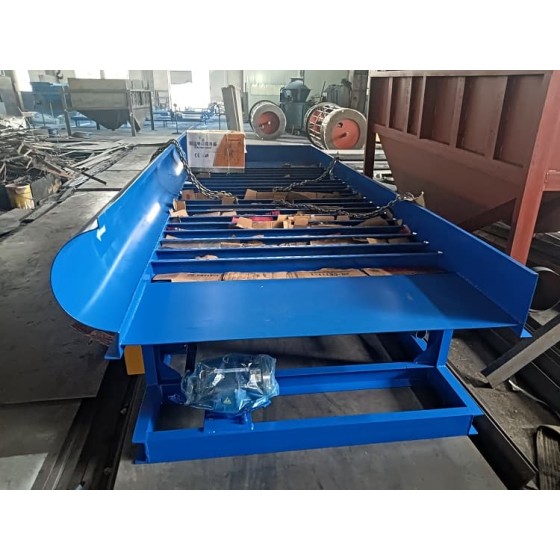
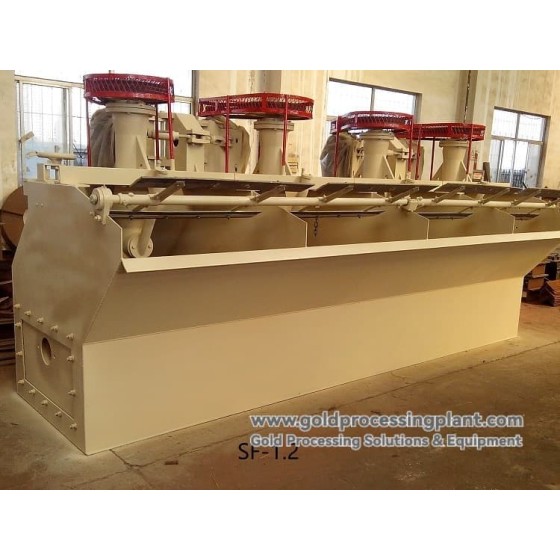
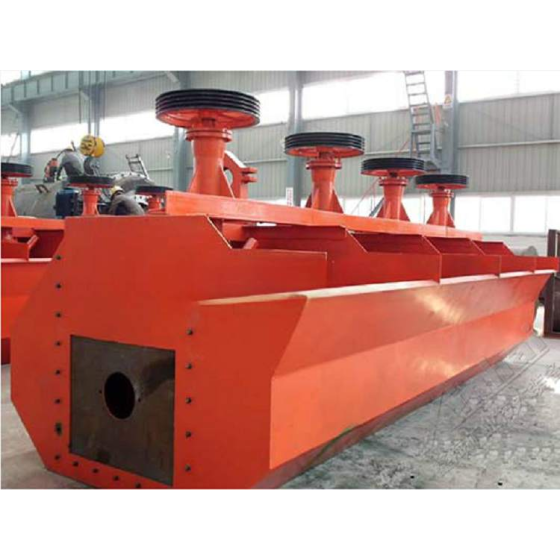
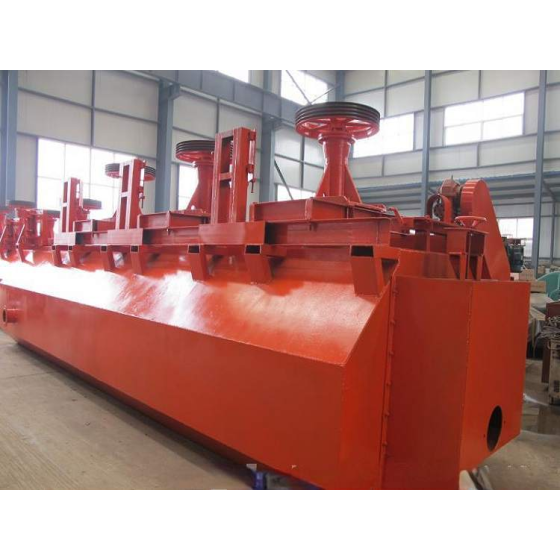
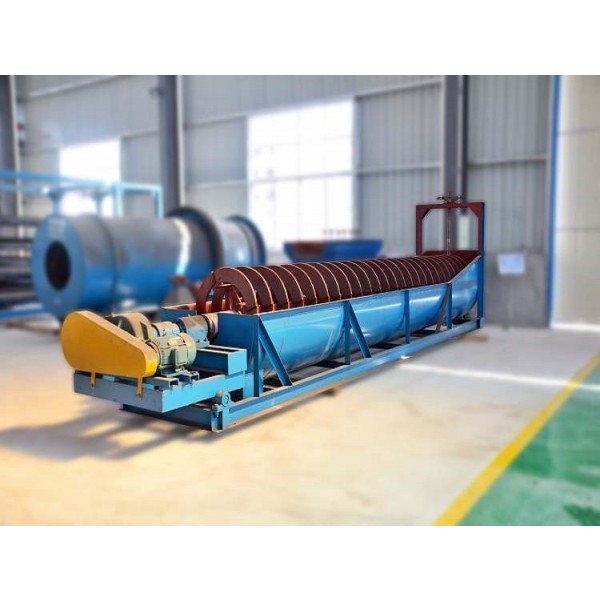
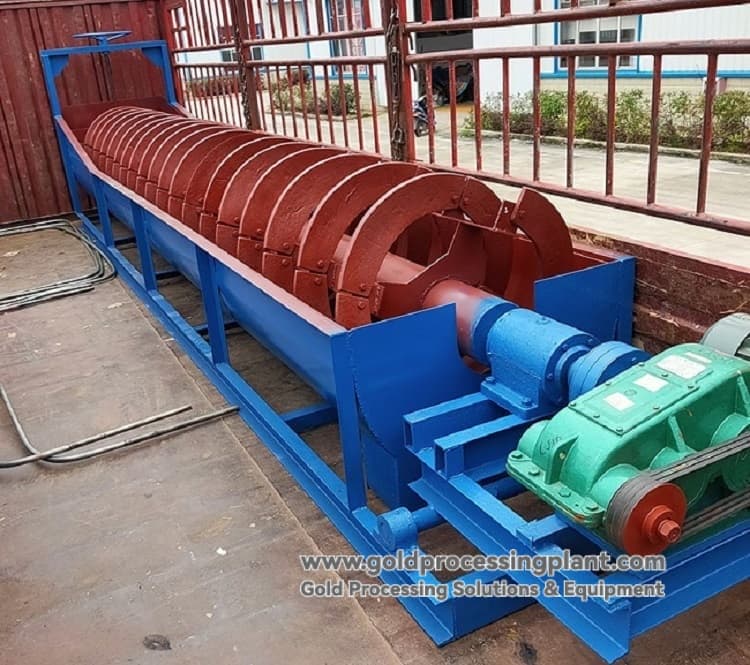 GoldProcessingPlant spiral classifier in a closed-circuit grinding system at a gold processing plant (inclined rectangular trough, spiral shaft and flights, upper drive mechanism, lower lifting device)
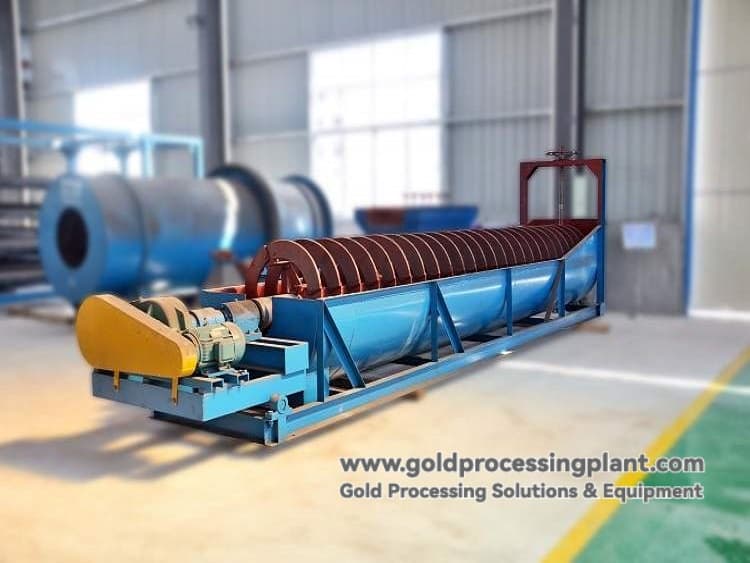 Trough, spiral-shaft flights and lower lifting device of the spiral classifier—bottom inclination 12° to 18.5°; return coarse sand is lifted along the bottom back to the ball mill while fines leave over the overflow weir toward gravity separation and flotation