Provide professional solution for SF type flotation machine in gold ore flotation. This equipment has both self-absorbing pulp and self-absorbing gas functions, strong impeller stirring force, high foam stability, especially suitable for the flotation separation of medium and fine-grained gold ore, easy operation and maintenance and strong adaptability.
Need a plan quote or proposal? Available for free 24/7!
SF Flotation Machine | High-efficiency, energy-saving flotation equipment with self-priming mechanical agitation, a forward-inclined tank and a double-blade impeller
The SF flotation machine is a high-efficiency, energy-saving self-priming mechanical flotation machine that uses an innovative forward-inclined tank and double-blade impeller to effectively solve the industry problems of coarse particles settling in the tank and low recovery. Integrating air intake, pulp suction, agitation and flotation in one unit, it delivers outstanding advantages such as large air volume, low energy consumption, high recovery and stable operation. It is especially suitable for the flotation separation of finely disseminated non-ferrous, ferrous, non-metallic and rare metal minerals, making it a core self-priming flotation cell in modern mineral processing plants and a reliable flotation machine for gold recovery.
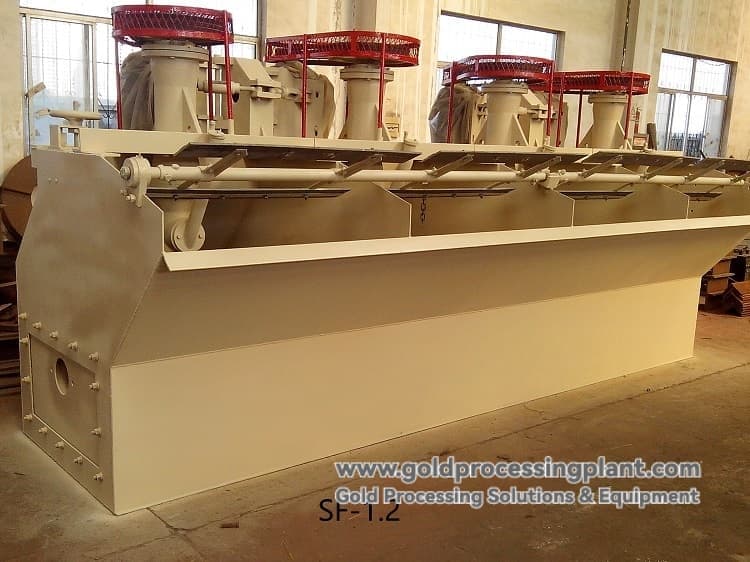
GoldProcessingPlant SF flotation machine——forward-inclined tank with double-blade impeller, large air volume, low energy consumption and high recovery
Product Overview
The SF flotation machine is a high-efficiency, energy-saving self-priming mechanical flotation machine. It uses an innovative forward-inclined tank and a double-blade impeller, effectively solving the industry problems of coarse particles settling in the tank and low recovery. The machine integrates air intake, pulp suction, agitation and flotation in one unit and offers outstanding advantages such as large air volume, low energy consumption, high recovery and stable operation. It is especially suitable for the flotation separation of finely disseminated non-ferrous, ferrous, non-metallic and rare metal minerals, and is a core piece of equipment in modern mineral processing plants as well as an efficient self-priming flotation cell for fine-particle ores.
In gold and non-ferrous metal plants, the SF flotation machine can serve as the rougher, scavenger and cleaner units in a gold flotation process line, be integrated into an integrated gold processing flow, and be supplied as the core separation equipment in a gold processing equipment list for a complete line. Its horizontal arrangement and combined self-priming design greatly simplify the circuit and reduce investment and operating and maintenance costs.
Working Principle
The flotation process of the SF flotation machine can be divided into three stages: pulp preparation, air-pulp mixing and mineralization, and separation and froth removal:
Pulp preparation: the pulp ground in the ball mill and fully conditioned with reagents is fed into the tank.
Air-pulp mixing and mineralization:
The double-blade impeller rotates at high speed driven by the motor, generating negative pressure, automatically drawing in air and forming a large number of fine bubbles.
At the same time, the impeller draws in pulp from the bottom of the tank, so that air, pulp and reagents are fully agitated and mixed in the mixing zone.
After the target mineral particles collide with the bubbles, the hydrophobic minerals attach themselves to the bubbles, forming mineralized bubbles.
Separation and froth removal:
The mineralized bubbles rise to the surface by buoyancy and form a froth layer.
The forward-inclined tank design favors froth stability and its concentration toward the scraper area.
The rotating scraper removes the enriched mineralized froth, which is the concentrate product.
The hydrophilic minerals remain in the pulp and are discharged as tailings from the rear of the tank.
Core Advantages
Structural Design Advantages
Forward-inclined tank: the unique design effectively prevents coarse particles from settling and accumulating, avoids “tank settling” and ensures continuous, stable production.
Double-blade impeller-stator system: the impeller is made of wear-resistant materials and features a scientific design with strong agitation and large air volume, while its lower peripheral speed greatly extends the service life of the impeller and stator.
Horizontal arrangement with combined self-priming: the horizontal layout enables automatic pulp suction, so pulp from the preceding cell is drawn into the next one, with no need for additional froth pumps or intermediate pulp pumps. The circuit is simple and investment, operating and maintenance costs are low.
Performance Advantages
Excellent coarse-particle recovery: the dual-circulation pulp flow pattern keeps coarse mineral particles effectively suspended and participating in mineralization, significantly improving overall recovery.
High efficiency and energy saving: the optimized impeller design and fluid dynamics deliver high performance with lower energy consumption than conventional flotation machines.
Large processing capacity: high capacity per unit volume meets the production needs of large-scale plants.
Easy operation and maintenance: a high degree of automation, stable operation, easy replacement of key wear parts and low overall maintenance costs.
Technical Specifications
Model
Effective volume (m³)
Processing capacity (m³/min)
Impeller diameter (mm)
Impeller speed (r/min)
Main shaft power (kW)
Scraper power (kW)
Weight per cell (kg)
SF-0.37
0.37
0.2 - 0.4
300
352 - 442
1.5
0.55
470
SF-0.7
0.7
0.3 - 1.0
350
336
3
1.1
970
SF-1.2
1.2
0.6 - 1.2
450
312
5.5
1.1
1400
SF-2.8
2.8
1.5 - 3.5
550
280
11
1.5
2120
SF-4
4
2.0 - 4
650
235
15
1.5
2600
SF-8
8
4.0 - 8
760
191
30
1.5
4292
SF-16
16
5.0 - 16
850
169 - 193
45
1.5
7415
SF-20
20
5.0 - 20
730
186
30×2
1.5
9823
Note: processing capacity varies with ore density, particle size, flotation difficulty and other factors; the values in the table are reference ranges.
Applications
Non-ferrous metal separation: rougher and scavenger flotation and cleaner flotation of sulfide and oxide ores of copper, lead, zinc, molybdenum and nickel.
Ferrous metal separation: flotation of iron ore (magnetite, hematite), manganese ore and ilmenite.
Non-metallic mineral purification: impurity removal and purification of fluorite, potash feldspar, barite, graphite and phosphate rock.
Rare metal recovery: recovery of strategic minerals such as lepidolite, columbite-tantalite and beryl.
Other applications: wastewater treatment, pulp deinking and more. The tailings after separation can be further processed with gold recovery from tailings to recover additional valuable metals.
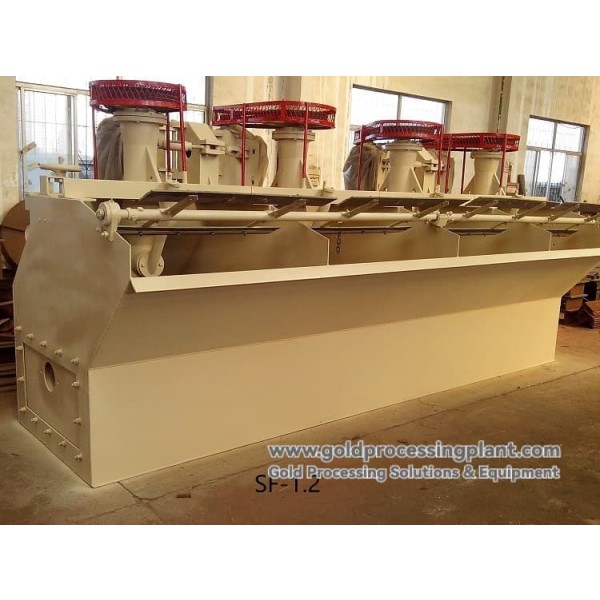
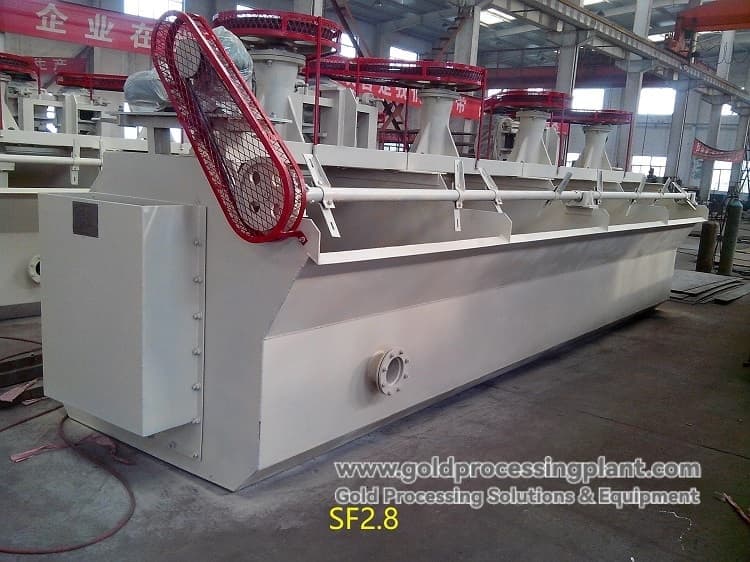
SF flotation machine in a separation operation——suitable for separating non-ferrous, ferrous, non-metallic and rare metal minerals
Professional Services and Support
We provide not only equipment, but also full-process solutions and lifetime technical support:
Process design support: we design the optimal flotation circuit and equipment configuration based on your ore characteristics (floatability test report).
Installation and commissioning: we send an experienced team of engineers to provide on-site guidance for installation, commissioning and trial operation, ensuring the equipment achieves optimal performance.
Operator training: comprehensive training in equipment operation, maintenance and troubleshooting.
Spare parts supply: guaranteed supply of wear parts manufactured by the original equipment manufacturer (impeller, stator, main shaft, etc.) for long-term stable operation.
Process optimization: long-term technical consulting to solve production problems and continuously improve flotation indices.
Why Choose the SF Flotation Machine
Self-priming design: integrates air intake, pulp suction, agitation and flotation, with no external blower required and a simple configuration.
Good coarse-particle recovery: the forward-inclined tank prevents coarse particles from settling, while the dual-circulation pulp flow significantly improves overall recovery.
Simplified circuit: horizontal arrangement with combined self-priming; pulp from the preceding cell is automatically drawn into the next one, with no froth pumps or intermediate pulp pumps.
Energy saving and durability: the double-blade impeller has a low peripheral speed with large air volume and lower energy consumption than conventional flotation machines, plus a long service life for the impeller and stator.
Full-process service: complete technical support from process design and installation to original spare parts and process optimization, also available within an EPC turnkey project.
Summary
Thanks to the combination of self-priming mechanical agitation, a forward-inclined tank and a double-blade impeller, the SF flotation machine effectively solves the industry problems of coarse particles settling in the tank and low recovery, while offering large air volume, low energy consumption, high recovery and stable operation. Its horizontal arrangement and combined self-priming design eliminate the need for froth pumps and intermediate pulp pumps, simplifying the circuit and reducing investment and operating costs. It is a proven flotation machine for gold and is widely applicable to the flotation separation of non-ferrous, ferrous, non-metallic and rare metal minerals. GoldProcessingPlant can provide flotation machine selection, circuit design and complete-line configuration tailored to your ore floatability and processing scale, with a gravity concentration line and a jaw crusher as complementary equipment.
Frequently Asked Questions
What is the SF flotation machine and which minerals is it suitable for?
The SF flotation machine is a high-efficiency, energy-saving self-priming mechanical flotation machine that integrates air intake, pulp suction, agitation and flotation. With its forward-inclined tank and double-blade impeller, it offers large air volume, low energy consumption, high recovery and stable operation. It is especially suitable for the flotation separation of finely disseminated non-ferrous, ferrous, non-metallic and rare metal minerals, and can be used in the rougher, scavenger and cleaner stages of gold ore flotation together with a hydrocyclone.
What is the working principle of the SF flotation machine?
Its process is divided into three stages: first, the ground pulp fully conditioned with reagents is fed into the tank; then the double-blade impeller rotates at high speed, generating negative pressure to draw in air automatically and form fine bubbles, while also drawing pulp from the bottom so that air, pulp and reagents are fully mixed in the agitation zone and hydrophobic minerals attach to the bubbles to form mineralized bubbles; finally, the mineralized bubbles rise to form a froth layer which, guided by the forward-inclined tank, concentrates toward the scraper and is removed as concentrate, while hydrophilic minerals leave the rear of the tank as tailings.
How does the SF flotation machine solve the problem of coarse particles settling in the tank?
The SF flotation machine uses a uniquely designed forward-inclined tank that effectively prevents coarse particles from settling and accumulating, avoids “tank settling” and ensures continuous, stable production. At the same time, the dual-circulation pulp flow pattern keeps coarse particles suspended and participating in mineralization, significantly improving overall recovery. The double-blade impeller, with strong agitation and large air volume, further enhances the mineralization of coarse particles.
Why does the SF flotation machine not need froth pumps or intermediate pulp pumps?
Thanks to its horizontal arrangement and combined self-priming design, pulp from the preceding cell can be drawn automatically into the next one. As the impeller rotates, it draws in both air and pulp from the bottom of the tank, so no additional froth pumps or intermediate pulp pumps are required. The circuit is simpler and investment and operating and maintenance costs are lower.
What models are available and what is the processing capacity of the SF flotation machine?
The SF series includes eight models, from SF-0.37 to SF-20: effective volume of 0.37–20m³, processing capacity of 0.2–20m³/min, impeller diameter of 300–850mm, impeller speed of 169–442 r/min, main shaft power of 1.5–45kW (30×2kW for the SF-20), and weight per cell of 470–9823kg, meeting the needs of plants from small to large scale. The flotation cell capacity of each model is shown above; actual capacity varies with ore density, particle size and flotation difficulty, so the values are reference ranges.
How energy-efficient is the SF flotation machine and how long do wear parts last?
Through an optimized impeller design and fluid dynamics, the SF flotation machine maintains high performance with lower energy consumption than conventional flotation machines. Made of wear-resistant materials and scientifically designed, the double-blade impeller combines low peripheral speed, strong agitation and large air volume, greatly extending the service life of the impeller and stator. Key wear parts are easy to replace and overall maintenance costs are low.
Which applications is the SF flotation machine suitable for?
It is mainly used for non-ferrous metal separation (rougher, scavenger and cleaner flotation of sulfide and oxide ores of copper, lead, zinc, molybdenum and nickel), ferrous metal separation (magnetite, hematite, manganese and ilmenite), non-metallic mineral purification (fluorite, potash feldspar, barite, graphite and phosphate rock), rare metal recovery (lepidolite, columbite-tantalite and beryl), as well as wastewater treatment and pulp deinking. The tailings obtained can also be processed with a centrifugal gold concentrator for further recovery of valuable metals.
What is the difference between the SF self-priming flotation machine and the BS-K aerated flotation machine?
The SF type is a self-priming flotation machine: the rotation of its double-blade impeller generates negative pressure to draw in air and pulp by itself, with no external blower and a simple configuration, and its forward-inclined tank is especially suitable for coarse-particle recovery. The BS-K type is an aerated flotation machine that combines forced air injection from an external blower with mechanical agitation, producing finer, more uniform bubbles and increasing recovery by more than 2% compared with conventional equipment. It is ideal for fine separation and refractory ores, but its configuration is more complex and requires a stepped layout and froth pumps.
How do I get a quotation for the SF flotation machine and what services are included?
The quotation varies with the model, number of cells and configuration. GoldProcessingPlant provides process design support (based on the floatability test report), on-site installation, commissioning and trial operation, operation and maintenance training, original wear parts (impeller, stator, main shaft, etc.) and long-term process optimization, and can issue a quotation for the complete line. All of this is integrated into a complete gold plant solution.
Tell Us Your Ore Characteristics and Separation Targets
GoldProcessingPlant engineers match you with the right SF flotation machine model, number of cells and circuit configuration
We provide free flotation circuit design, calculation of the model and number of cells based on your processing capacity, configuration of the forward-inclined tank and double-blade impeller, combined self-priming circuit design and a complete-line equipment quotation, with full-line supply of crushers, feeders, ball mills, hydrocyclones, classifiers, thickeners and tailings gold recovery equipment through customized processing solution and quotation.
CONTACT US
To find out more about our products and solutions, please fill out the form below and one of our experts will get back to you shortly.



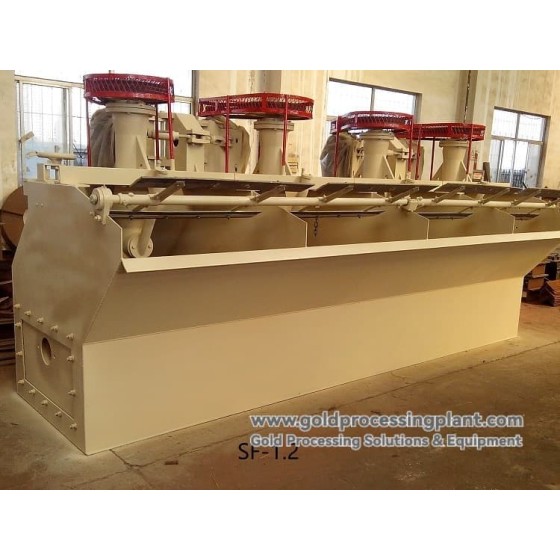
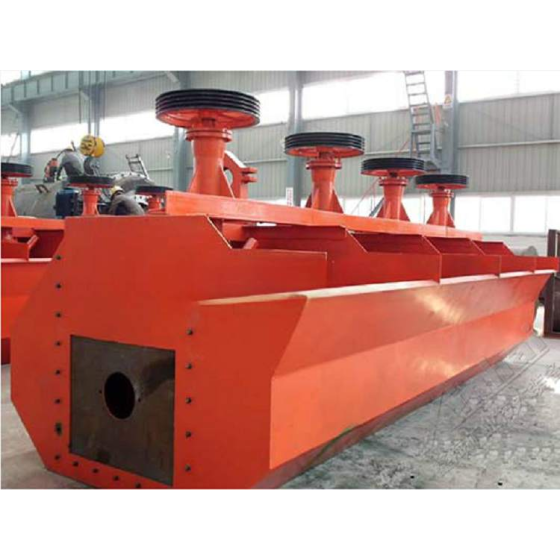
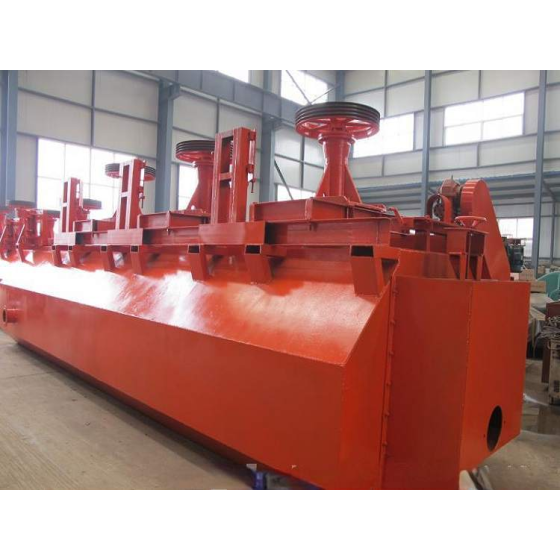
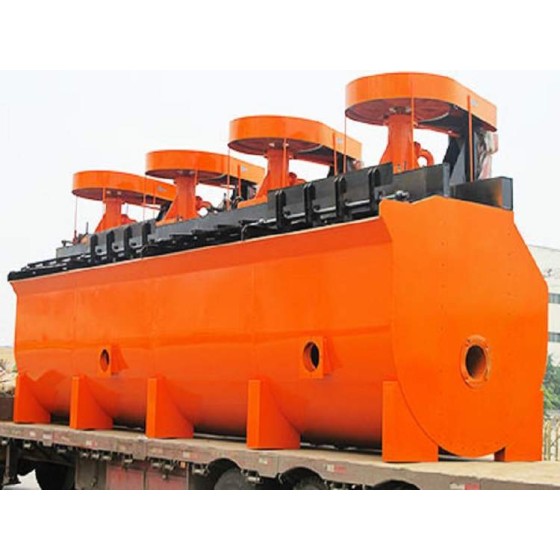
 GoldProcessingPlant SF flotation machine——forward-inclined tank with double-blade impeller, large air volume, low energy consumption and high recovery
 SF flotation machine in a separation operation——suitable for separating non-ferrous, ferrous, non-metallic and rare metal minerals