Filter Press | Plate and Frame Filter Press for Tailings and Concentrate Dewatering with High-Pressure Filtration and Low-Cake Moisture
The plate and frame filter press is a key solid-liquid separation machine in mining, environmental protection and chemical sectors. It excels at treating fine, viscous and hard-to-filter materials, achieving efficient separation through high-pressure filtration. In applications such as sand and gravel wastewater treatment, mineral processing tailings dewatering and sludge treatment, it is often used as the terminal mechanical dewatering unit. In tailings reprocessing and concentration and water-recovery circuits, it handles dry tailings disposal, concentrate dewatering and fine auriferous slime settling and dewatering, standing out for its good treatment effect, broad adaptability and stable operation.
Product Overview
The plate and frame filter press is a key solid-liquid separation machine in mining, environmental protection and chemical sectors, especially good at treating fine, viscous and hard-to-filter materials. Through high-pressure filtration it achieves efficient separation and, in sand washing wastewater treatment, tailings dewatering and sludge treatment, is often used as the terminal mechanical dewatering equipment. Thanks to its good treatment effect, wide adaptability and stable operation, it is a reliable choice for solid-liquid separation. In a gold processing plant it serves dry tailings disposal, concentrate dewatering and water recovery as the terminal unit of the closed concentration and water-recovery circuit.
Equipment Structure
- Main frame: composed of the thrust plate assembly, compression plate assembly, filter plates and cloths, and support frame, forming a robust pressure-filtration working chamber.
- Transmission system: includes the hydraulic station, hydraulic cylinder assembly and driving and driven sprockets, supplying force to compress and open the filter plate pack.
- Control system: integrates the electric control cabinet, plate-shifting device (automatic or manual) and hydraulic control unit, enabling automated operation.
Working Principle
The working process of the plate and frame filter press is divided into four stages:
- 1. Compression
- 2. Feeding and filtration
- 3. Decompression and opening
- 4. Cake discharge
Compression: the hydraulic cylinder pushes the compression plate, pressing multiple layers of plates and filter cloths together to form sealed filtration chambers.
Feeding and filtration: the feed pump introduces slurry or sludge into the filtration chambers; under pressure the liquid (filtrate) passes through the filter cloth and exits, while solid particles are retained to form the filter cake.
Decompression and opening: once filtration is complete, the hydraulic system releases pressure and the plate-shifting device separates the filter plates one by one, automatically or manually.
Cake discharge: the filter cake falls by its own weight and the filter cloth is cleaned manually or automatically, completing one working cycle.
Technical Features and Advantages
- Outstanding adaptability: treats all kinds of very fine, viscous and hard-to-filter materials with stable, reliable filtration performance.
- High-solids cake: with high working pressure (0.3–1.5 MPa) it forms a dry, hard cake with very low moisture, reducing downstream treatment cost.
- Flexible configuration: filtration area and number of chambers can be selected by capacity, with a wide range of models.
- Simple structure: intuitive, convenient operation and maintenance, stable running and a relatively small footprint.
- Low operating cost: compared with other high-pressure dewatering machines, initial investment and running cost are more economical.
Technical Parameters (General Range)
Typical Application Fields
- Mining: tailings dewatering and dry disposal at concentrators, concentrate dewatering and sand-washing wastewater treatment.
- Chemical industry: filtration and washing of products such as pigments, dyes and catalysts.
- Environmental protection: dewatering and volume reduction of municipal and industrial sludge.
- Metallurgy: dewatering and recovery of smelting slag and leach residue.
- Food and pharmaceuticals: separation of fermentation broths and crystals.
Selection Recommendations and Use Limitations
Before selection it is necessary to define: material characteristics (particle size, viscosity, pH value), capacity (dry sludge or slurry quantity), target cake moisture and site conditions.
Use limitations:
- Relatively small capacity, not suited to very large-scale continuous production.
- Filter cloth is a consumable and must be replaced periodically.
- Cake discharge and cloth cleaning usually require manual intervention, with high labour intensity.
- Operation is batchwise, not fully continuous.
Maintenance and Upkeep
Daily inspection: confirm filter plate sealing faces are intact, hydraulic oil level and pressure are normal and filter cloths are undamaged.
Periodic maintenance:
- Monthly: thoroughly clean the filter cloth.
- Quarterly: inspect and replace hydraulic oil.
- Annually: check filter plate flatness and the integrity of main structural parts.
Important precautions:
- Never apply pressure with an empty chamber, to avoid damaging the filter plates.
- Strictly control feed pressure within the rated range.
- After discharge, promptly remove residual material and keep the machine clean.
The core value of the plate and frame filter press lies in high-pressure filtration, adaptability to fine, viscous and hard-to-filter materials, low cake moisture, simple structure and low operating cost. It is the key terminal unit for dry tailings disposal, concentrate dewatering and the closed concentration and water-recovery circuit of a gold plant. GoldProcessingPlant can recommend the right plate and frame filter press model, filter plate and cloth configuration and hydraulic and electrical scheme based on your pulp properties, capacity and target moisture, and can integrate it into the thickening and dewatering stage of the combined gold ore processing flowsheet for unified design, supplying it as part of the gold processing equipment list for the complete line.
Tell Us Your Pulp Properties and Target Moisture
GoldProcessingPlant engineers will match the right filter press model, filter plate and cloth configuration and hydraulic control scheme for your circuit
We provide free selection for dry tailings disposal and concentrate dewatering, chamber-count sizing by pulp density and flow, filter-cloth life and maintenance plans, and complete-line equipment quotations covering thickeners, slurry pumps, crushers, ball mills, hydrocyclones, classifiers, jigs, centrifugal concentrators, shaking tables and flotation machines.
Get Filter Press Selection and a Quotation



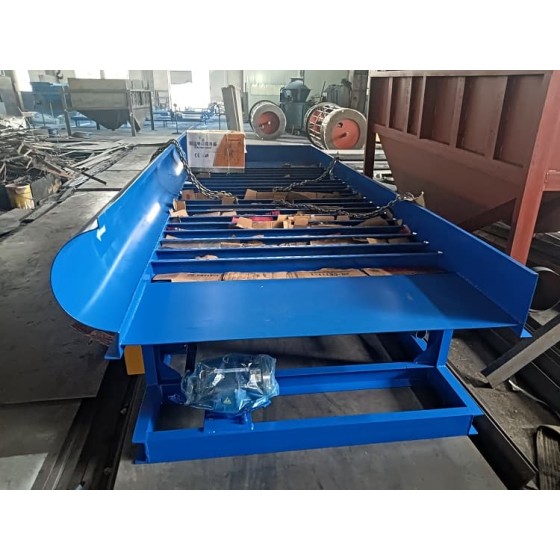
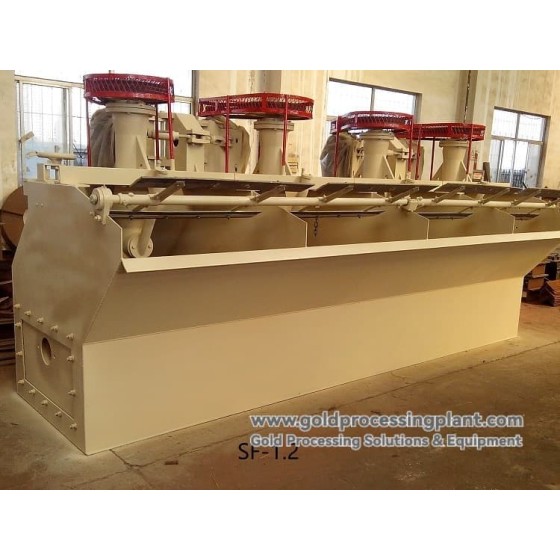
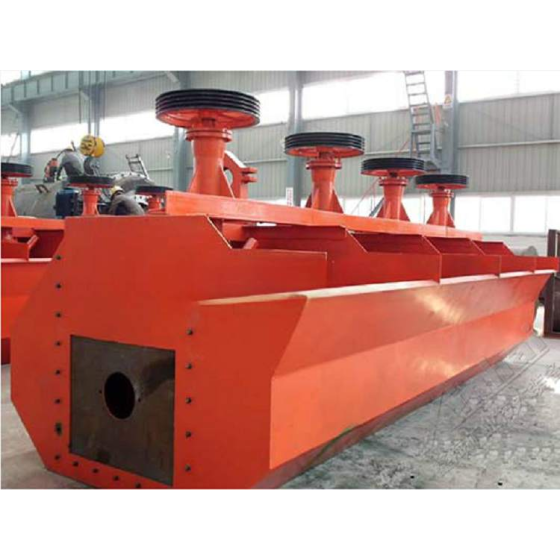
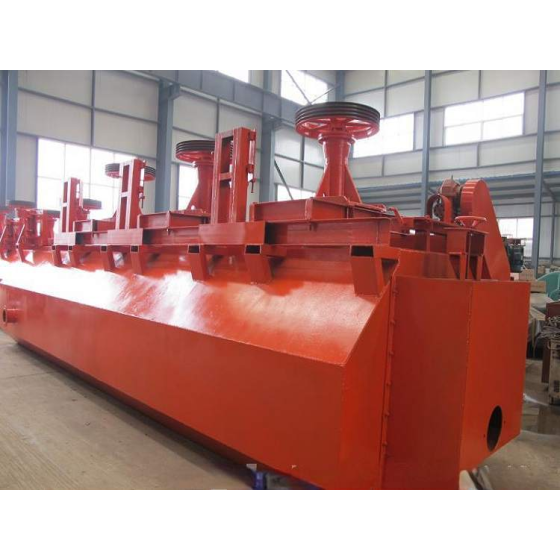
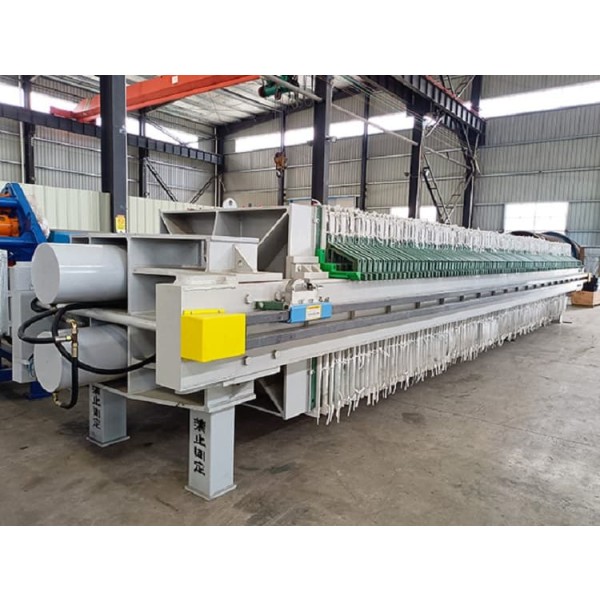
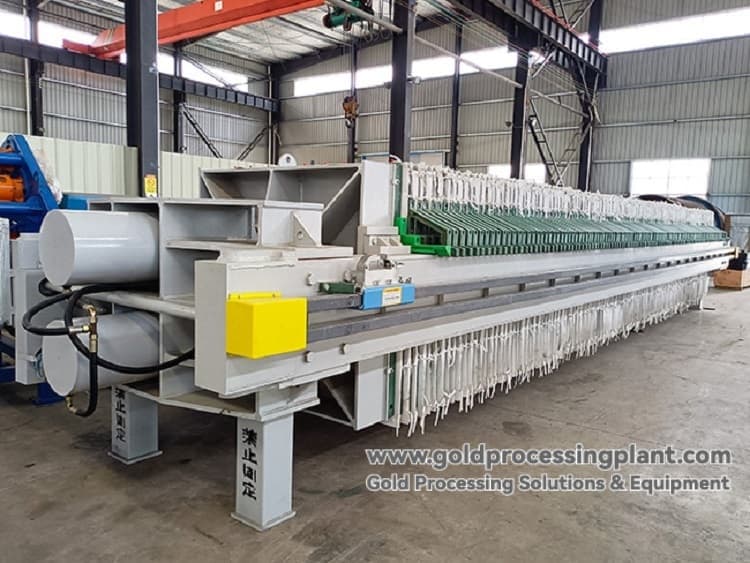 GoldProcessingPlant plate and frame filter press (thrust plate, compression plate, filter plates and cloths, support frame; hydraulic compression, high-pressure filtration, cake discharge by plate shifting)
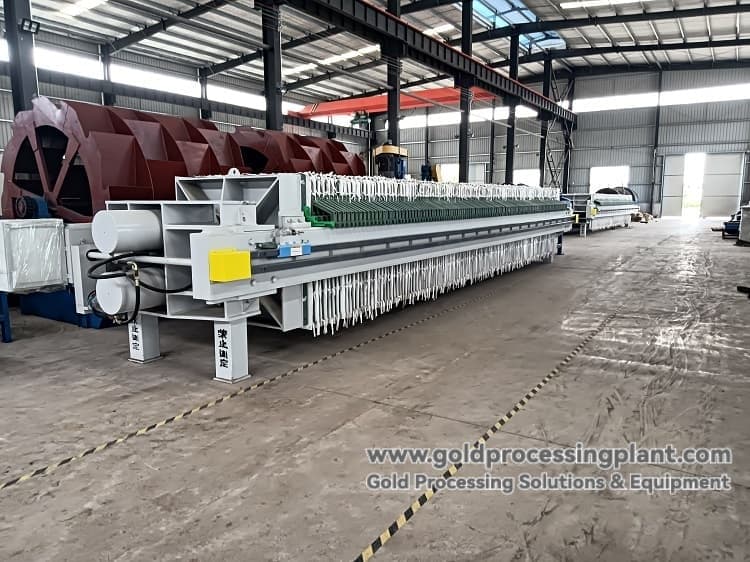 Filter plates, cloths and filtration process of the plate and frame filter press——filtrate passes through the cloth and exits while solids are retained as cake; high working pressure, low cake moisture and cloth washing after discharge
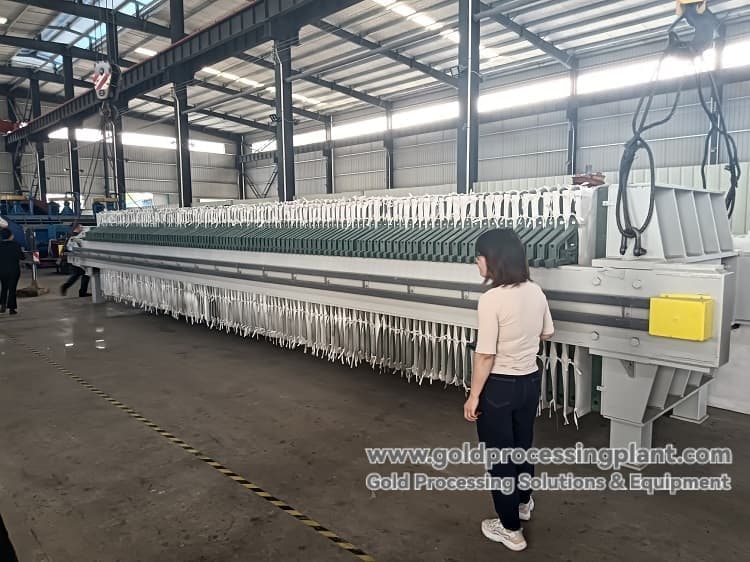 Hydraulic station and working area of the plate and frame filter press——the hydraulic station supplies compression force, the plate shifter discharges plate by plate, cake is dry-stacked and filtrate is reused
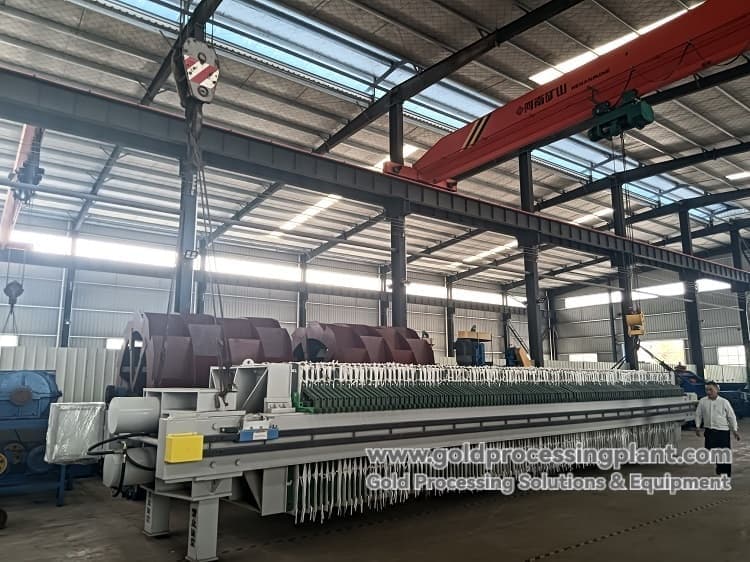 Cake discharge and filter cloth cleaning of the plate and frame filter press——cake falls by its own weight, cloths are cleaned manually or automatically, completing the filtration cycle