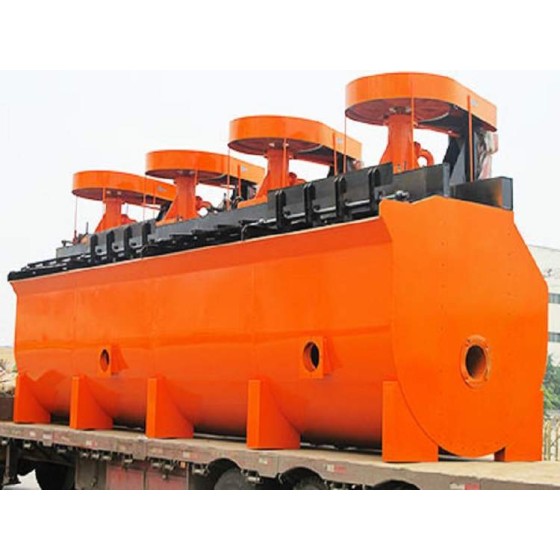
Gold Heap Leaching Process: Low-Grade Oxide Gold Extraction and Heap Leach Equipment Configuration
Gold heap leaching is a mainstream gold extraction process for low-grade oxide ore: ore is crushed and stacked on a lined pad, cyanide solution is sprayed over the heap, and the gold-bearing pregnant solution is collected from the base for gold recovery. On the same heap pad, a difference in ore particle size and permeability can translate into a wide gap in leach cycle and recovery — and that difference comes down to how the heap is built, how the solution is applied, and whether the ore is agglomerated to match its characteristics. This guide walks through the process principle, core operations, parameter control, equipment configuration, and investment breakdown of a gold heap leaching plant, so you can see the process route, heap leach equipment list, and budget in one pass before building or upgrading.
What Is the Gold Heap Leaching Process
Heap leaching is a gold extraction method in which low-grade ore is crushed to a target particle size and stacked, leaching solution (cyanide solution) is sprayed over the impermeable pad, the solution percolates through the heap and dissolves gold, and the gold-bearing pregnant solution is collected from the heap base for downstream recovery. Leaching relies on convective and molecular diffusion through the thin film of solution on the ore surface. The process is simple and low-cost, and suits low-grade oxide gold ore, open-pit waste rock, old tailings, and small remote deposits. Gold recovery is lower than with agitated leaching, but capital cost is low and operation is simple — which is why heap leaching is the mainstream route for economically recovering low-grade gold resources.
A complete gold heap leaching plant includes: ore crushing (or no crushing) → heap construction on an impermeable pad → cyanide solution spraying → pregnant solution collection → activated carbon adsorption columns / zinc precipitation → loaded carbon processing or gold sludge smelting → tailings neutralization and environmental treatment. Every step‘s process parameters and heap leach equipment configuration directly determine the final gold recovery rate and operating cost. The reason heap leaching is so widely adopted for low-grade oxide ore is that it links mining, crushing, leaching, and recovery into one simple production flow, with a low investment threshold that suits scattered deposits and small-to-medium projects.
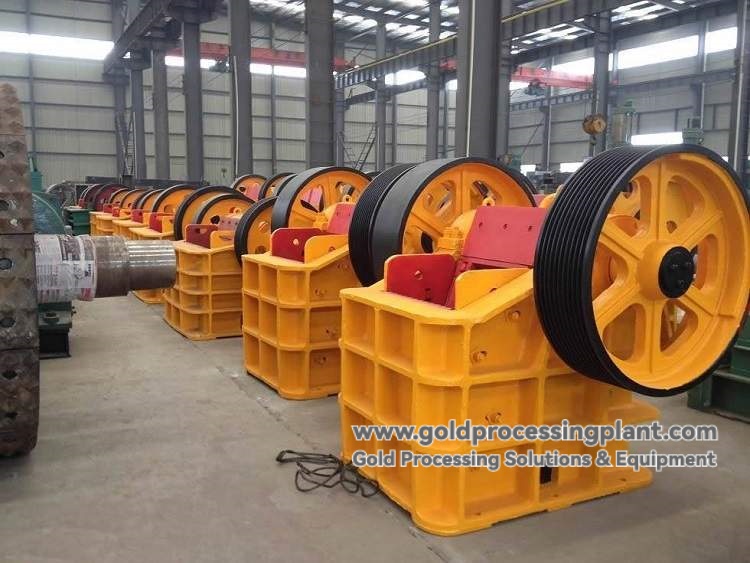
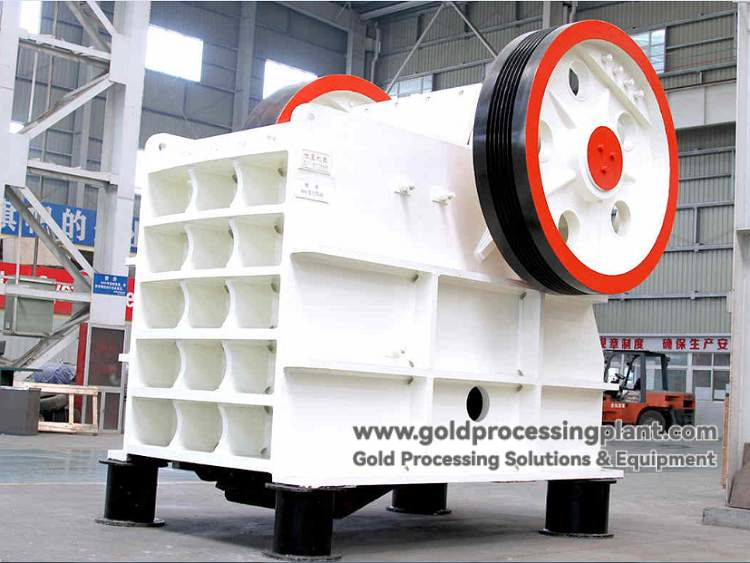
Gold heap leaching plant process - jaw crusher
GoldProcessingPlant: Company Strength and Manufacturing Base
Whether a gold heap leaching process can be delivered on the ground ultimately depends on the process design and equipment manufacturing capability behind it. GoldProcessingPlant is a full-process gold mining service provider integrating process design, engineering design, equipment manufacturing, installation, and commissioning, with two self-owned manufacturing bases and technical teams in Shandong and Jiangxi, China.
20+ YearsGold ore processing design and equipment manufacturing experience
Two Manufacturing BasesSelf-owned factories in Shandong and Jiangxi, about 50,000 m²
30–5000 TPDProject capacity coverage: hard rock gold, placer gold, refractory ore, tailings reprocessing
50+ CountriesEquipment export and cross-border project delivery experience
GoldProcessingPlant strictly follows the ISO9001 quality management system, and its products are CE certified, with an annual production capacity of more than 500 sets. The team consists of gold processing engineers, metallurgical experts, mechanical designers, and a project management team, with core members holding 20+ years of industry experience and having participated in multiple large-scale gold EPC projects.
Ore Types Suitable for Gold Heap Leaching
The gold heap leaching process is matched to ore properties. The following four ore types are typical candidates for heap leaching:
- Low-grade oxide gold ore — grade too low for agitated leaching to be economic; heap leaching costs less
- Open-pit waste rock — contains gold but not enough to justify mill feed; heap leaching can recover part of it
- Old tailings — tailings stored in old tailings ponds with elevated gold content can be heap leached for re-recovery
- Small remote deposits — limited capital and poor transport access; heap leach equipment is simple and commissioning is fast
Selection note: Heap leaching is not suitable for sulfide ore, carbonaceous ore, or finely disseminated ore. Sulfide ore consumes high cyanide and gives low recovery; carbonaceous ore “preg-robs” gold, with dissolved gold re-adsorbed onto carbonaceous matter; finely disseminated ore locks gold in gangue, so the solution cannot penetrate. When ore properties vary widely, confirm the process route with assay data to avoid misselection.
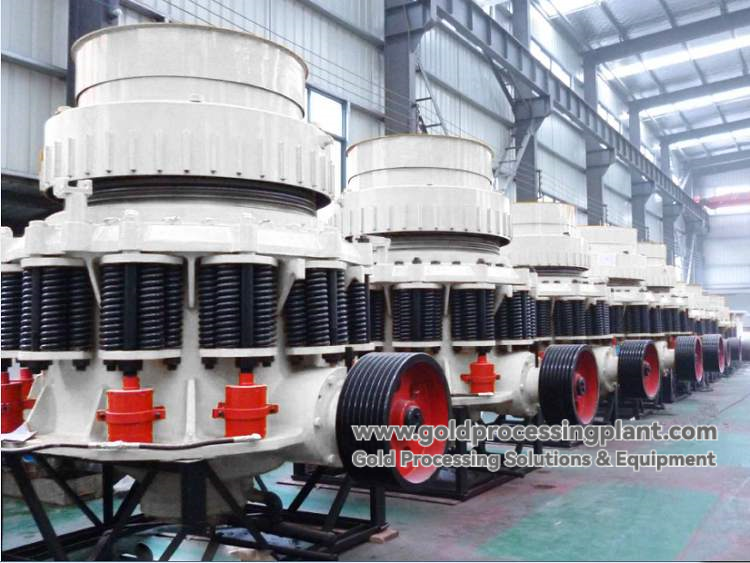
Gold heap leaching plant process - cone crusher
Gold Heap Leaching Process: Stage-by-Stage Breakdown
The gold heap leaching process is divided into six stages. Below is a stage-by-stage breakdown of what each operation does, the equipment involved, and the control points — the basis for subsequent heap leach equipment selection and cost estimation.
Ore Crushing: Keeping Particle Size Within Leaching Requirements
- Crushing size: gold ore for heap leaching is typically crushed to 2.5–25 mm, depending on grade and size requirements. Low-grade ore with loose size requirements may need no crushing or only primary crushing; higher-grade ore that needs higher recovery must be crushed finer.
- Crushing equipment: jaw crusher (primary) + cone crusher (secondary/tertiary) in a multi-stage circuit, following the principle of “more crushing, less grinding” to bring ore to the size required for heap construction.
Heap Construction: Liner Impermeability and Heap Permeability
- Impermeable liner: an impermeable liner (such as HDPE membrane) is laid on the heap pad base to prevent cyanide-bearing solution from seeping into the ground and polluting the environment. The liner is critical to heap leach environmental compliance and cannot be skipped.
- Heap construction method: ore is stacked in layers, with heap height and slope determined by site conditions and leaching requirements. Ore with high clay or fines content needs agglomeration (adding cement or lime as binder) to improve heap permeability and prevent solution channeling within the heap.
Spray Leaching: Solution Distribution Uniformity and Leach Cycle
- Spray system: spray pipes and emitters are laid on top of the heap to apply cyanide solution uniformly. Distribution uniformity directly affects recovery; uneven spraying leaves part of the heap unleached and cuts recovery.
- Leach cycle: oxide ore leach cycles typically run 30–90 days, depending on particle size, grade, and leaching conditions. A longer cycle gives higher recovery but ties up capital and slows heap turnover.
- Reagent regime: cyanide concentration, spray intensity, and pH are matched to ore properties; pH is typically controlled at 10–11 to prevent cyanide volatilization losses.
Pregnant Solution Collection: Pregnant Pond and Solution Circulation
- Pregnant pond: gold-bearing pregnant solution is collected from the heap base and flows into the pregnant pond. The pond must be impermeable, with volume designed according to spray flow and rainfall.
- Solution circulation: after gold is recovered from the pregnant solution via activated carbon columns or zinc precipitation, the barren solution returns to the spray system for reuse, reducing reagent consumption and wastewater discharge.
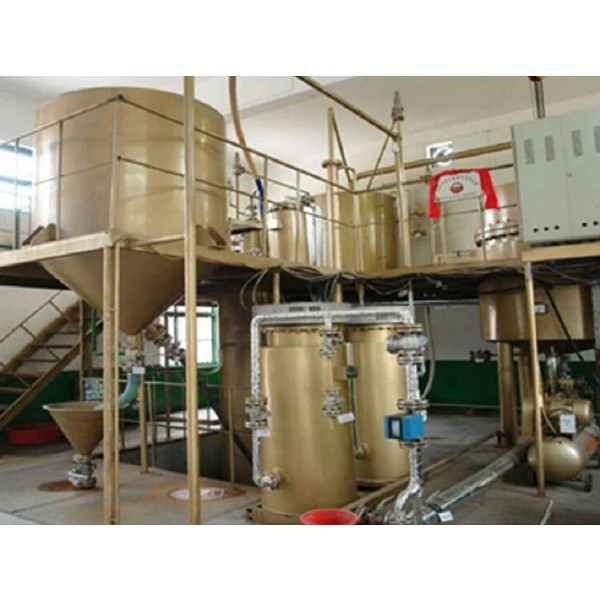
Gold Recovery: Activated Carbon Columns and Zinc Precipitation
- Activated carbon columns: pregnant solution passes through activated carbon columns, where gold-cyanide complexes are adsorbed and enriched onto the carbon; loaded carbon is then desorbed and electrowon to recover gold. Suited to conventional heap leach pregnant solutions.
- Zinc precipitation: pregnant solution is clarified, filtered, and deoxygenated before zinc dust is added; zinc displaces gold from the gold-cyanide complex, and the gold sludge is filtered, acid-washed, and smelted to produce doré gold. Suited to pregnant solutions with high silver or where carbon adsorption performs poorly. Pregnant solution must be clarified to suspended solids < 10 ppm and deoxygenated to dissolved oxygen < 1 mg/L.
Tailings Neutralization and Environmental Treatment
- After leaching, the spent ore heap must be neutralized — lime or another neutralizing agent is used to reduce cyanide concentration to compliant levels before closure or reclamation.
- Cyanide-bearing wastewater must be treated to compliance before reuse or discharge; the impermeable liner and pregnant pond require long-term maintenance — this is the key to heap leach environmental compliance.
Gold heap leaching plant process flow
Key Parameter Control Points in the Gold Heap Leaching Process
Stable operation of a gold heap leaching process depends on precise control of a handful of key parameters. Below are the core control points for heap leach process design and on-site operation:
Ore particle sizeTypically 2.5–25 mm, depending on grade and leaching requirements
Heap permeabilityOre high in clay or fines needs agglomeration to prevent channeling
pH10–11 (adjusted with lime) to prevent cyanide volatilization
Spray intensitySet by heap permeability; uniform distribution is key
Cyanide concentrationMatched to ore cyanide consumption; balance pregnant solution grade against reagent cost
Leach cycleOxide ore typically 30–90 days, depending on particle size and leaching conditions
Pregnant solution clarityZinc precipitation requires clarification to suspended solids < 10 ppm
Tailings neutralizationLime neutralization after leaching to bring cyanide concentration into compliance
Gold heap leaching parameters are matched to ore properties and leaching requirements — change the particle size and the leach cycle must follow; raise the clay content and agglomeration and spray intensity must be re-matched.
Technical Advantages of Heap Leaching for Gold
The gold heap leaching process is widely used for low-grade oxide ore and scattered deposits. Its technical advantages concentrate in the following areas:
- Low capital cost: simple equipment, no grinding or complex leach tank trains, short construction period — suited to small and medium projects with limited capital.
- Simple operation: short process flow, easy operation and maintenance — suited to remote deposits with limited technical manpower.
- Configurable automation: automation can be configured to customer needs; control systems are not one-size-fits-all — basic instrumentation is standard, advanced control is added as required.
- Resource utilization: low-grade oxide ore, waste rock, and old tailings that conventional mills cannot process economically can still yield part of their gold via heap leaching, improving resource utilization.
A note on recovery rates: Gold recovery in heap leaching is determined jointly by the ore‘s inherent characteristics (dissemination size, permeability, occurrence state) and the heap leach conditions. GoldProcessingPlant does not promise absolute figures detached from reality. What we commit to is this: through rigorous process design, we will design a flow that achieves a reasonable recovery rate for your ore‘s conditions, and we will pursue excellence in equipment selection and heap leach control.
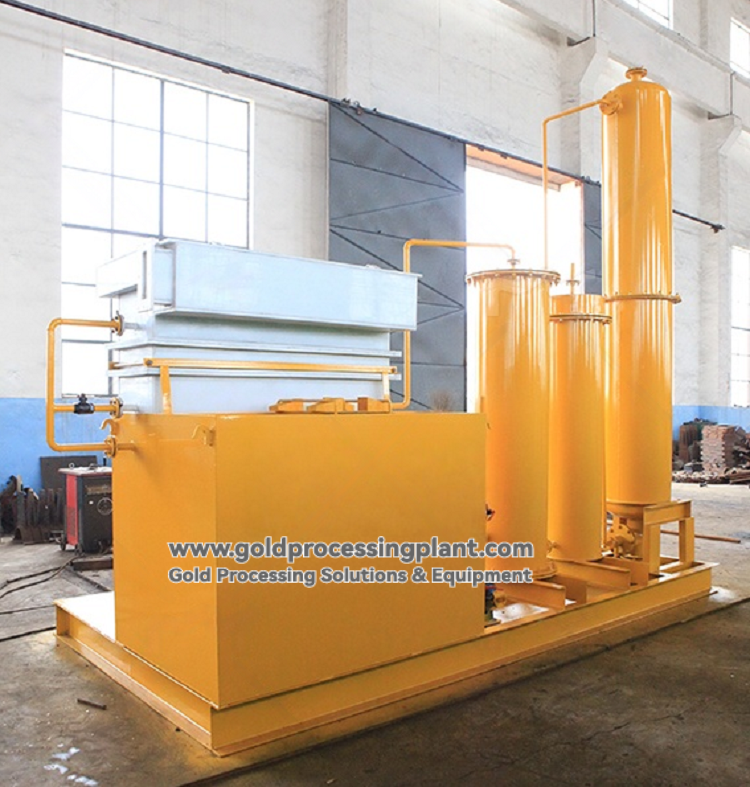
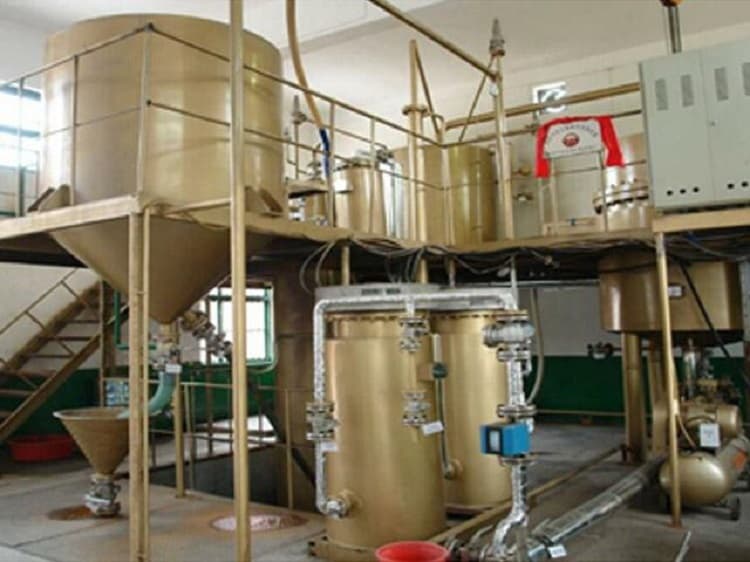
Gold heap leaching process - activated carbon columns and zinc precipitation unit
Key Equipment Configuration List for a Gold Heap Leaching Plant
Gold heap leaching process equipment is configured across six systems by operation. The following is a reference list for a standard heap leach plant; actual selection must be adjusted to throughput and ore characteristics:
| System |
Core Equipment |
Function |
| Crushing |
Jaw crusher, cone crusher (optional) |
Primary + secondary/tertiary crushing to heap leach particle size |
| Heap construction |
Heap pad liner (HDPE membrane), agglomeration equipment (optional) |
Impermeable liner; agglomeration for high-clay ore to improve permeability |
| Spraying |
Spray pipes, emitters, pump sets |
Uniform cyanide solution application; distribution uniformity is key |
| Pregnant solution collection |
Pregnant pond, impermeable liner, solution circulation system |
Collect gold-bearing pregnant solution; return barren solution to spray circuit |
| Gold recovery |
Activated carbon columns / zinc precipitation unit |
Core of the gold heap leaching process; recover gold from pregnant solution |
| Loaded carbon / gold sludge processing |
Desorption and electrowinning system, smelting furnace |
Desorb and electrowin loaded carbon, or smelt gold sludge, to produce doré gold |
| Tailings environmental treatment |
Neutralization system, cyanide-bearing wastewater treatment system |
Tailings neutralization; cyanide wastewater treated to compliance |
Heap leach equipment supply note: All the heap leach equipment above is either self-manufactured or coordinated by GoldProcessingPlant, covering the full flow from crushing, heap construction, spraying, and gold recovery to loaded carbon processing and tailings environmental treatment. Single units or complete sets, configured to ore properties and process requirements — not to inventory. For special conditions (extreme cold, high altitude, severe corrosion, unstable power in Africa, difficult power supply in remote areas), non-standard customization of materials, motor power, and structure is available.
Equipment Investment and Quotation for a Gold Heap Leaching Plant
Equipment investment in a gold heap leaching plant is directly tied to throughput, ore particle size requirements, heap pad liner area, spray system configuration, gold recovery method (activated carbon columns or zinc precipitation), and tailings neutralization and cyanide wastewater treatment. Two heap leach projects of the same size can differ widely in pad liner and agglomeration configuration if one handles simple oxide ore and the other handles high-clay oxide ore — and equipment configuration and investment can diverge just as widely.
GoldProcessingPlant does not quote a “one-price-fits-all” figure detached from ore properties; we quote to the actual configuration. Tell GoldProcessingPlant your daily throughput, ore type, feed size, and site conditions, and we can directly issue an equipment configuration list and quotation for that throughput, making investment comparison fast and straightforward.
The main variables affecting gold heap leach plant investment include: throughput scale, ore particle size requirements, heap pad liner area and impermeability standard, agglomeration configuration (for high-clay ore), spray system and gold recovery method, tailings neutralization and cyanide wastewater treatment, and civil works and power infrastructure conditions. A quotation based on actual configuration is the only one worth comparing.
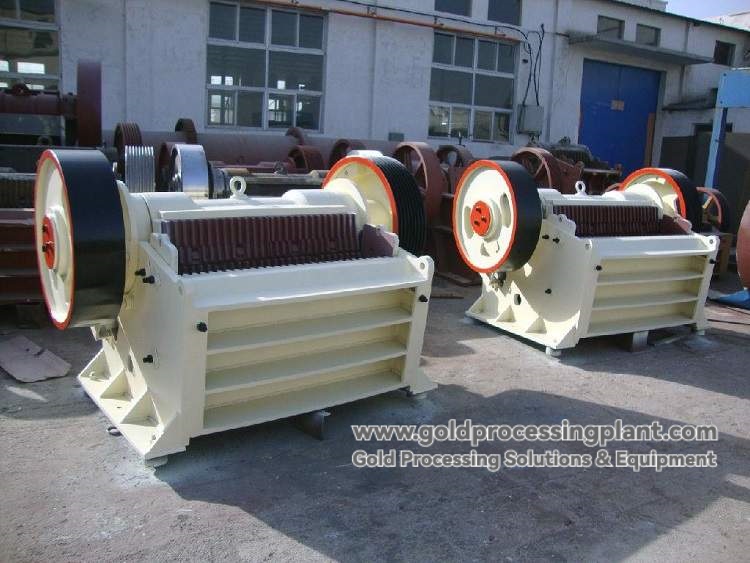
Gold heap leaching process
Why Choose GoldProcessingPlant for Your Heap Leaching Project
Gold processing is not short of equipment; what it lacks is a team that understands ore, understands process, understands equipment, and can mesh all three together. On heap leach gold projects, what sets GoldProcessingPlant apart is:
1
Process design first, no templates
Every gold heap leaching process scheme is derived from ore properties, not copied from peer drawings. Oxide ore versus clay-rich ore, coarse versus fine — crushing size and spray regime are completely different.
2
Self-owned manufacturing, process and hardware meshed
Crushers, activated carbon columns, zinc precipitation units, and desorption-electrowinning systems are all self-manufactured. Process and mechanical engineers work in the same team, and heap leach equipment is built strictly to process drawings — avoiding “drawings and equipment don‘t match”.
3
From “selling equipment” to “configuring to your ore”
Is your ore oxide or clay-rich, how coarse is the particle size, how good is the permeability — every equipment selection decision in the gold heap leaching process has an ore-property basis.
4
Clear delivery boundary, controllable labor cost
Under EPC, process design, equipment manufacturing, installation guidance, and commissioning training are handled by us to the end; civil works and general installation labor are organized locally by the customer, with our engineers providing technical guidance.
5
Global project experience, cross-border delivery that lands
Projects cover Africa, South America, Central Asia, and Southeast Asia, with capacities of 30–5000 TPD. For unstable power in Africa, we add diesel generator sets; where local worker skill is limited, we train hands-on.
6
Ongoing technical support, built to last and run well
Commissioning and reaching design capacity is only the beginning. We provide systematic training to ensure your team can independently adjust spray regime, cyanide concentration, and leach cycle, and we provide long-term spare parts and process optimization support.
GoldProcessingPlant Heap Leach Project Cases and Coverage
GoldProcessingPlant‘s heap leach equipment and solutions have been delivered to gold-producing regions across Africa, South America, Central Asia, and Southeast Asia, with project capacities from 30 TPD to 5000 TPD and ore types ranging from simple oxide ore to high-clay oxide ore.
Africa: Ghana, Mali, Tanzania, Sudan
Complete plant solutions delivered, covering hard rock gold, placer gold, and refractory ore, with diesel generator packages for unstable local power.
South America: Peru, Colombia
Multiple hard rock gold plant projects, with capacities from small to large, ore types mainly oxide and sulfide-hosted gold.
Central Asia: Russia, Kazakhstan
Large placer gold plant construction, adapted to extreme cold, with equipment materials and motor power customized for low-temperature environments.
Southeast Asia and major gold regions in China
Covering quartz vein and altered rock gold, plus tailings reprocessing projects, with gravity, flotation, cyanidation, or combined processes matched to occurrence state.
For your specific ore type and region, GoldProcessingPlant can reference the process approach of similar cases during discussion — but the final scheme is based on your actual ore samples and site conditions, never a copy of another project‘s existing drawings.
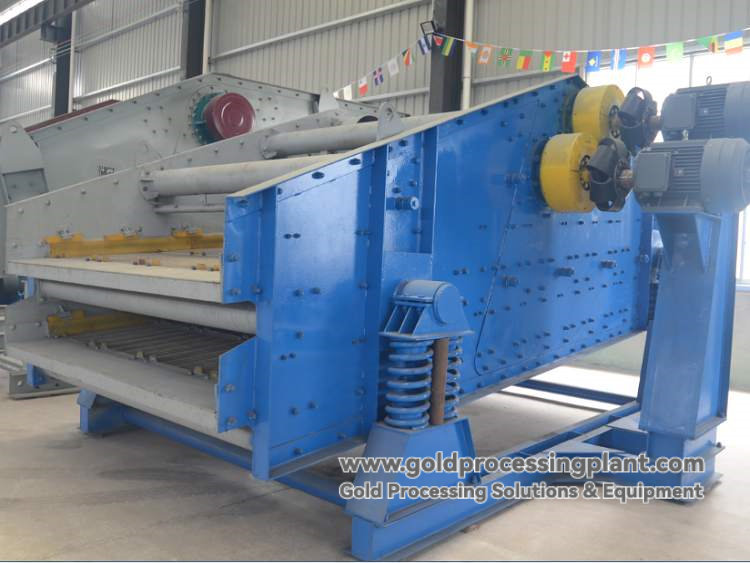
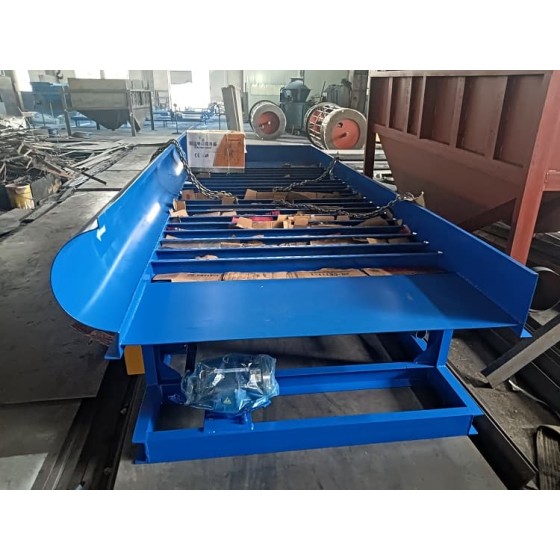
Gold heap leaching plant equipment - vibrating screen
Gold Heap Leaching Plant Construction and Delivery Process
A gold heap leaching plant typically goes through eight stages from ore data to final gold pour. Understanding what happens at each stage and what the customer needs to provide helps with advance planning and avoids detours.
| Stage |
Core Work |
Customer Cooperation |
| Needs communication and preliminary assessment |
Understand ore type, grade, throughput, site conditions; preliminary feasibility assessment |
Provide basic mine data or assay results |
| Process design and equipment selection quotation |
Determine heap leach process route and heap pad design; issue equipment list, selection scheme, and budget quotation |
Confirm site conditions; provide process and target requirements |
| Scheme confirmation and commercial contract |
Confirm flowsheet, equipment, heap pad liner, delivery boundary, schedule, and responsibility split |
Confirm final scheme and budget |
| Engineering drawing design |
Heap layout, equipment foundation, spray piping, pregnant pond liner, civil works condition drawings |
Confirm site boundary conditions; coordinate with civil contractor |
| Equipment manufacturing and supply |
Production of crushers, activated carbon columns / zinc precipitation units, desorption-electrowinning systems; auxiliary procurement and factory testing |
Pay progress payments; advance site “three connections and one leveling” and liner construction |
| Logistics and shipping |
Packing, shipping, sea/land transport, documentation and customs clearance, milestone tracking |
Provide receiving information; assist customs clearance; arrange unloading and warehousing |
| On-site construction guidance and commissioning |
Guide heap pad liner installation, spray system installation, single-machine commissioning, and loaded linked trial run; optimize spray regime and leach cycle |
Organize civil works and local installation workers; provide lifting and commissioning conditions |
| Personnel training and after-sales support |
Operator training, acceptance handover, spare parts supply, long-term technical support |
Arrange operations and maintenance personnel to participate throughout |
A typical gold heap leaching project takes about 8–15 months from process design to final commissioning. Because the leach cycle itself is long, the time to reach design capacity after commissioning must be calculated separately according to the heap leach cycle. Key milestones: process design 7–15 days → engineering design 20–30 days → equipment manufacturing 60–120 days → logistics 30–60 days → installation and commissioning 60–150 days. Reasonable overlap between stages can compress the total schedule; overseas projects need extra customs clearance buffer.
EPC Turnkey Delivery Boundary for a Heap Leach Plant: Who Does What, Agreed Up Front
GoldProcessingPlant provides EPC turnkey service for gold heap leaching projects: from process design, engineering drawings, and core equipment manufacturing to on-site installation guidance, linked commissioning, and personnel training, all coordinated by us — the customer deals with one team. But a heap leach project involves heap pad civil works, liner installation, equipment, installation, and commissioning, and different stages have completely different requirements for qualifications, labor cost, and site conditions. If “who does what” is not spelled out before the contract is signed, disputes over “waiting for workers” and “passing the buck with extra charges” are almost inevitable later.
So GoldProcessingPlant‘s EPC service follows a core principle: what we are responsible for, we see through to the end; what the customer needs to cooperate on, we clarify in advance. The boundary is laid out item by item below.
What GoldProcessingPlant Is Responsible For
- Process technology and technical scheme: ore property analysis, flowsheet determination, spray regime and reagent regime, with a scheme document including equipment selection and preliminary quotation.
- Engineering design and drawings: core design drawings including heap layout, equipment foundation, spray piping, and pregnant pond liner, with complete technical clarification.
- Core equipment manufacturing and auxiliary supply: production of crushers, activated carbon columns / zinc precipitation units, desorption-electrowinning systems and other core equipment to drawings, plus coordinated supply of pumps, piping, electrical control, and other auxiliaries to ensure hardware and process are meshed.
- On-site installation technical guidance: engineers dispatched to site to guide heap pad liner installation, spray system installation, equipment positioning, piping connection, and electrical and instrument installation.
- Linked commissioning and personnel training: lead single-machine commissioning and full-process loaded linked trial run, optimize spray regime, cyanide concentration, and leach cycle until design capacity is reached, and train the customer‘s team.
- After-sales and spare parts supply: responsible for equipment quality during the warranty period, with long-term spare parts supply and process optimization advice.
What the Customer Is Responsible For
- Heap pad civil works: organize civil works for the heap pad liner, pregnant pond, and equipment foundations according to our civil works condition drawings. If complete building structure drawings (plant structure, foundation reinforcement, etc.) are involved, they must be issued by a locally qualified design institute.
- Local installation labor organization: equipment positioning, pipe welding, cable laying, spray pipe installation, and other specific installation work are done by workers recruited locally by the customer. Our engineers guide on site how to install; the customer organizes the people to do it.
- Site basic conditions: responsible for site “three connections and one leveling” (water, power, access, and site leveling), plus lifting equipment and water, power, and materials needed for commissioning.
- Local compliance permits: responsible for local environmental, safety, and construction permits. Heap leach projects involve cyanide solution, so environmental approval must be handled in advance.
Why is this division more cost-effective? If we sent a large number of Chinese workers overseas or to another site, the cost of flights, visas, accommodation, and high daily wages would be staggering. The customer recruits ordinary installation workers locally, and we provide technical engineers for guidance — saving at least half the labor cost. Local workers also communicate more easily and can flexibly follow the on-site civil works schedule, avoiding delays from waiting for visas or flights.
If the customer genuinely cannot find a construction team locally, or wants GoldProcessingPlant to take on civil works and installation labor as well, this can be discussed separately based on the actual project location, with the scope and cost agreed separately in the contract.
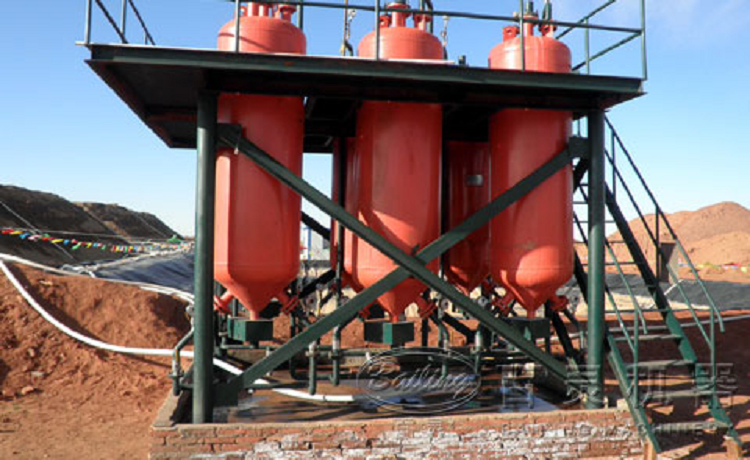
Gold heap leaching project site
Related Gold Processing Solutions
Beyond the gold heap leaching process, GoldProcessingPlant‘s solution library covers hard rock gold, placer gold, refractory ore, and tailings reprocessing, so we can match experience from similar scenarios to your ore type:
Frequently Asked Questions About Gold Heap Leaching
+What is the difference between heap leaching and CIP/CIL? ▼
Heap leaching stacks ore and sprays solution over it without grinding; the leach cycle runs 30–90 days, with low capital cost and simple operation — suited to low-grade oxide ore and scattered deposits. CIP/CIL is agitated leaching: ore is ground fine and leached in tanks, giving higher recovery and throughput — suited to medium and large plants. Heap leaching is not suitable for sulfide ore, carbonaceous ore, or finely disseminated ore. Final selection depends on ore properties, grade, and throughput.
+What ores is heap leaching suitable for? ▼
The gold heap leaching process suits low-grade oxide gold ore, open-pit waste rock, old tailings, and small remote deposits. It is not suitable for sulfide ore (high cyanide consumption, low recovery), carbonaceous ore (carbon preg-robbing), or finely disseminated ore (solution cannot penetrate). Ore with high clay content needs agglomeration to improve permeability.
+Why is the heap leach cycle so long, and can it be shortened? ▼
The cycle is long because solution must penetrate into the ore lumps, which is slower than agitated leaching. Oxide ore leach cycles typically run 30–90 days. Ways to shorten it include crushing finer, agglomerating high-clay ore, optimizing spray intensity and cyanide concentration, and improving solution distribution uniformity. Too short a cycle and recovery drops; too long and heap turnover slows — find the balance through testing.
+Should I use activated carbon columns or zinc precipitation for pregnant solution? ▼
Activated carbon columns suit conventional heap leach pregnant solutions; loaded carbon is then desorbed and electrowon. Zinc precipitation suits pregnant solutions with high silver or where carbon adsorption performs poorly; the solution must be clarified to suspended solids < 10 ppm and deoxygenated to dissolved oxygen < 1 mg/L, with precipitation efficiency typically > 99%. The two can be selected by solution characteristics and budget, or combined.
+How much does a gold heap leaching plant cost? ▼
The main equipment investment in a gold heap leaching process is directly tied to throughput, ore particle size, heap pad liner area, spray system, gold recovery method, and environmental configuration — there is no fixed universal price. Specific investment must be quoted to actual configuration based on ore properties and site conditions. Tell GoldProcessingPlant your daily throughput, ore type, and site conditions, and we can directly issue an equipment configuration list and quotation for that throughput.
+How long does it take from contract signing to commissioning? ▼
A typical gold heap leaching project takes about 8–15 months from process design to final commissioning. Because the leach cycle itself is long, time to reach design capacity after commissioning must be calculated separately. Key milestones: process design 7–15 days → engineering design 20–30 days → equipment manufacturing 60–120 days → logistics 30–60 days → installation and commissioning 60–150 days. Reasonable overlap can compress the total; overseas projects need extra customs clearance buffer.
+What gold recovery rate can heap leaching achieve? ▼
Recovery is determined jointly by the ore‘s inherent characteristics (dissemination size, permeability, occurrence state) and heap leach conditions, and is typically lower than agitated leaching. Where ore properties are suitable, a given oxide ore heap leach project may achieve a relatively high recovery, but that is that project’s actual data, not a committed target for all ores. GoldProcessingPlant does not promise absolute figures detached from reality; we commit to designing a flow that achieves a reasonable recovery rate for your ore‘s conditions through rigorous process design.
+How do you handle ore with high clay content in heap leaching? ▼
High clay content reduces heap permeability and causes solution channeling, cutting recovery. The fix is agglomeration: add cement or lime as binder to form fines and clay into pellets, improving heap permeability. Agglomeration adds capital and operating cost, but for high-clay ore, heap leaching results are hard to guarantee without it.
+How is the heap pad liner built, and will it pollute the environment? ▼
An impermeable liner (such as HDPE membrane) is laid on the heap pad base to prevent cyanide-bearing solution from seeping into the ground and polluting the environment. The liner is critical to heap leach environmental compliance and cannot be skipped. The pregnant pond also needs impermeable treatment. After leaching, the spent ore heap is neutralized with lime or another neutralizing agent to reduce cyanide concentration to compliant levels before closure or reclamation. Cyanide-bearing wastewater must be treated to compliance before reuse or discharge.
+How does heap leaching work with tailings reprocessing? ▼
When old tailings ponds hold tailings with elevated gold content, take samples and assay first to judge reprocessing value. Tailings with recovery value can be heap leached again, or re-processed by gravity, flotation, or cyanidation. The route depends on tailings grade, occurrence state, and economics. Judge reprocessing value first, then discuss equipment configuration — no blind pitching.
+Can you do process design only, without buying equipment? ▼
Yes. Process design, equipment selection and quotation, engineering drawings, single equipment, complete equipment sets, installation and commissioning guidance, and EPC turnkey — choose as needed, no mandatory bundling. The process design fee and drawing advance paid up front can be fully deducted from the equipment payment when a subsequent equipment or EPC contract is signed.
How to Select and Implement a Gold Heap Leaching Process
On the same heap pad, a difference in ore particle size and permeability can translate into a wide gap in leach cycle and recovery — and that difference comes down to how the heap is built, how the solution is applied, and whether the ore is agglomerated to match its characteristics. The core of the gold heap leaching process is meshing particle size, heap permeability, pH, spray intensity, cyanide concentration, and leach cycle with the heap leach equipment — particle size determines permeability, distribution uniformity determines recovery, and liner impermeability determines environmental compliance. Every step is linked.
GoldProcessingPlant‘s logic for heap leach projects is simple: understand the ore first, then configure the equipment. Tell GoldProcessingPlant your daily throughput, ore type, and site conditions, and we can directly issue an equipment configuration list and quotation for that throughput, making investment comparison fast. From ore data to final commissioning, a typical gold heap leaching plant takes 8–15 months; single units, complete sets, and EPC are available as needed, and the upfront process design fee is deductible in subsequent cooperation.
If you are evaluating the feasibility of a gold heap leaching process, or your existing heap leach plant has recovery that won‘t come up or tailings grade that runs high, talk to the GoldProcessingPlant engineering team. Tell us your ore type, throughput, and site conditions, and we will match the heap leach process route, equipment configuration, and investment estimate based on project experience.
From Heap Leach Process Scheme to Equipment Quotation, in One Step
GoldProcessingPlant provides customized gold heap leaching process solutions to gold mining customers worldwide — single equipment, complete sets, engineering drawings, installation and commissioning guidance, and EPC turnkey, combined as needed, with no mandatory bundling.
Contact us and tell us your daily throughput, ore type, and site conditions; the GoldProcessingPlant team will issue a configuration quotation with a heap leach equipment list and budget for you.
GoldProcessingPlant — together with you, to create greater value from every ton of gold ore.