Gold CIL Processing Plant & Line: Carbon-in-Leach Gold Extraction and Equipment Configuration
The gold CIL processing plant (Carbon-in-Leach) is a mainstream gold extraction route in which cyanide leaching and activated carbon adsorption take place in the same tank. On the same leach tank, performance on oxide ore and arsenic-bearing ore can differ widely — the difference lies in whether the leach-adsorption rhythm matches the ore characteristics. This guide breaks down the carbon-in-leach gold processing line from process principle, core operations and parameter control to CIL equipment configuration and investment structure, so you can see the gold CIL process route, equipment list and budget in one pass before building or upgrading.
What Is the Gold CIL Process
Carbon-in-Leach (CIL) is a gold extraction process in which leaching and activated carbon adsorption proceed simultaneously. Pulp enters the leach tank, cyanide dissolves gold, and activated carbon in the same tank directly adsorbs the dissolved gold-cyanide complex — leaching and adsorbing at the same time. Loaded carbon is then desorbed, electrowon and smelted to produce doré gold. In the carbon-in-leach gold processing line, leaching and adsorption are completed in the same tank, giving a more compact flowsheet and fewer tanks. It suits ore with relatively fast leaching kinetics that needs stage control, and is a common route for small-to-large gold processing plants.
A complete gold CIL processing plant includes: crushing → grinding and classification → thickening and pulp conditioning → leaching and adsorption (the CIL core) → loaded carbon desorption and electrowinning → carbon regeneration → gold sludge smelting. Process parameters and CIL equipment configuration at every stage directly determine the final gold recovery and operating cost. The reason carbon-in-leach is so widely adopted in small-to-large plants is that it completes leaching and adsorption in one tank, eliminating a separate adsorption tank train — a short flowsheet, small footprint, controllable investment and tighter operational flexibility than leach-then-adsorb circuits.
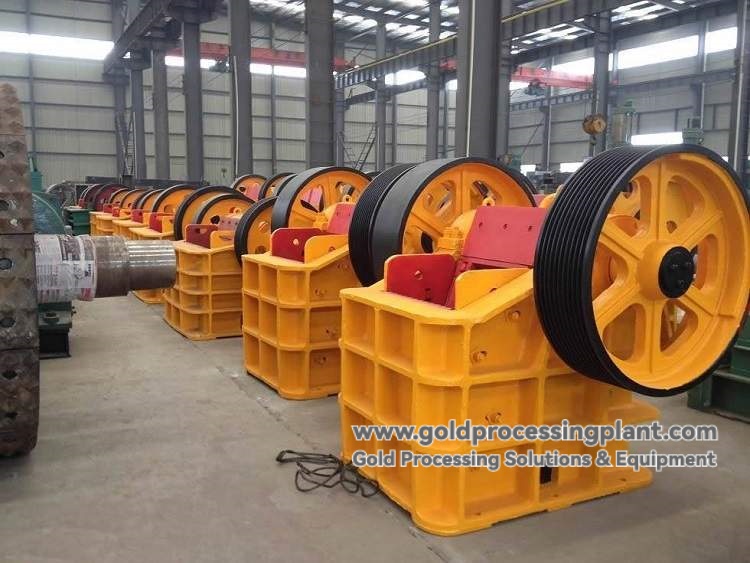
Gold CIL processing plant - jaw crusher
GoldProcessingPlant: Company Strength and Manufacturing Base
Whether a gold CIL processing plant can be delivered on the ground ultimately depends on the process design and equipment manufacturing capability behind it. GoldProcessingPlant is a full-process gold mining service provider integrating process design, engineering design, equipment manufacturing, installation and commissioning, with two self-owned manufacturing bases and technical teams in Shandong and Jiangxi, China.
20+ YearsGold ore processing design and equipment manufacturing experience
Two Manufacturing BasesSelf-owned factories in Shandong and Jiangxi, about 50,000 m²
30–5000 TPDProject capacity coverage: hard rock gold, placer gold, refractory ore, gold tailings reprocessing
50+ CountriesEquipment export and cross-border project delivery experience
GoldProcessingPlant strictly follows the ISO9001 quality management system, and its products are CE certified, with an annual production capacity of more than 500 sets. The team consists of gold processing engineers, metallurgical experts, mechanical designers and a project management team, with core members holding 20+ years of industry experience and having participated in multiple large-scale gold EPC projects.
Ore Types Suitable for Carbon-in-Leach Gold Extraction
The gold CIL process is matched to ore properties. The following four ore types are typical candidates for carbon-in-leach gold extraction:
- Oxide gold ore with fast leaching kinetics — leach and adsorb simultaneously, shortening residence time
- Flotation gold concentrate with fine gold — concentrate goes to gold cyanide leaching, with CIL adsorption recovering gold in parallel
- Gravity tailings containing free gold — after gravity recovers coarse gold, CIL captures the fine gold in the tailings
- Conventional hard rock gold via whole-ore cyanidation — simple ore properties without interfering elements suit the more compact CIL flowsheet
Selection note: For ore where gold occurs mainly as free gold, with simple gangue and no interfering elements, the whole-ore cyanidation route is more direct. Sulfide ore, carbonaceous ore, arsenic-bearing ore and finely disseminated ore need a pretreatment assessment first — the gold CIL process cannot be applied directly. When ore properties vary widely, confirm the process route with assay data to avoid misselection.
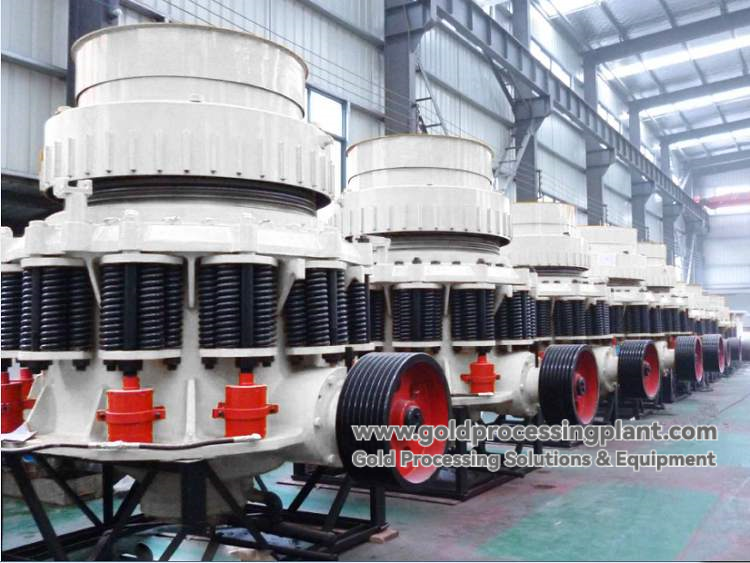
Gold CIL processing line - cone crusher
Carbon-in-Leach Process: Stage-by-Stage Breakdown
The gold CIL process is divided into six stages. Below is a stage-by-stage breakdown of what each operation does, the equipment involved and the control points — the basis for subsequent CIL equipment selection and cost estimation.
Ore Crushing: More Crushing, Less Grinding
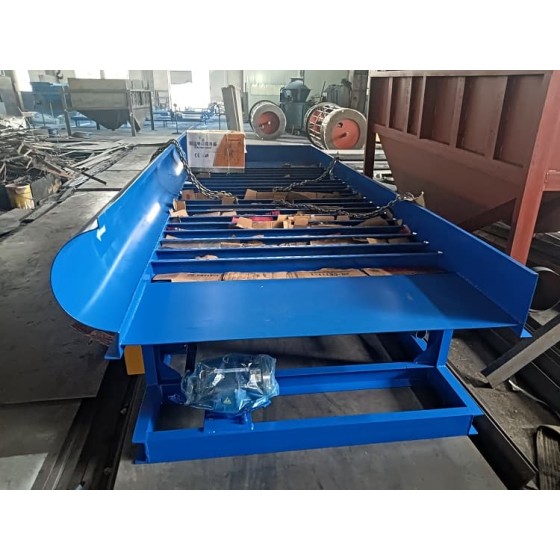
- Primary crushing: run-of-mine ore is fed evenly by a vibrating feeder into a jaw crusher for primary crushing, reducing large lumps to a size suitable for secondary and tertiary crushing.
- Secondary and tertiary crushing: crushed ore is conveyed to a cone crusher and reduced further to grinding feed size. The crushing stage follows the “more crushing, less grinding” principle — do more work in crushing, consume less power in grinding. This is the first gate for cutting energy consumption in a gold CIL processing line.
Grinding and Classification: Liberating Gold
- Ball mill: crushed ore enters the ball mill and is ground to fine powder under steel ball action, liberating gold from gangue.
- Closed-circuit classification: mill discharge goes to a hydrocyclone or spiral classifier; qualified fine overflow proceeds to the next stage, while coarse particles return to the mill for regrinding, forming a closed grinding circuit. Grind size is typically controlled at 85%–95% passing 200 mesh. Liberation is the prerequisite for recovery in gold cyanide leaching — if grind size is insufficient, gold remains locked in gangue and reagents cannot reach it.
Pulp Pretreatment: Trash Removal and Conditioning
- Trash removal: a trash screen removes wood chips and debris, preventing damage to pumps and valves and blocking of screens.
- Thickening and conditioning: a high-efficiency thickener optimizes pulp density to 40–45%, and lime is added to adjust pH to 10.5–11.5. The alkaline environment prevents cyanide volatilization loss — a key to safety and cost control in the gold CIL process.
Leaching and Adsorption: The CIL Core, Completed in the Same Tank
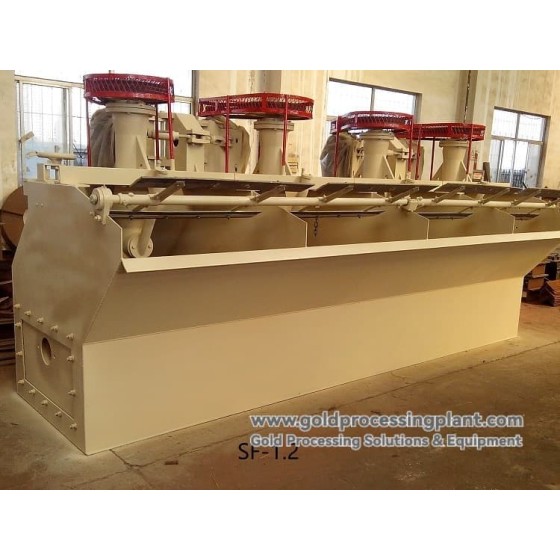
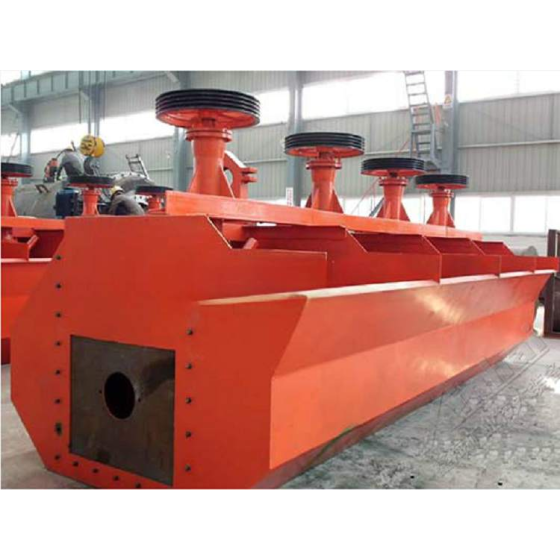
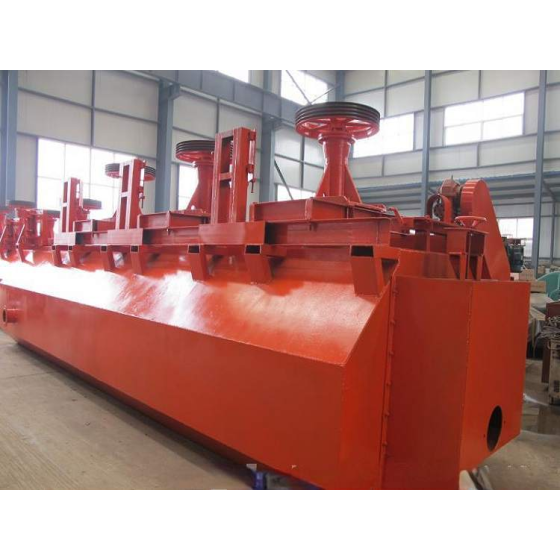
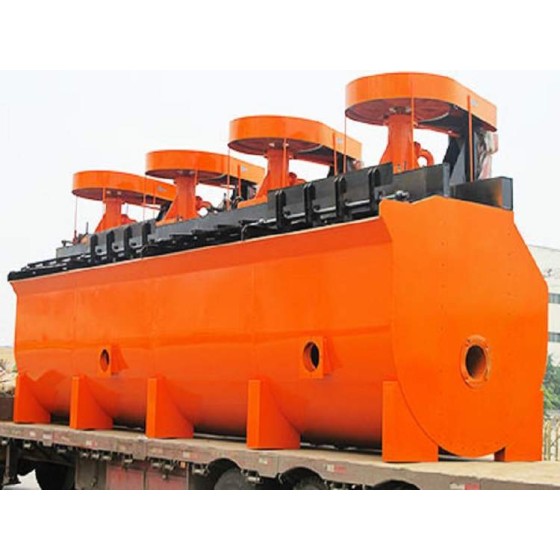
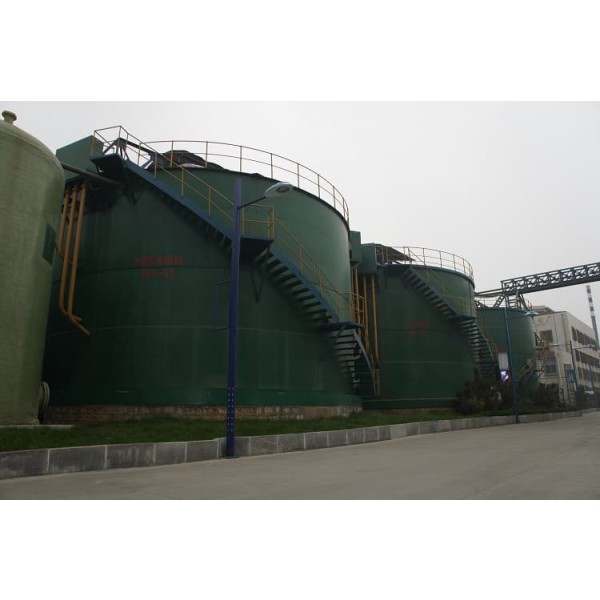
- Leach-adsorption tank train: multiple dual-impeller leach tanks in series, with cyanide and activated carbon added to the same tank. While cyanide dissolves gold, activated carbon directly adsorbs the dissolved gold-cyanide complex — leaching and adsorbing simultaneously, eliminating a separate adsorption tank train. This is the core difference between carbon-in-leach and leach-then-adsorb circuits.
- Counter-current carbon movement: fresh carbon is added at the last tank and loaded carbon is discharged from the first tank; pulp and carbon contact counter-currently, maintaining the adsorption gradient in the gold CIL process.
- Carbon screen system: a high-efficiency carbon screen after each leach-adsorption tank separates pulp from activated carbon and controls carbon loss — a key component of CIL leach-adsorption equipment.
Loaded Carbon Processing: Desorption, Electrowinning and Carbon Regeneration
The desorption and electrowinning system is key equipment in carbon-in-leach gold extraction. It comes in two configurations, both available from GoldProcessingPlant:
- Ambient-temperature, atmospheric-pressure desorption and electrowinning: relatively simple structure, lower investment, easy operation and maintenance — suited to small and medium plants or conventional easily desorbed ore.
- High-temperature, high-pressure desorption and electrowinning: gold is stripped from carbon with a cyanide-free desorbent at 150°C and 0.5 MPa; desorption time can be compressed to 10–12 hours, with more complete stripping — suited to large mines or hard-to-desorb ore. Gold deposits as sludge on the electrowinning cathode.
- Carbon regeneration: barren carbon after desorption is acid-washed and regenerated in a high-temperature rotary kiln, restoring activity before returning to the leach-adsorption system of the gold CIL processing plant, reducing new carbon make-up cost.
Smelting and Refining: From Gold Sludge to Gold Ingot
- Electrowon gold sludge is acid-washed to remove impurities, then melted in a medium-frequency smelting furnace at high temperature and cast into standard gold ingots — completing the carbon-in-leach gold extraction flow from ore to doré gold.
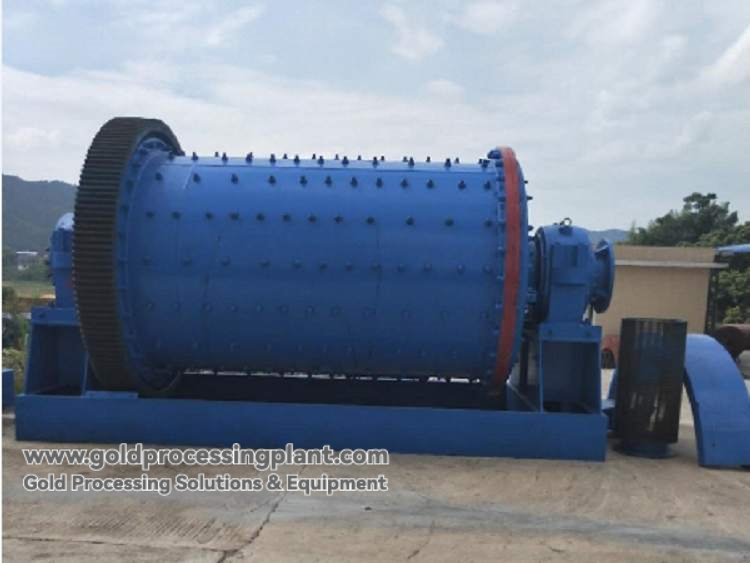
Gold CIL processing plant - ball mill
Key Parameter Control Points in the Gold CIL Process
Stable operation of a gold CIL processing plant depends on precise control of a handful of key parameters. Below are the core control points for carbon-in-leach process design and on-site operation:
Grind size85%–95% passing 200 mesh; determines gold liberation
Pulp density40–45%; affects leaching and adsorption efficiency
pH10.5–11.5 (adjusted with lime) to prevent cyanide volatilization
Leach-adsorption timeSet by ore leaching kinetics; multi-tank series ensures residence time
Carbon concentration in tanksMonitored on-line tank by tank to maintain the adsorption gradient
Desorption temperature/pressureAmbient or 150°C/0.5 MPa, depending on system type
Carbon regeneration temperatureHigh-temperature rotary kiln regeneration restores carbon activity
Barren carbon gradeKept low to reduce gold loss with carbon
Gold CIL parameters are matched to ore properties and target throughput — change the grind size and the leach-adsorption time must follow; raise the slime content and the reagent regime must be re-matched.
Technical Advantages of Carbon-in-Leach Gold Processing
The gold CIL processing plant is widely used in small-to-large plants. Its technical advantages concentrate in the following areas:
- Compact flowsheet: leaching and adsorption in the same tank eliminate a separate adsorption tank train, with fewer tanks and more controllable footprint and investment.
- Energy-saving and environmentally sound: enclosed design reduces cyanide volatilization; carbon regeneration cuts consumption; cyanide-free desorption is environmentally friendly.
- Configurable automation: automation can be configured to customer needs; control systems are not one-size-fits-all — basic instrumentation is standard, advanced control is added as required.
- Stable and reliable: equipment materials can be upgraded to corrosion-resistant stainless steel or lined with anti-corrosion coatings for acidic leach environments; the process is mature.
A note on recovery: Gold recovery in the CIL process is determined by the ore’s inherent characteristics (dissemination size, intergrowth relationships, occurrence state). GoldProcessingPlant does not promise absolute figures detached from reality. What we commit to is this: through rigorous process design, we will design the highest-recovery flowsheet achievable for your ore’s conditions, and pursue excellence in equipment selection and process control.
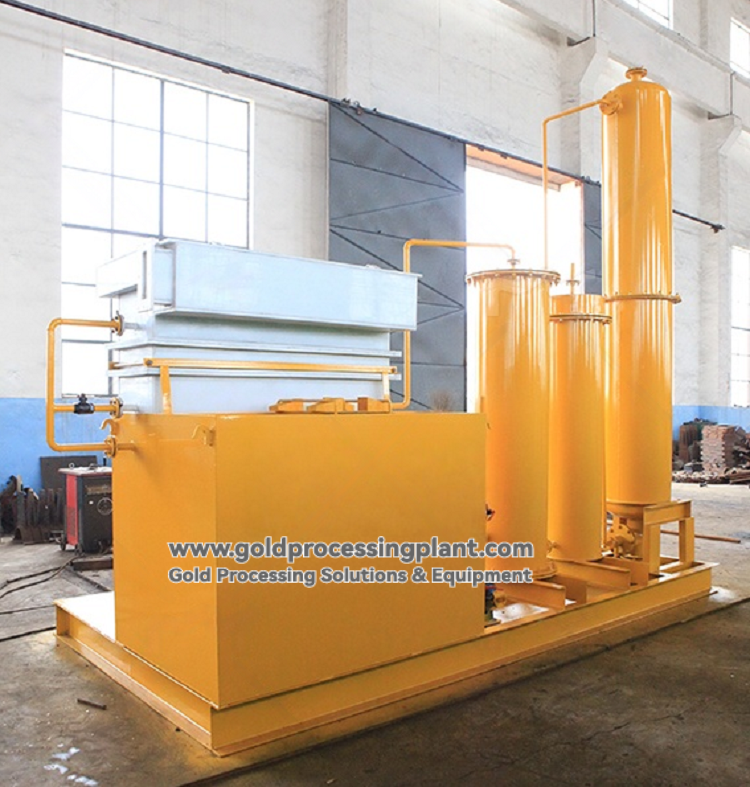
Gold carbon-in-leach CIL - ambient-temperature atmospheric-pressure desorption and electrowinning system
Key Equipment Configuration List for a Gold CIL Processing Plant
CIL equipment is configured across six systems by operation. The following is a reference list for a standard carbon-in-leach gold processing line; actual selection must be adjusted to throughput and ore characteristics:
| System |
Core Equipment |
Function |
| Crushing |
Jaw crusher, hydraulic cone crusher |
Primary + secondary/tertiary crushing; more crushing and less grinding cut grinding energy |
| Grinding |
Overflow ball mill, hydrocyclone cluster |
Closed-circuit grinding to 85%–95% passing 200 mesh |
| Pretreatment |
High-efficiency thickener, trash screen, lime addition system |
Condition pulp to 40–45% density and pH to 10.5–11.5 |
| Leaching and adsorption |
Dual-impeller leach-adsorption tanks, high-efficiency carbon screens, carbon transfer pumps |
Core of the gold CIL process; leaching and adsorption completed in the same tank |
| Desorption and electrowinning |
Ambient-temperature atmospheric-pressure desorption and electrowinning system / high-temperature high-pressure desorption column and electrowinning cell train |
Strips gold from loaded carbon; gold deposits as sludge. The two systems are chosen by plant scale and ore desorption difficulty |
| Carbon regeneration |
Acid wash tank, high-temperature regeneration kiln |
Restores barren carbon activity for reuse |
| Smelting |
Medium-frequency smelting furnace, gold ingot casting molds |
Smelting gold sludge into ingots |
CIL equipment supply note: All the CIL leach-adsorption equipment above is self-manufactured by GoldProcessingPlant, covering the full flow from crushing, grinding, classification, gravity, flotation and cyanidation. Single units or complete sets, configured to ore properties and process requirements — not to inventory. For special conditions (extreme cold, high altitude, severe corrosion, unstable power in Africa), non-standard customization of materials, motor power and structure is available.
Gold CIL Processing Plant Equipment Investment Reference
In a gold CIL processing plant, core equipment accounts for the bulk of investment. The price of complete main equipment for the carbon-in-leach process is directly tied to throughput. The following ranges are for preliminary investment estimation:
USD 200k – 3.8M
For roughly 30–3000 TPD (tonnes per day)
Reference price for complete main equipment, excluding civil works, installation and logistics
Reference prices for complete main equipment at several common throughput tiers make preliminary comparison easier:
5 TPH Gold CIL complete main equipment reference: about USD 350k–500k
10 TPH Gold CIL complete main equipment reference: about USD 550k–850k
20 TPH Gold CIL complete main equipment reference: about USD 900k–1.35M
These are reference ranges for complete main equipment only, excluding civil works, installation and logistics. Specific quotations depend on your ore type, process route, throughput, environmental policy and site conditions. Non-standard customization, complex ore, special conditions or more complete configurations will raise the price accordingly. Tell GoldProcessingPlant your daily throughput, ore type and site conditions, and we can directly issue an equipment configuration list and quotation for that throughput, making investment comparison fast.
The main variables affecting gold CIL plant investment include: throughput scale, grind size requirements, number of leach-adsorption tanks and residence time, desorption and electrowinning system selection (ambient or high-temperature high-pressure), carbon regeneration configuration, and civil works and power infrastructure conditions. Two 500 TPD gold CIL processing lines — one on oxide ore, one on arsenic-bearing refractory ore — can differ widely in equipment configuration and investment. A quotation based on actual configuration is the only one worth comparing.
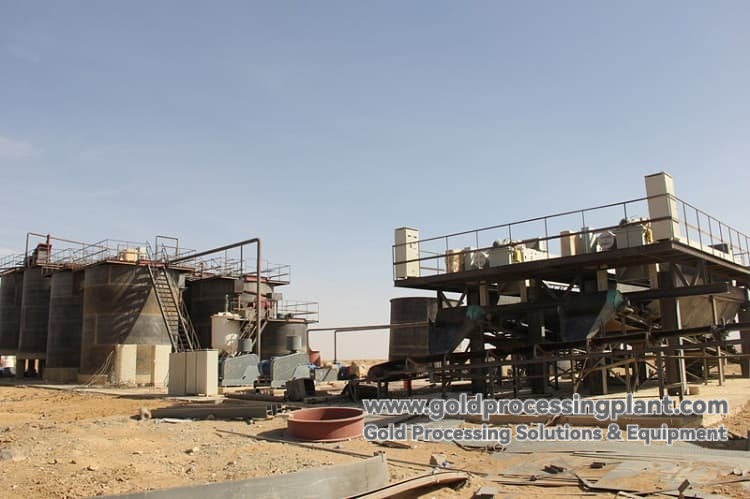
Gold CIL process - leach-adsorption tank train
Why Choose GoldProcessingPlant for Your CIL Project
Gold processing is not short of equipment; what it lacks is a team that understands ore, understands process, understands equipment, and can mesh all three together. On carbon-in-leach gold projects, what sets GoldProcessingPlant apart is:
1
Custom process design
Every gold CIL process scheme is derived from ore properties, not copied from peer drawings. Quartz vein versus Carlin type, fracture gold versus locked gold — grind size and reagent regime are completely different.
2
Self-owned manufacturing, process and hardware meshed
Crushers, ball mills, leach-adsorption tanks and desorption-electrowinning systems are all self-manufactured. Process and mechanical engineers work in the same team, and CIL equipment is built strictly to process drawings — avoiding “drawings and equipment don’t match”.
3
From “selling equipment” to “configuring to your ore”
Is your ore oxide or sulfide, is gold free or locked, how fast does it leach — every equipment selection decision in the gold CIL process has an ore-property basis.
4
Clear delivery boundary, controllable labor cost
Under EPC, process design, equipment manufacturing, installation guidance and commissioning training are handled by us to the end; civil works and general installation labor are organized locally by the customer, with our engineers providing technical guidance.
5
Global project experience, cross-border delivery that lands
Projects cover Africa, South America, Central Asia and Southeast Asia, with capacities of 30–5000 TPD. For unstable power in Africa, we add diesel generator sets; where local worker skill is limited, we train hands-on.
6
Ongoing technical support, built to last and run well
Commissioning and reaching design capacity is only the beginning. We provide systematic training to ensure your team can independently adjust reagent regime, grind size and leaching parameters, and we provide long-term spare parts and process optimization support.
GoldProcessingPlant CIL Project Cases and Coverage
GoldProcessingPlant’s CIL equipment and solutions have been delivered to gold-producing regions across Africa, South America, Central Asia and Southeast Asia, with project capacities from 30 TPD to 5000 TPD and ore types ranging from simple quartz vein to arsenic-bearing and carbonaceous refractory ore.
Africa: Ghana, Mali, Tanzania, Sudan
Complete plant solutions delivered, covering hard rock gold, placer gold and refractory ore, with diesel generator packages for unstable local power.
South America: Peru, Colombia
Multiple hard rock gold plant projects, with capacities from small to large, ore types mainly oxide and sulfide-hosted gold.
Central Asia: Russia, Kazakhstan
Large placer gold plant construction, adapted to extreme cold, with equipment materials and motor power customized for low-temperature environments.
Southeast Asia and major gold regions in China
Covering quartz vein and altered rock gold, plus tailings reprocessing projects, with gravity, flotation, cyanidation or combined processes matched to occurrence state.
For your specific ore type and region, GoldProcessingPlant can reference the process approach of similar cases during discussion — but the final scheme is based on your actual ore samples and site conditions, never a copy of another project’s existing drawings.
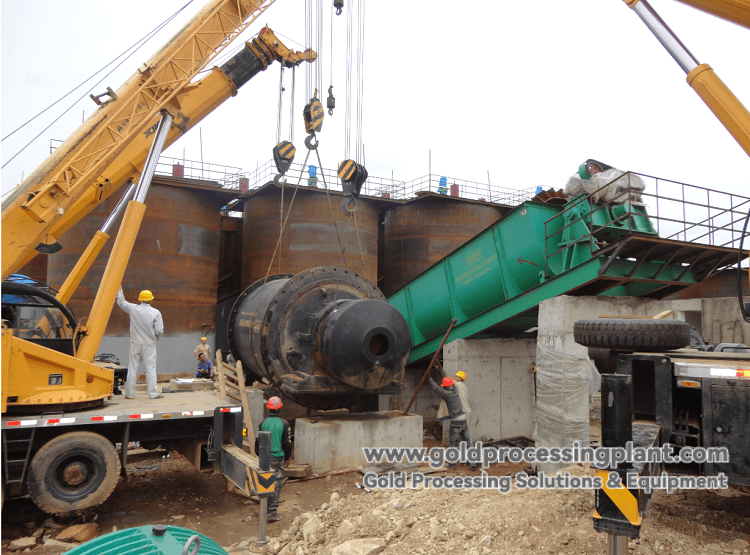
Gold CIL carbon-in-leach plant equipment installation site
Gold CIL Plant Construction and Delivery Process
A gold CIL processing plant typically goes through eight stages from ore data to final gold pour. Understanding what happens at each stage and what the customer needs to provide helps with advance planning and avoids detours.
| Stage |
Core Work |
Customer Cooperation |
| Needs communication and preliminary assessment |
Understand ore type, grade, throughput, site conditions; preliminary feasibility assessment |
Provide basic mine data or assay results |
| Process design and equipment selection quotation |
Determine the CIL process route; issue equipment list, selection scheme and budget quotation |
Confirm site conditions; provide process and target requirements |
| Scheme confirmation and commercial contract |
Confirm flowsheet, equipment, delivery boundary, schedule and responsibility split |
Confirm final scheme and budget |
| Engineering drawing design |
Plant layout, equipment foundation, arrangement, piping, civil works condition drawings |
Confirm site boundary conditions; coordinate with civil contractor |
| Equipment manufacturing and supply |
Core equipment production, auxiliary procurement and factory testing |
Pay progress payments; advance “three connections and one leveling” and plant foundation |
| Logistics and shipping |
Packing, shipping, sea/land transport, documentation and customs clearance, milestone tracking |
Provide receiving information; assist customs clearance; arrange unloading and warehousing |
| On-site construction guidance and commissioning |
Guide installation, single-machine commissioning, loaded linked trial run |
Organize civil works and local installation workers; provide lifting and commissioning conditions |
| Personnel training and after-sales support |
Operator training, acceptance handover, spare parts supply, long-term technical support |
Arrange operations and maintenance personnel to participate throughout |
A typical gold CIL project takes about 8–15 months from process design to final commissioning. Key milestones: process design 7–15 days → engineering design 20–30 days → equipment manufacturing 60–120 days → logistics 30–60 days → installation and commissioning 60–150 days. Reasonable overlap between stages can compress the total schedule; overseas projects need extra customs clearance buffer.
EPC Turnkey Delivery Boundary for a Gold CIL Plant: Who Does What, Agreed Up Front
GoldProcessingPlant provides EPC turnkey service for gold CIL projects: from process design, engineering drawings and core equipment manufacturing to on-site installation guidance, linked commissioning and personnel training, all coordinated by us — the customer deals with one team. But a mineral processing project involves civil works, equipment, installation and commissioning, and different stages have completely different requirements for qualifications, labor cost and site conditions. If “who does what” is not spelled out before the contract is signed, disputes over “waiting for workers” and “passing the buck with extra charges” are almost inevitable later.
So GoldProcessingPlant’s EPC service follows a core principle: what we are responsible for, we see through to the end; what the customer needs to cooperate on, we clarify in advance. The boundary is laid out item by item below.
What GoldProcessingPlant Is Responsible For
- Process technology and technical scheme: ore property analysis, flowsheet determination, reagent regime, with a scheme document including equipment selection and preliminary quotation.
- Engineering design and drawings: site planning, equipment layout, civil works condition drawings and other core design drawings, with complete technical clarification.
- Core equipment manufacturing and auxiliary supply: production of leach-adsorption tanks, desorption-electrowinning systems and other core equipment to drawings, plus coordinated supply of pumps, piping, electrical control and other auxiliaries to ensure hardware and process are meshed.
- On-site installation technical guidance: engineers dispatched to site to guide equipment positioning, piping connection, and electrical and instrument installation.
- Linked commissioning and personnel training: lead single-machine commissioning and full-process loaded linked trial run, optimize reagent regime, grind size and leaching parameters until design capacity is reached, and train the customer’s team.
- After-sales and spare parts supply: responsible for equipment quality during the warranty period, with long-term spare parts supply and process optimization advice.
What the Customer Is Responsible For
- Civil works: organize civil works according to our civil works condition drawings. If complete building structure drawings (plant structure, foundation reinforcement, etc.) are involved, they must be issued by a locally qualified design institute.
- Local installation labor organization: equipment positioning, pipe welding, cable laying and other specific installation work are done by workers recruited locally by the customer. Our engineers guide on site how to install; the customer organizes the people to do it.
- Site basic conditions: responsible for site “three connections and one leveling” (water, power, access and site leveling), plus lifting equipment and water, power and materials needed for commissioning.
- Local compliance permits: responsible for local environmental, safety and construction permits.
Why is this division more cost-effective? If we sent a large number of Chinese workers overseas or to another site, the cost of flights, visas, accommodation and high daily wages would be staggering. The customer recruits ordinary installation workers locally, and we provide technical engineers for guidance — saving at least half the labor cost. Local workers also communicate more easily and can flexibly follow the on-site civil works schedule, avoiding delays from waiting for visas or flights.
If the customer genuinely cannot find a construction team locally, or wants GoldProcessingPlant to take on civil works and installation labor as well, this can be discussed separately based on the actual project location, with the scope and cost agreed separately in the contract.
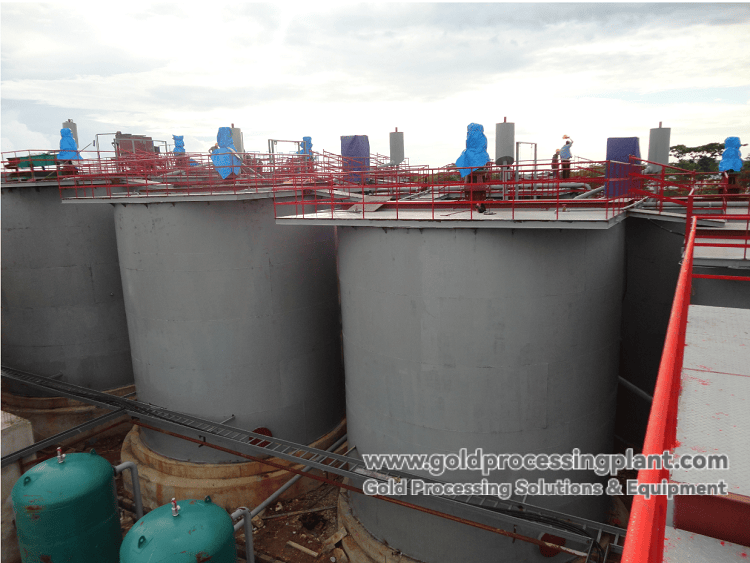
Gold CIL carbon-in-leach plant project site
Related Gold Processing Solutions
Beyond the gold CIL process, GoldProcessingPlant’s solution library covers hard rock gold, placer gold, refractory ore and tailings reprocessing, so we can match experience from similar scenarios to your ore type:
Frequently Asked Questions About Gold CIL Processing
+What is the difference between gold CIL and CIP? ▼
CIL completes leaching and adsorption in the same tank, leaching and adsorbing simultaneously, with a more compact flowsheet and no separate adsorption tank train — suited to small-to-large plants. CIP completes leaching first and then moves to adsorption tanks, with leaching and adsorption in separate tanks, giving more thorough leaching time — suited to ore with fast leaching kinetics that needs stage control, commonly used in large plants. Final selection depends on leach kinetics data from ore sample testing.
+What ores is carbon-in-leach gold extraction suitable for? ▼
The gold CIL process suits oxide gold ore with fast leaching kinetics, fine-grained flotation gold concentrate, gravity tailings containing free gold, and conventional hard rock gold via whole-ore cyanidation. Sulfide ore, carbonaceous ore and finely disseminated ore need a pretreatment assessment first and cannot be put through CIL directly.
+My ore contains arsenic/carbon — can I use the gold CIL process? ▼
Arsenic-bearing and carbonaceous ore are refractory; conventional cyanide leaching recovery is typically only 20–50%. Pretreatment is needed first (flotation to enrich gold-bearing sulfides, then roasting/bio-oxidation/pressure oxidation, or passivation of carbonaceous matter to eliminate preg-robbing), followed by leaching. GoldProcessingPlant has proprietary reagent pretreatment schemes; ore sample process validation is recommended first.
+How much does a gold CIL processing plant cost? ▼
Reference price for complete main equipment of a gold CIL processing plant is roughly USD 200k–3.8M, for about 30–3000 TPD, excluding civil works, installation, logistics and auxiliaries. Specific quotations depend on ore properties and site conditions, quoted to actual configuration — no one-price-fits-all.
+How long does it take from contract signing to commissioning? ▼
A typical gold CIL project takes about 8–15 months from process design to final commissioning. Key milestones: process design 7–15 days → engineering design 20–30 days → equipment manufacturing 60–120 days → logistics 30–60 days → installation and commissioning 60–150 days. Reasonable overlap can compress the total; overseas projects need extra customs clearance buffer.
+What recovery rate can the gold CIL process achieve? ▼
CIL recovery is determined by the ore’s inherent characteristics (dissemination size, intergrowth relationships, occurrence state). Where ore properties are suitable, an oxide gold project (feed grade 3.5 g/t) achieved 92% total gold recovery, but that is that project’s actual data, not a committed target for all ores. GoldProcessingPlant does not promise absolute figures detached from reality; we commit to designing the highest-recovery flowsheet achievable for your ore’s conditions through rigorous process design.
+Why is pH adjusted in pulp pretreatment? ▼
Gold cyanide leaching must run under alkaline conditions (pH 10.5–11.5). Adding lime to adjust pH primarily prevents cyanide volatilization loss, safeguarding operational safety and reagent cost control. If pH control is inadequate, cyanide consumption rises noticeably and leaching performance suffers.
+Why does activated carbon move counter-currently between CIL tanks? ▼
Counter-current adsorption is a key design in carbon-in-leach gold extraction: fresh carbon is added at the last tank, loaded carbon is discharged from the first tank, and pulp contacts carbon counter-currently. Carbon therefore always adsorbs in the high-concentration zone, giving higher adsorption efficiency and more stable loaded carbon grade. The carbon screen separates pulp from activated carbon and controls carbon loss.
+How do I choose between ambient and high-temperature high-pressure desorption and electrowinning? ▼
Ambient-temperature atmospheric-pressure systems are structurally simple, lower in investment and easy to operate and maintain — suited to small and medium plants or conventional easily desorbed ore. High-temperature high-pressure systems desorb at 150°C and 0.5 MPa, compressing time to 10–12 hours with more complete stripping — suited to large mines or hard-to-desorb ore. Choose by plant scale, loaded carbon grade and budget, not by equipment unit price alone.
+Does activated carbon wear out in the CIL process, and what is carbon regeneration for? ▼
Activated carbon wears during agitation, transfer and carbon screening, so new carbon must be added periodically. Carbon regeneration restores the adsorption activity of barren carbon, reducing new carbon make-up and directly lowering operating cost of the gold CIL processing line. The regeneration system includes acid washing and a high-temperature rotary kiln; carbon with good regenerated activity can be recycled for multiple rounds.
+What are the power and site requirements for a gold CIL plant? ▼
Tank aeration, desorption and electrowinning, and carbon regeneration in the gold CIL process are all power-consuming; power stability directly affects production continuity. In areas with unstable power, diesel generator sets are recommended as main or backup power. The site must also meet “three connections and one leveling” (water, power, access and site leveling); civil works condition drawings are provided by us.
+My ore properties fluctuate widely — can the CIL process adapt? ▼
Scheme design accounts for the ore fluctuation range and operational tolerance, leaving adjustment margin. If fluctuation exceeds a certain range, operating parameters or part of the process need adjustment. The specific adaptation boundary is assessed during process validation through comparative testing of different ore samples, and explained clearly to your team during training.
+Can you do process design only, without buying equipment? ▼
Yes. Process design, equipment selection and quotation, engineering drawings, single equipment, complete equipment sets, installation and commissioning guidance, and EPC turnkey — choose as needed, no mandatory bundling. The process design fee and drawing advance paid up front can be fully deducted from the equipment payment when a subsequent equipment or EPC contract is signed.
+How are tailings and cyanide-bearing wastewater treated in a gold CIL plant? ▼
Cyanide-bearing wastewater must be treated to compliance before reuse or discharge; tailings can use dry stacking to reduce footprint and environmental risk. We incorporate environmental systems into scheme design from the start, providing cyanide wastewater treatment systems and dry tailings stacking schemes to avoid rework later.
+How does CIL work together with heap leaching and zinc precipitation? ▼
Heap leaching suits low-grade oxide ore, and pregnant solution can be recovered via activated carbon columns or zinc precipitation. CIL is an agitated leach process with higher throughput and recovery. Zinc precipitation mainly treats clarified pregnant solution, suited to high-silver or poor carbon adsorption scenarios. The specific combination depends on ore grade, throughput and product scheme, and economics must be confirmed through process validation.
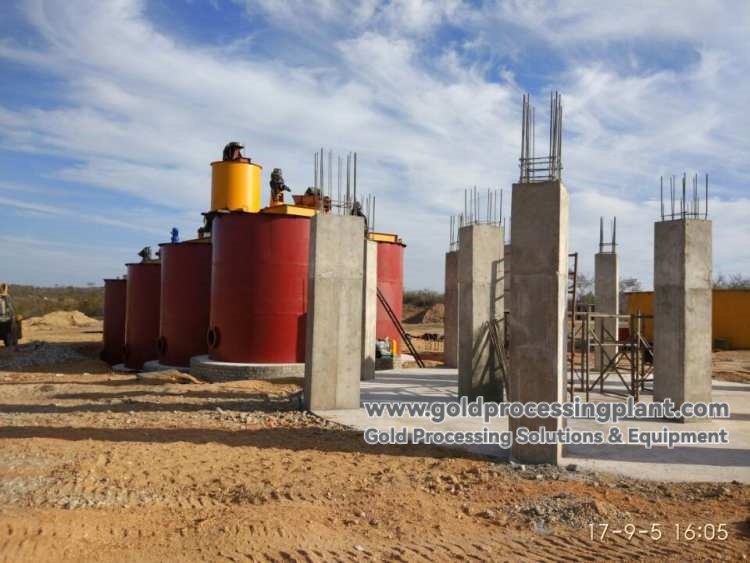
Overseas gold CIL plant project site
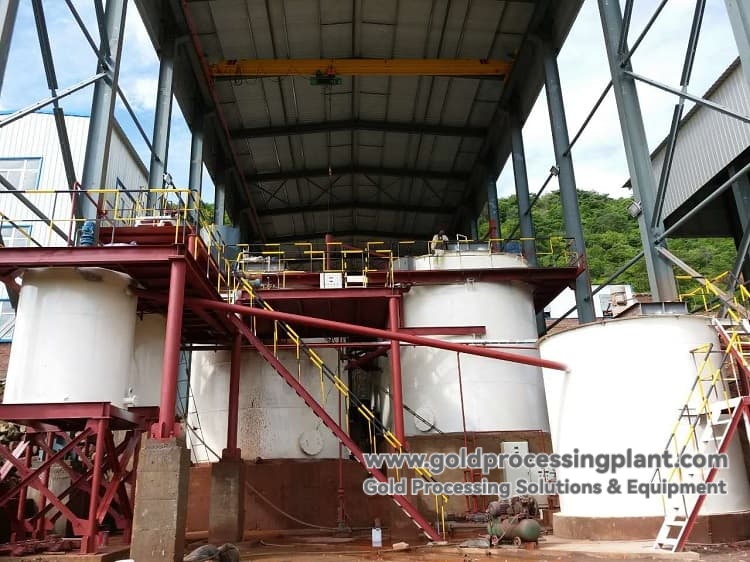
Gold ore CIL process
How to Select and Implement a Gold CIL Processing Plant
On the same leach tank, performance on oxide ore and arsenic-bearing ore can differ widely — the difference lies in whether the leach-adsorption rhythm matches the ore characteristics. The gold CIL process completes leaching and adsorption in the same tank, giving a more compact flowsheet and fewer tanks, but grind size, pulp density, pH and in-tank carbon concentration still need to be matched to ore properties — every link affects final loaded carbon grade and recovery.
GoldProcessingPlant’s logic for gold CIL projects is simple: understand the ore first, then configure the equipment. Tell GoldProcessingPlant your daily throughput, ore type and site conditions, and we can directly issue an equipment configuration list and quotation for that throughput, making investment comparison fast. From ore data to final commissioning, a typical gold CIL processing line takes 8–15 months; single units, complete sets and EPC are available as needed, and the upfront process design fee is deductible in subsequent cooperation.
If you are evaluating the feasibility of a gold CIL processing plant, or your existing CIL plant has recovery that won’t come up or tailings grade that runs high, talk to the GoldProcessingPlant engineering team. Tell us your ore type, throughput and site conditions, and we will match the gold cyanide leaching process route, equipment configuration and investment estimate based on project experience.
From Gold CIL Process Scheme to Equipment Quotation, in One Step
GoldProcessingPlant provides customized gold CIL process solutions to gold mining customers worldwide — single equipment, complete sets, engineering drawings, installation and commissioning guidance, and EPC turnkey, combined as needed, with no mandatory bundling.
Contact us and tell us your daily throughput, ore type and site conditions; the GoldProcessingPlant team will issue a configuration quotation with a gold CIL equipment list and budget for you.
GoldProcessingPlant — together with you, to create greater value from every ton of gold ore.