Gold CIP Processing Plant & Line: Carbon-in-Pulp Gold Recovery & Equipment
The Gold CIP (Carbon-in-Pulp) process is a mainstream gold recovery method that directly uses activated carbon to adsorb and recover gold from cyanide pulp. Why can the same leaching tank achieve vastly different recovery rates when used on oxide ores versus arsenic-bearing ores? The problem often lies not in the equipment, but in whether the gold cyanidation leaching process route and equipment configuration are matched to the ore characteristics. This article breaks down the Carbon-in-Pulp processing line from process principles, core stages, parameter control, equipment configuration, to investment components, helping you clearly see the Gold CIP process route, equipment list, and budget before building or upgrading a plant.
What is the Gold CIP Process?
The Carbon-in-Pulp (CIP) method in gold processing is a gold extraction process that directly uses activated carbon to adsorb and recover gold from cyanide pulp. After the pulp completes cyanide leaching, it enters the adsorption tank where activated carbon is added. The gold-cyanide complex is adsorbed and enriched by the carbon. The loaded carbon then undergoes elution, electrowinning, and smelting to produce doré bullion. In the entire Carbon-in-Pulp process, leaching and adsorption are carried out in separate tanks, allowing for more thorough leaching time and a more stable adsorption gradient. It is suitable for ores with fast leaching speeds that require staged control and is a common process for medium to large-scale gold processing plants.
A complete Gold CIP production line includes: crushing → grinding & classification → thickening & conditioning → cyanide leaching → activated carbon counter-current adsorption → loaded carbon elution & electrowinning → carbon regeneration → gold sludge smelting. The process parameters and gold leaching & adsorption equipment configuration at each stage of the Gold CIP process directly determine the final gold recovery rate and operating costs. The reason the CIP Carbon-in-Pulp process is widespread in medium to large plants is that it separates the control of leaching and adsorption. Leaching time can be maximized, the adsorption gradient can be stably maintained, and operational flexibility is greater than processes where leaching and adsorption occur simultaneously.
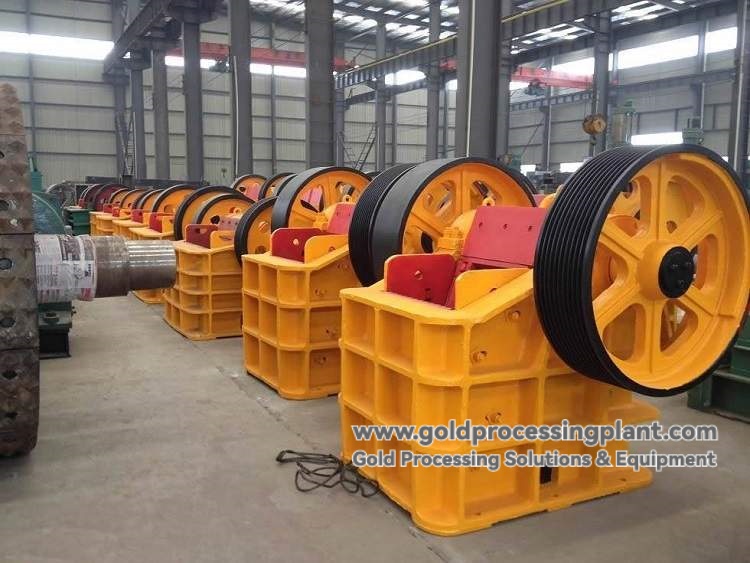
Gold CIP Processing Line - Jaw Crusher
GoldProcessingPlant's Company Strength & Manufacturing Base
Whether a Gold CIP processing plant can be realized ultimately depends on the process design and equipment manufacturing capabilities behind it. GoldProcessingPlant is a full-process service provider for gold mining, integrating process design, engineering design, equipment manufacturing, installation, and commissioning. We have two proprietary manufacturing bases and technical teams in Shandong and Jiangxi, China.
20+ YearsExperience in gold ore processing design and equipment manufacturing
2 BasesOwn factories in Shandong and Jiangxi, covering approx. 50,000 m²
30–5000 TPDProject capacities covering hard rock, placer, refractory ore, and tailings retreatment
50+ CountriesEquipment export and international project delivery experience
GoldProcessingPlant strictly implements the ISO9001 quality management system. Our products are CE certified, with an annual production capacity of over 500 sets. The team consists of gold beneficiation engineers, metallurgical experts, mechanical designers, and a project management team. Core members have over 20 years of industry experience and have participated in multiple large-scale gold mining EPC projects.
Applicable Ore Types for Carbon-in-Pulp
The Gold CIP process is not a universal solution; ore properties determine its suitability. The following four types of ore are typical application scenarios for Carbon-in-Pulp processing:
- Oxide gold ores with high clay content — Clay minerals affect flotation selectivity; all-slime cyanidation CIP is more direct.
- Flotation gold concentrates with fine gold particle size — Concentrate is sent to the gold cyanidation leaching process and recovered by CIP adsorption.
- Gravity tailings containing free gold — After gravity recovery of coarse gold, fine gold in the tailings is recovered as a safety net by the CIP process.
- Conventional hard rock gold ore all-slime cyanidation — Simple ore properties, free of interfering elements.
Selection Tip: For ores where gold is mainly in free form, gangue is simple, and no interfering elements are present, the all-slime cyanidation route is more direct. For sulfide ores, carbon-bearing ores, arsenic-bearing ores, and micro-fine encapsulated ores, the necessity of pretreatment must be evaluated first; the Gold CIP process cannot be directly applied. When ore properties vary greatly, it is recommended to confirm the process route based on ore sample data to avoid selection deviations.
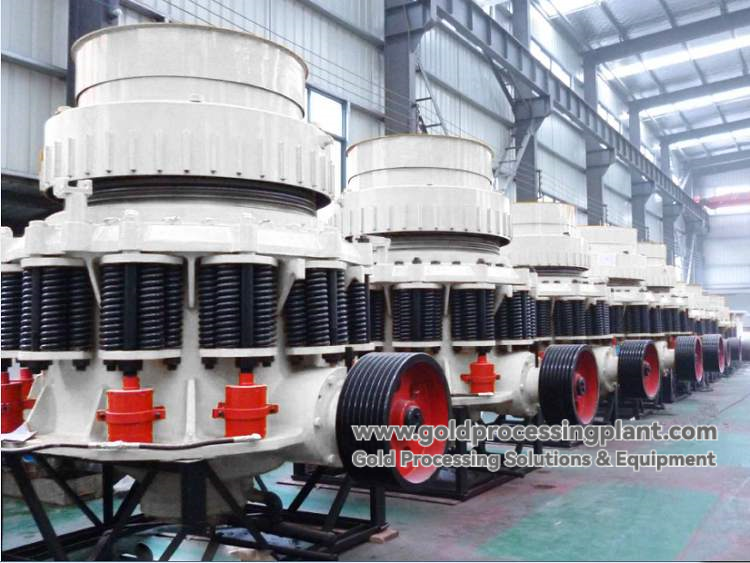
Gold CIP Processing Line - Cone Crusher
Carbon-in-Pulp CIP Process Breakdown
The Gold CIP process is divided into six stages. Below is a step-by-step breakdown of the function, equipment, and control points of each stage in the Carbon-in-Pulp process, which is also the basis for subsequent Gold CIP equipment selection and investment estimation.
Ore Crushing: More Crushing, Less Grinding
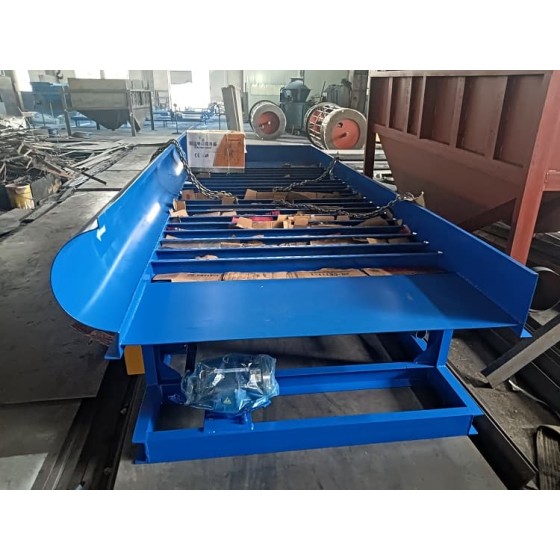
- Primary Crushing: Run-of-mine ore is uniformly fed into a jaw crusher via a vibrating feeder for primary crushing, reducing large ore blocks to a size suitable for secondary and fine crushing.
- Secondary & Fine Crushing: The primary crushed ore is sent via belt conveyor to a cone crusher for further reduction to meet grinding feed requirements. The crushing stage follows the "more crushing, less grinding" principle—doing more work in crushing and consuming less power in grinding, which is the first threshold for reducing energy consumption in a Gold CIP plant.
Grinding & Classification: Liberating Gold Particles
- Ball Mill: Crushed ore enters the ball mill and is ground into fine powder under the action of steel balls, liberating gold from the gangue.
- Closed-Circuit Classification: Mill discharge enters a hydrocyclone or spiral classifier; qualified fine overflow proceeds to the next stage, while coarse particles return to the mill for regrinding, forming closed-circuit grinding. Grind size is typically controlled at 85%-95% passing -200 mesh. Liberation degree is the prerequisite for gold cyanidation leaching recovery—if the grind size is insufficient, gold is encapsulated in gangue and the reagent cannot penetrate.
Slurry Pretreatment: Impurity Removal & Conditioning
- Impurity Removal: A trash screen removes wood chips and debris to prevent damage to pumps and valves and clogging of screens.
- Thickening & Conditioning: A high-efficiency thickener optimizes the slurry concentration to 40-45%, and lime is added to adjust the pH to 10.5-11.5. The alkaline environment prevents cyanide volatilization loss, which is key to safety and cost control in the Gold CIP process.
Leaching & Adsorption: The Core CIP Stage
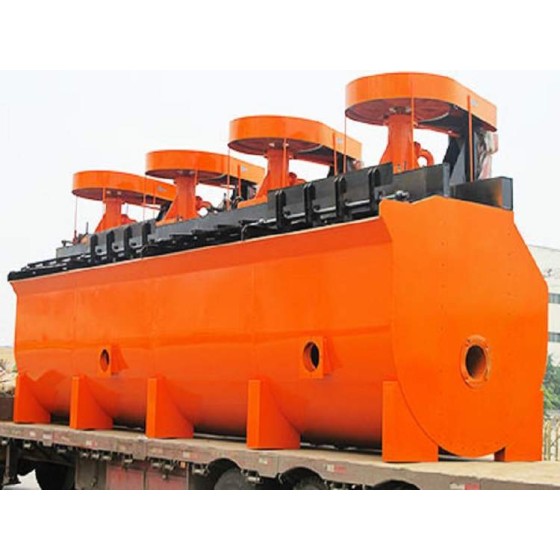
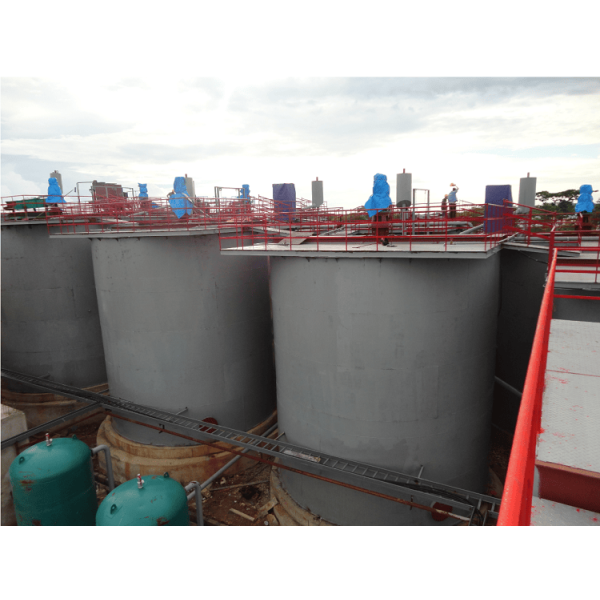
- Leaching Tank Train: 6-9 double-impeller leaching tanks in series, injected with oxygen-enriched air, allowing cyanide to fully react and dissolve gold, completing the dissolution stage of the gold cyanidation leaching process.
- Activated Carbon Adsorption: After leaching, the slurry enters the adsorption tank where high-quality coconut shell activated carbon is added. The carbon moves counter-currently between tanks—fresh carbon is added to the last tank, and loaded carbon is discharged from the first tank, ensuring the adsorption gradient of the Carbon-in-Pulp process.
- Carbon Separation Screen System: A high-efficiency carbon separation screen is installed after each adsorption tank to separate slurry from activated carbon and control carbon loss. This is a key component of gold leaching & adsorption equipment.
Loaded Carbon Processing: Elution, Electrowinning & Carbon Regeneration
The elution and electrowinning system is key equipment in the Carbon-in-Pulp process. It is divided into two configurations based on operating conditions; GoldProcessingPlant can supply both:
- Atmospheric Pressure Elution & Electrowinning System: Relatively simple equipment structure, lower investment, easy operation and maintenance; suitable for small to medium plants or conventional easily elutable ores.
- High-Temperature High-Pressure Elution & Electrowinning System: Uses a cyanide-free eluent to desorb gold from carbon at 150°C and 0.5MPa. Elution time can be compressed to 10-12 hours with more thorough desorption; suitable for large mines or difficult-to-elute ores. Gold deposits as sludge on the cathode of the electrowinning cell.
- Carbon Regeneration: The barren carbon after elution undergoes acid washing and high-temperature rotary kiln regeneration. After activity is restored, it returns to the Gold CIP plant adsorption system for recycling, reducing the cost of new carbon replenishment.
Smelting & Refining: From Gold Sludge to Gold Ingots
- After acid washing and impurity removal, the electrowon gold sludge is put into a medium-frequency smelting furnace for high-temperature smelting and cast into standard gold ingots, completing the full Carbon-in-Pulp process from ore to doré bullion.
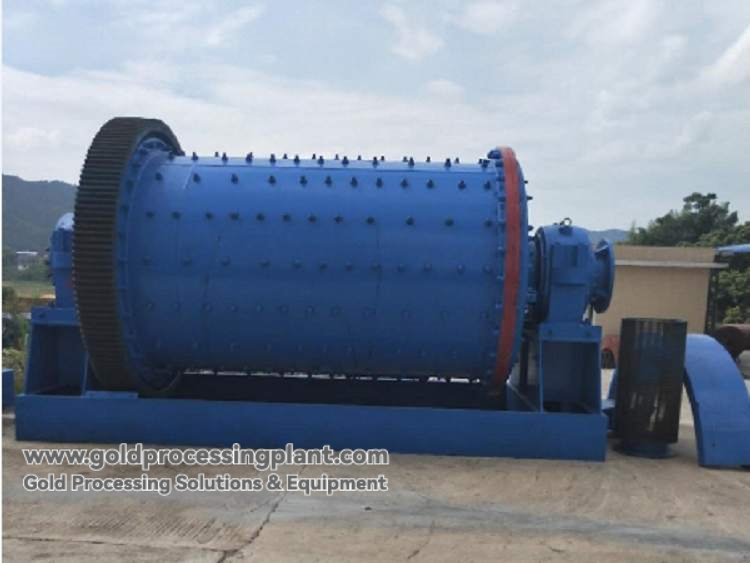
Gold CIP Processing Line - Ball Mill
Key Parameter Control Points for the Gold CIP Process
The stable operation of the Gold CIP plant relies on precise control of several key parameters. Below are the core control points for Carbon-in-Pulp process design and on-site operation:
Grind Size85%-95% passing -200 mesh, determining gold liberation degree
Slurry Density40-45%, affecting leaching and adsorption efficiency
pH Value10.5-11.5 (adjusted with lime), preventing cyanide volatilization
Leaching TimeDetermined by ore leaching speed; multi-tank series ensures residence time
Activated Carbon ConcentrationOnline monitoring of carbon density in tanks to maintain adsorption gradient
Elution Temp/PressureAtmospheric or 150°C/0.5MPa, depending on system type
Carbon Regeneration TempHigh-temperature rotary kiln regeneration to restore carbon activity
Barren Carbon GradeControlled at a low level to minimize gold loss with carbon
The parameters of the Gold CIP process are not set in isolation—if the grind size changes, the leaching time must be adjusted accordingly; if the ore mud content increases, the reagent regime must be re-matched. How these parameters are configured depends on your ore properties and target throughput.
Technical Advantages of the Carbon-in-Pulp CIP Process
The reason the Gold CIP process has become the mainstream choice for medium to large processing plants is that its technical advantages are concentrated in the following aspects:
- High Recovery Rate: Activated carbon counter-current adsorption; under suitable ore property conditions, the CIP process can achieve a relatively high recovery rate. Specific indicators are subject to ore sample test results.
- Energy Saving & Eco-Friendly: Closed design reduces cyanide volatilization; carbon regeneration recycling reduces consumption; cyanide-free elution is environmentally friendly.
- On-Demand Configuration: Automation control can be configured according to customer needs. On-site operating habits and staffing vary, so the control system is not one-size-fits-all; basic instruments are standard, and advanced controls are added as needed.
- Stable & Reliable: Equipment materials can be upgraded to corrosion-resistant stainless steel or lined with anti-corrosion coatings for acidic leaching environments; the process is mature.
Note on Recovery Rates: The recovery rate of the Gold CIP process is determined by the ore's inherent genes (dissemination size, intergrowth relationships, occurrence state). GoldProcessingPlant does not promise absolute figures detached from reality. What we promise is: through rigorous process design, we will design the highest recovery process achievable under your ore conditions, and strive for excellence in equipment selection and process control.
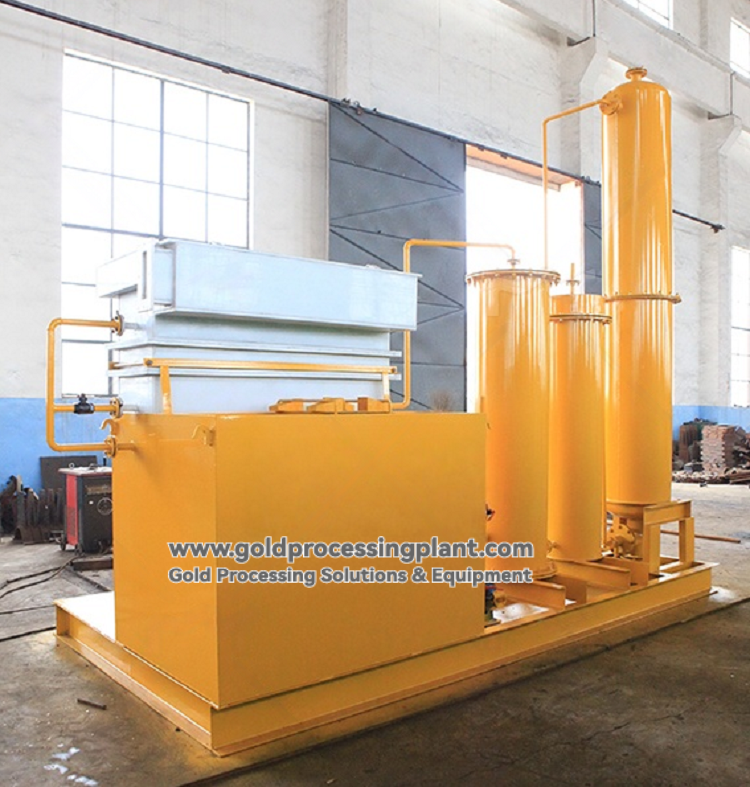
Carbon-in-Pulp (CIP) - Atmospheric Elution & Electrowinning System
Key Equipment Configuration List for Gold CIP Production Line
The equipment configuration of the Gold CIP plant is divided into six major systems according to process stages. Below is a reference for the standard Carbon-in-Pulp configuration. Actual selection needs to be adjusted according to capacity and ore characteristics:
| System |
Core Equipment |
Function Description |
| Crushing |
Jaw crusher, hydraulic cone crusher |
Primary + secondary/fine crushing, more crushing less grinding to reduce grinding energy consumption |
| Grinding |
Overflow ball mill, hydrocyclone cluster |
Closed-circuit grinding, controlling fineness to 85%-95% passing -200 mesh |
| Pretreatment |
High-efficiency thickener, trash screen, lime addition system |
Conditioning to 40-45% concentration, pH adjusted to 10.5-11.5 |
| Leaching & Adsorption |
Double-impeller leaching tanks, high-efficiency carbon separation screens, carbon lifters |
Core of the Gold CIP process; leaching and counter-current adsorption |
| Elution & Electrowinning |
Atmospheric elution & electrowinning system / High-temperature high-pressure elution column, electrowinning cell bank |
Gold is desorbed from loaded carbon and deposits as gold sludge; two systems are chosen based on processing scale and ore elution difficulty |
| Carbon Regeneration |
Acid washing tank, high-temperature regeneration kiln |
Restores activity of barren carbon for recycling |
| Smelting |
Medium-frequency smelting furnace, gold ingot casting mold |
Gold sludge smelting and casting |
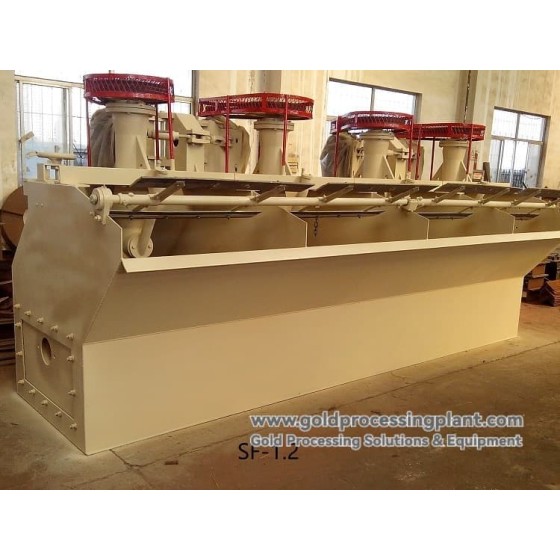
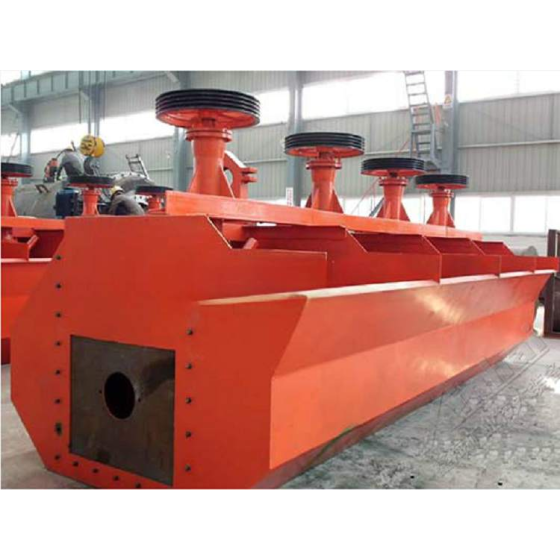
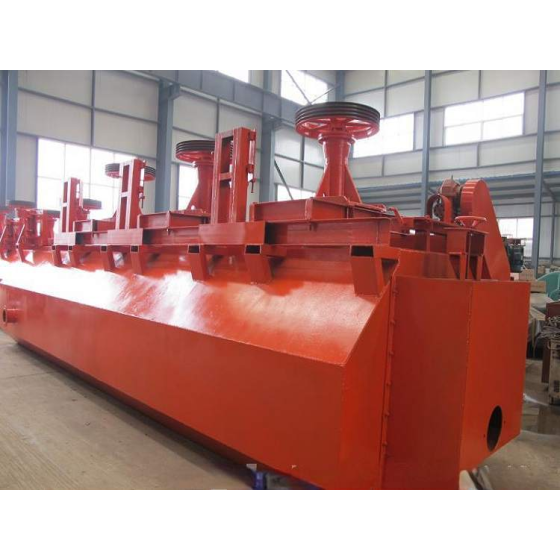
Gold CIP Equipment Supply Note: All the above gold leaching & adsorption equipment is manufactured in-house by GoldProcessingPlant, covering the entire process from crushing, grinding, classification, gravity separation, flotation, to cyanidation. We sell single units or complete sets, configured according to ore characteristics and process requirements, not by inventory. For special working conditions (extreme cold, high altitude, highly corrosive, unstable power in Africa), non-standard customization of materials, motor power, and structure is available.
Gold CIP Production Line Equipment Investment Reference
In the investment for a Gold CIP plant, core equipment accounts for the majority. The price of the complete main equipment set for the Gold CIP process is directly related to processing capacity. Below is an approximate range for preliminary investment estimation:
$200,000 – $3,800,000 USD
Corresponding to daily processing capacity of approx. 30 – 3,000 TPD
Above is a reference price for complete main equipment, excluding civil works, installation, and logistics
Reference prices for complete main equipment sets at several common capacity levels are as follows, for preliminary comparison:
100 TPD Gold CIP complete main equipment reference price approx. $350,000 – $500,000 USD
300 TPD Gold CIP complete main equipment reference price approx. $600,000 – $900,000 USD
500 TPD Gold CIP complete main equipment reference price approx. $900,000 – $1,350,000 USD
The above are only reference ranges for complete main equipment, excluding civil works, installation, and logistics. Specific quotations depend on your ore type, process route, processing capacity, whether a tailings dry stacking system is required, and site conditions. Non-standard customization, complex ores, special working conditions, or more complete configurations will increase prices accordingly. Tell GoldProcessingPlant your daily capacity, ore type, and site conditions, and we can directly issue an equipment configuration list and quotation for the corresponding capacity, making it easy for you to quickly compare investments.
The main variables affecting the investment in a Gold CIP plant include: processing capacity scale, grind size requirements, number of leaching tanks and residence time, elution & electrowinning system selection (atmospheric or high-temperature high-pressure), carbon regeneration configuration, and civil works and power infrastructure conditions. For the same 500 TPD Gold CIP plant, the equipment configuration and investment for oxide ore and arsenic-bearing refractory ore may differ significantly. Only a quotation based on actual configuration has reference value.
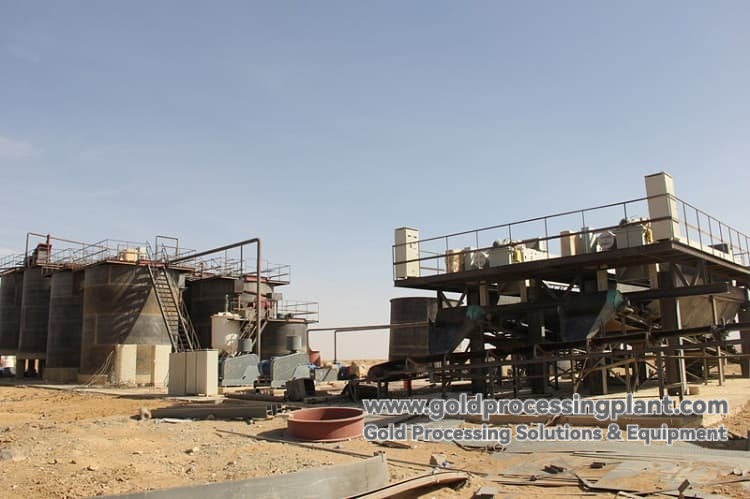
Gold CIP Process - Leaching & Adsorption Tank Train
Why Choose GoldProcessingPlant for Your Gold CIP Project
Gold processing is not short of equipment; what it lacks is a team that understands the ore, the process, the equipment, and how to mesh all three together. In Carbon-in-Pulp projects, GoldProcessingPlant stands out in the following ways:
1
Process Design First, No Templates
All Gold CIP process schemes are derived based on ore characteristics, not copied from peers' drawings. Quartz vein vs. Carlin-type, fracture gold vs. encapsulated gold—the grind size and reagent regime are completely different.
2
In-House Equipment Manufacturing, Process & Hardware Mesh
Crushers, ball mills, leaching tanks, and elution & electrowinning systems are all manufactured in-house. Process and mechanical engineers collaborate in the same team; Gold CIP equipment is manufactured strictly according to process drawings, avoiding "drawings not matching equipment."
3
From "Selling Equipment" to "Configuring Equipment by Ore"
Whether your ore is oxide or sulfide, whether gold is free or encapsulated, how fast the leaching speed is—every equipment selection decision in the Gold CIP plant is based on ore characteristics.
4
Clear Delivery Boundaries, Controllable Labor Costs
Under EPC mode, process design, equipment manufacturing, installation guidance, and commissioning training are managed by us end-to-end; civil works and general installation workers are organized locally by the customer, with our engineers providing technical guidance.
5
Global Project Experience, Deliverable Across Borders
Projects cover Africa, South America, Central Asia, and Southeast Asia, with capacities of 30-5000 TPD. For unstable power in Africa, we equip diesel generators; for limited local worker skills, we provide hands-on training.
6
Continuous Technical Support: Build It and Keep It Running
Commissioning and reaching design capacity are just the beginning. We provide systematic training to ensure your team can independently adjust the reagent regime, grind size, and leaching parameters, and provide long-term spare parts and process optimization support.
GoldProcessingPlant Gold CIP Project Cases & Coverage Areas
GoldProcessingPlant's Gold CIP equipment and solutions have been delivered to multiple gold mining areas in Africa, South America, Central Asia, and Southeast Asia, with project scales ranging from 30 TPD to 5000 TPD, and ore types from simple quartz vein to arsenic/carbon-bearing refractory ores.
Africa: Ghana, Mali, Tanzania, Sudan
Complete line solution delivery, covering hard rock, placer, and refractory ores; diesel generator solutions provided for local unstable power.
South America: Peru, Colombia
Multiple hard rock gold processing plant projects, with capacities from small to large, ore types mainly oxide and sulfide-hosted gold.
Central Asia: Russia, Kazakhstan
Large-scale placer gold processing plant construction, adapted to extreme cold conditions; equipment materials and motor power customized for low-temperature environments.
Southeast Asia & Major Domestic Gold Mining Areas
Covering quartz vein, altered rock type gold ores, and tailings retreatment projects; matching gravity, flotation, cyanidation, or combined processes according to ore occurrence state.
For your specific ore type and region, GoldProcessingPlant can refer to similar project process ideas during communication—but the final scheme is based on your actual ore samples and site conditions, not copying existing drawings from other projects.
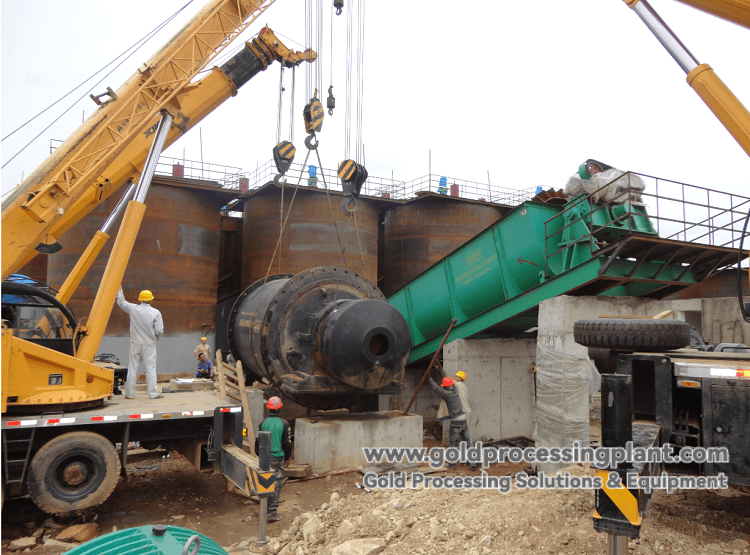
Gold CIP Plant Equipment Installation Site
Gold CIP Plant Construction & Delivery Process
A Gold CIP plant typically goes through eight stages from ore data to final gold production. Understanding the work content and customer cooperation items at each stage of the Gold CIP process helps with advance planning and avoiding detours.
| Stage |
Core Work |
Customer Cooperation |
| Requirement Communication & Preliminary Assessment |
Understand ore type, grade, capacity, site conditions; preliminary feasibility assessment |
Provide basic mine data or assay data |
| Process Design & Equipment Selection Quotation |
Determine CIP process route; issue equipment list, selection plan, and budget quotation |
Confirm site conditions; provide process and indicator requirements |
| Scheme Confirmation & Commercial Contract |
Confirm process, equipment, delivery boundaries, schedule, and responsibility division |
Confirm final scheme and budget |
| Engineering Drawing Design |
Plant layout plan, equipment foundation drawing, layout drawing, pipeline drawing, civil works condition drawing |
Confirm site boundary conditions; interface with civil construction contractor |
| Equipment Manufacturing & Supply |
Core equipment production, auxiliary equipment quality inspection and procurement, factory test run |
Pay progress payments; advance "three connections and one leveling" and plant foundation |
| Logistics & Shipping |
Packaging, shipping, sea/land transport, documentation & customs clearance, node tracking |
Provide receiving information; cooperate with customs clearance; arrange unloading and warehousing |
| On-Site Construction Guidance & Commissioning |
Guide installation, single-machine commissioning, full-load linkage trial run |
Organize civil works and local installation workers; provide lifting and commissioning conditions |
| Personnel Training & After-Sales Support |
Operation training, acceptance handover, spare parts supply, long-term technical support |
Arrange operation and maintenance personnel to participate throughout |
The overall cycle for a conventional Gold CIP project from process design to final production is usually around 8-15 months. Key milestones: process design 7-15 days → engineering design 20-30 days → equipment manufacturing 60-120 days → logistics 30-60 days → installation and commissioning 60-150 days. Reasonable overlapping of stages can compress the total duration; overseas projects need additional buffer for customs clearance.
Gold CIP Plant EPC Turnkey Delivery Boundaries: Who Does What, Clarified in Advance
GoldProcessingPlant provides EPC turnkey services for Gold CIP projects: from process design, engineering drawings, and core equipment manufacturing to on-site installation guidance, linkage commissioning, and personnel training, we coordinate and manage it all. The customer only needs to interface with one team. However, mineral processing engineering involves civil works, equipment, installation, and commissioning. Different stages have completely different requirements for qualifications, labor costs, and site conditions. If "who does what" is not clarified before signing the contract, it is very easy to encounter disputes later such as "stopping work waiting for workers" or "passing the buck and demanding extra money."
Therefore, the core principle of GoldProcessingPlant's EPC service is: what we are responsible for, we manage end-to-end; what the customer needs to cooperate with, we clarify in advance. Here are the boundaries listed item by item.
What GoldProcessingPlant is Responsible For
- Process Technology & Technical Solution: Ore characteristic analysis, process route determination, reagent regime, and issuance of a solution document with equipment selection and preliminary quotation.
- Engineering Design & Drawings: Site layout plan, equipment arrangement drawing, civil works condition drawing, and other core design drawings, along with complete technical clarification.
- Core Equipment Manufacturing & Ancillary Supply: Production of leaching tanks, elution & electrowinning systems, and other core equipment according to drawings, along with coordinated supply of pumps, pipes, electrical controls, and other auxiliary materials to ensure hardware and process mesh.
- On-site Installation Technical Guidance: Dispatch engineers to the site to guide equipment positioning, pipeline connection, and electrical instrument installation.
- Linkage Commissioning & Personnel Training: Lead single-machine commissioning and full-process load linkage trial runs, optimize reagent regime, grind size, and leaching parameters until standards and capacity are reached, and train the customer's team.
- After-sales & Spare Parts Supply: Responsible for equipment quality during the warranty period, long-term spare parts supply, and process optimization suggestions.
What the Customer is Responsible For
- Civil Works: Organize civil construction according to the civil works condition drawings we provide. If complete architectural structure construction drawings (plant structure, foundation reinforcement, etc.) are involved, they need to be issued by a qualified local design institute designated by the customer.
- Local Installation Worker Organization: Specific installation work such as equipment positioning, pipeline welding, and cable laying is completed by workers recruited locally by the customer. Our engineers guide on-site how to install; the customer is responsible for organizing people to install.
- Site Basic Conditions: Responsible for on-site "three connections and one leveling" (water, electricity, roads, site leveling), as well as lifting equipment, water, electricity, and material preparation required for commissioning.
- Local Compliance Procedures: Responsible for local approval procedures such as environmental protection, safety, and construction permits at the project location.
Why is this division of labor more cost-effective? If we send a large number of Chinese workers to overseas or remote sites for construction, the cost of airfare, visas, accommodation, and high daily wages is extremely staggering. The customer recruits ordinary installation workers locally, and we provide technical engineers for guidance, saving at least half of the labor cost. Moreover, local workers communicate conveniently and adapt more flexibly to the on-site civil works progress, without delaying the schedule due to waiting for visas and flights.
If the customer really cannot find a construction team locally, or hopes that GoldProcessingPlant will also take responsibility for civil works and installation workers, this can be discussed separately based on the actual situation of the project location, with the scope separately agreed in the contract and costs calculated.
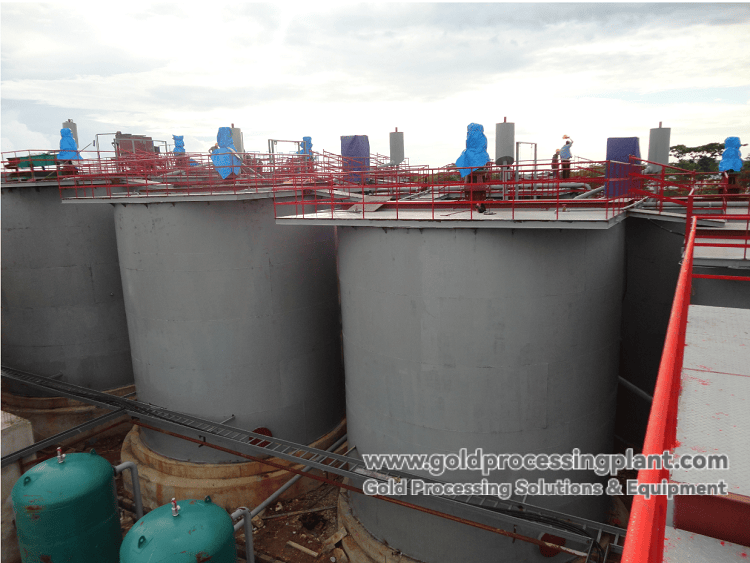
Gold CIP Plant Project Site
Related Gold Processing Solutions
In addition to the Gold CIP process, GoldProcessingPlant's solution library covers hard rock, placer, refractory ore, and tailings retreatment. We can match experience for similar scenarios based on your ore type:
Frequently Asked Questions About Gold CIP Process
+What is the difference between Gold CIP and CIL? ▼
CIP completes leaching first, then enters the adsorption tank. Leaching and adsorption are carried out in separate tanks, allowing for more thorough leaching time. It is suitable for ores with fast leaching speeds requiring staged control and is commonly used in large plants. CIL leaches and adsorbs simultaneously, resulting in a more compact process suitable for small to large plants. The final selection needs to be determined based on the leaching speed data from ore sample tests; it cannot be decided arbitrarily.
+What ores are suitable for Carbon-in-Pulp? ▼
The Gold CIP process is suitable for oxide gold ores with high clay content, flotation gold concentrates with fine gold particle size, gravity tailings containing free gold, and conventional hard rock gold ore all-slime cyanidation. Sulfide ores, carbon-bearing ores, and fine-grained disseminated ores require an assessment of pretreatment necessity first; the CIP process cannot be directly applied.
+My ore contains arsenic/carbon; can I use the Gold CIP process? ▼
Arsenic and carbon-bearing ores are refractory gold ores; conventional cyanidation leaching rates are usually only 20-50%. Pretreatment is required first (flotation enrichment of gold-bearing sulfides followed by roasting/bio-oxidation/pressure oxidation, or passivation of carbonaceous matter to eliminate the "preg-robbing" effect) before leaching. GoldProcessingPlant has proprietary reagent pretreatment solutions; ore sample process validation is recommended first.
+What is the approximate investment for a Gold CIP production line? ▼
The reference price for complete main equipment of a Gold CIP process is approximately $200,000 - $3,800,000 USD, corresponding to a daily processing capacity of about 30-3000 TPD, excluding civil works, installation, logistics, and auxiliary materials. Specific quotations need to be combined with ore characteristics and site conditions, and quoted based on actual configuration selection; we do not do "one-size-fits-all pricing."
+How long does it take from signing the contract to production? ▼
The overall cycle for a conventional Gold CIP project from process design to final production is usually around 8-15 months. Key milestones: process design 7-15 days → engineering design 20-30 days → equipment manufacturing 60-120 days → logistics 30-60 days → installation and commissioning 60-150 days. Reasonable overlapping of stages can compress the total duration; overseas projects need additional buffer for customs clearance.
+What recovery rate can be achieved in the Gold CIP process? ▼
The CIP process recovery rate is determined by the ore's inherent genes (dissemination size, intergrowth relationships, occurrence state). Under suitable ore property conditions, a certain oxide gold project (run-of-mine grade 3.5 g/t) achieved an overall gold recovery rate of 92%, but this is actual data for that project and does not represent promised indicators for all ores. GoldProcessingPlant does not promise absolute figures detached from reality; what we promise is to design the highest recovery process achievable under your ore conditions through rigorous process design.
+Why is pH adjusted in the slurry pretreatment stage? ▼
The gold cyanidation leaching process needs to be carried out under alkaline conditions (pH 10.5-11.5). The core role of adding lime to adjust pH is to prevent cyanide volatilization loss, ensuring operational safety and controllable reagent costs. If pH control is inadequate, cyanide consumption will increase significantly, and leaching efficiency will be compromised.
+Why does activated carbon move counter-currently between tanks? ▼
Counter-current adsorption is a key design of Carbon-in-Pulp: fresh carbon is added to the last tank, and loaded carbon is discharged from the first tank, so the slurry and carbon contact in opposite directions. This way, carbon always adsorbs in the high-concentration zone, resulting in higher adsorption efficiency and more stable loaded carbon grade. The role of the carbon separation screen is to separate slurry from activated carbon and control carbon loss.
+How to choose between atmospheric and high-temperature high-pressure elution & electrowinning systems? ▼
The atmospheric elution & electrowinning system has a simple equipment structure, lower investment, and easy operation and maintenance, suitable for small to medium plants or conventional easily elutable ores. The high-temperature high-pressure system elutes at 150°C and 0.5MPa, compressing the time to 10-12 hours with more thorough desorption, suitable for large mines or difficult-to-elute ores. Selection depends on processing scale, loaded carbon grade, and investment budget; do not look only at equipment unit price.
+Does activated carbon wear out in the CIP process? What is the use of carbon regeneration? ▼
Activated carbon wears out during agitation, transportation, and at the carbon separation screen, requiring periodic replenishment of new carbon. The role of carbon regeneration is to restore the adsorption activity of barren carbon, reducing the amount of new carbon replenishment and directly lowering the operating costs of the Gold CIP production line. The regeneration system includes acid washing and a high-temperature rotary kiln; carbon with good regenerated activity can be recycled for multiple rounds.
+What are the requirements for power supply and site conditions for a Gold CIP plant? ▼
The leaching tank aeration, elution & electrowinning, and carbon regeneration in the Gold CIP process are all power-consuming stages; power supply stability directly affects production continuity. In areas with unstable power, it is recommended to equip diesel generators as main or backup power. The site also needs to meet "three connections and one leveling" (water, electricity, roads, site leveling); civil works condition drawings are provided by us.
+Ore properties fluctuate greatly; can the CIP process adapt? ▼
The scheme design considers the ore fluctuation range and operational fault tolerance, reserving adjustment space. If fluctuations exceed a certain range, operating parameters or partial processes need to be adjusted. The specific adaptation boundaries will be evaluated through comparative tests of different ore samples during the process validation stage and clearly explained to your team during training.
+Can you only do process design/provide a solution without buying equipment? ▼
Yes. Process design, equipment selection quotation, engineering drawings, single equipment, complete sets, installation and commissioning guidance, EPC turnkey—choose as needed, no mandatory bundling. The process design fee and drawing advance payment paid in the early stage can be fully deducted from the equipment payment when subsequently signing the equipment or EPC contract.
+How are tailings and cyanide-containing wastewater treated in a Gold CIP production line? ▼
Cyanide-containing wastewater needs to be treated to standards before recycling or discharge. Tailings can use a dry stacking solution to reduce land occupation and environmental risks. We incorporate environmental protection systems into consideration at the scheme design stage, providing cyanide-containing wastewater treatment systems and tailings dry stacking solutions to avoid rework later.
+How does the CIP process work with heap leaching and zinc precipitation? ▼
Heap leaching is suitable for low-grade oxide ores; the pregnant solution can be recovered using activated carbon adsorption columns or zinc precipitation. CIP is an agitated leaching process with larger processing capacity and higher leaching rates. Zinc precipitation mainly treats clarified pregnant solutions and is suitable for scenarios with high silver content or poor carbon adsorption performance. The specific combination depends on ore grade, processing scale, and product plan; economic viability needs to be confirmed through process validation.
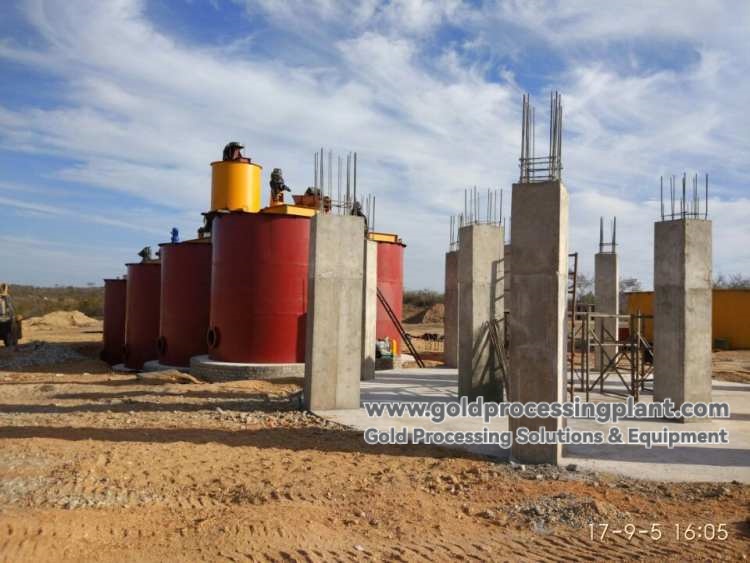
Overseas Gold CIP Plant Project Site
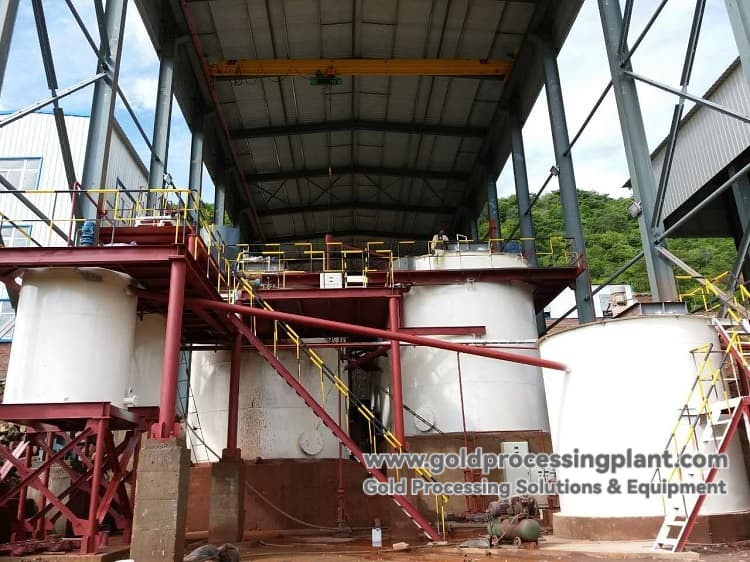
Gold CIP Process
How to Select and Implement a Gold CIP Processing Plant
Returning to the question at the beginning: why can the same leaching tank achieve vastly different recovery rates when used on oxide ores versus arsenic-bearing ores? The answer lies not in the equipment itself, but in whether the Gold CIP process is tailored to the ore characteristics. The core of the Carbon-in-Pulp process is to mesh the parameters of crushing & grinding, leaching & adsorption, elution & electrowinning, and carbon regeneration with the Gold CIP equipment—grind size determines liberation degree, leaching time determines dissolution rate, and adsorption gradient determines loaded carbon grade. Every step is interconnected.
GoldProcessingPlant's logic for Gold CIP projects is straightforward: understand the ore first, then configure equipment. Tell GoldProcessingPlant your daily capacity, ore type, and site conditions, and we can directly issue an equipment configuration list and quotation for the corresponding capacity, making it easy for you to quickly compare investments. From ore data to final production, a conventional Gold CIP production line takes 8-15 months; equipment can be selected as single units, complete sets, or EPC as needed, and the early process design fee can be deducted in subsequent cooperation.
If you are evaluating the feasibility of a Gold CIP plant, or if your existing Gold CIP plant has low recovery and high tailings grade, you are welcome to communicate with the GoldProcessingPlant engineering team. Tell us your ore type, processing capacity, and site conditions, and we will combine project experience to match the gold cyanidation leaching process route, equipment configuration, and investment estimate for you.
From Gold CIP Process Design to Equipment Quotation, in One Step
GoldProcessingPlant provides customized Gold CIP process solutions for gold mining customers worldwide. Single equipment, complete sets, engineering drawings, installation and commissioning guidance, EPC turnkey—combine as needed, no mandatory bundling.
Contact us and tell us your daily capacity, ore type, and site conditions. The GoldProcessingPlant team will issue a configuration quotation with a Gold CIP equipment list and budget for you.
GoldProcessingPlant works with you to create greater value from every ton of gold ore.