


Low Leaching Efficiency in Gold Mines? Optimization Strategies for CIP/CIL Processes
01 I. Problem Definition: The Root Causes of Low Gold Leaching Rates
Low gold leaching recovery rates? The primary issue that CIP/CIL process optimization schemes must address is identifying the specific stages where gold is not being recovered.
While on-site conditions vary, suboptimal leaching performance typically stems from three key factors: insufficient grinding fineness, where gold remains entrapped within quartz or sulfides, making it difficult for the leaching solution to come into contact with it; fluctuations in the cyanidation environment, where deviations in any of the parameters—pH, dissolved oxygen, or reagent concentration—can affect the dissolution reaction;disconnects in the adsorption stage, where gold has been leached but is not effectively captured by activated carbon, ultimately being lost with the tailings.
Difficult-to-process ores require separate consideration. Ores containing arsenic, carbon, or antimony often yield poor results with conventional leaching; arsenic encapsulates the gold, while carbonaceous materials adsorb the dissolved gold cyanide complexes. Such ores must undergo pretreatment before entering the cyanidation process.
The gold lost in tailings is often the most valuable. Identifying the true cause of low gold leaching rates is a prerequisite for all subsequent optimization efforts.
02 II. Technical Principles: Differences in Mechanisms Between the Carbon-in-Pulp (CIP) and Carbon-in-Leach (CIL) Methods
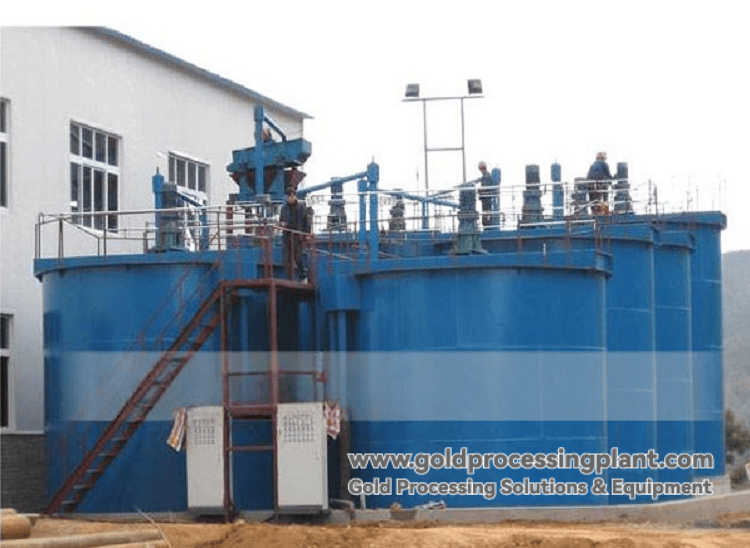
The basic principle of cyanide leaching is to dissolve gold into gold cyanide complexes using cyanide under alkaline conditions, and then recover it using activated carbon or zinc powder.CIP (Carbon in Pulp) involves leaching first, followed by carbon adsorption; leaching and adsorption take place in separate tanks, allowing for a more thorough leaching process. CIL (Carbon in Leach) involves leaching and adsorption occurring simultaneously, with activated carbon moving forward in a countercurrent flow, coming into contact with the ore slurry in the opposite direction.
The former is suitable for ores with relatively fast leaching rates that require staged control and is more commonly used in large-scale processing plants; the latter features a compact process flow and is suitable for the cyanidation of conventional rock gold ores and flotation concentrates, and can be adopted by small, medium, and large-scale processing plants alike.
Adsorption continuously reduces the gold concentration in the solution, objectively promoting the continuation of the dissolution reaction—this is the key advantage of the CIL process. The choice of process route depends on the state of gold occurrence and the reaction rate of the ore, rather than the equipment configuration itself.
03 III. Optimization Path: Six Stages of the CIP/CIL Process Optimization Plan
A practical CIP/CIL process optimization plan is generally implemented in the following sequence.
04 IV. Solution Comparison: How to Choose Between CIP and CIL
| Criteria | CIP (Carbon-in-Pulp) Method | CIL (Carbon-in-Leach) Method |
|---|---|---|
| Timing of Carbon Addition | Add carbon after leaching is complete | Add carbon at the start of leaching |
| Leaching-Absorption Relationship | Conducted in separate tanks with ample time | Conducted simultaneously with a streamlined process |
| Suitable ore characteristics | Relatively fast leaching; requires staged control | Conventional gold-bearing ores, cyanidation of flotation concentrates |
| Suitable for | Commonly used in large-scale processing plants | Suitable for small, medium, and large-scale operations |
| Key Considerations | Number of tanks and cycle time | Activated Carbon Wear and Competitive Adsorption of Fine Slurry |
05 V. Diagnosis and Solutions for Common Problems
| Common Issues | Possible Causes | Approach to Resolution |
|---|---|---|
| Leaching time is sufficient, but indicators remain low | Insufficient dissociation or gold is encapsulated | Re-check particle size and assess the need for pretreatment |
| Decreased activated carbon adsorption efficiency | Fine sludge and oil contaminants are competing for adsorption sites | Replace with new carbon; regenerate old carbon by carbon-on-carbon washing |
| Persistently high chemical consumption | Inefficient dosing points and interference from mineral sludge | Optimize sludge removal and chemical combinations |
| Treatment capacity falls short of expectations | Increased hardness and low classification efficiency | Conduct a process audit to identify bottlenecks |
| Excessively high tailings grade | Mismatch between leaching and adsorption | Simultaneously calculate time and carbon density |
06 VI. Process Validation: Why It Is Not Recommended to Simply Adopt an Off-the-Shelf Process
Significant variations in ore particle size distribution, degree of siltying, and associated elements mean that the performance of the same process flow at different mines can vary greatly. Finalizing a process without validation using representative ore samples often leads to investment deviations and failure to meet performance targets.
Conventional process validation typically takes three to four weeks, with the cycle time extended accordingly for complex ores. Validation includes analysis of ore properties, confirmation of process flow, calibration of key parameters, and performance estimation, based on which equipment selection recommendations are formulated. The investment in this phase typically yields returns during subsequent construction and production.
07 VII. Equipment Configuration and Investment Considerations
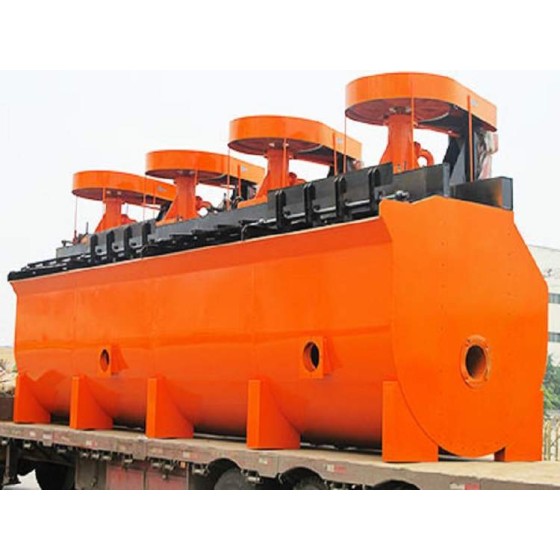
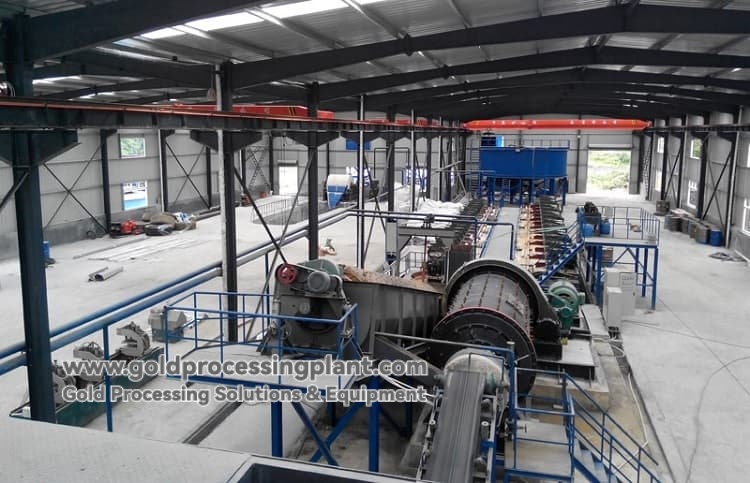
Equipment should be configured to meet the needs of each process stage; there is no need to blindly increase the quantity. For the crushing and grinding stage, focus on ball mills and classification equipment; the core of the leaching and adsorption stage is leaching tanks equipped with agitation and aeration; the recovery stage requires desorption columns, electrolytic cells, and gold smelting furnaces; and the thickening and dewatering stage requires high-efficiency thickeners and tailings filter presses.Process design and equipment manufacturing should be overseen by the same team to ensure that interfaces and production capacity remain aligned.
Investment costs vary significantly depending on processing scale, ore complexity, configuration standards, and site conditions, making it difficult to summarize them with a fixed figure. A prudent approach is to first conduct process validation using representative ore samples, then calculate the equipment list and investment scale based on the recommended process, avoiding the use of generic quotes in place of targeted calculations.
08 VIII. Service Support and Cooperation Models
Is your gold ore leaching rate low? The value of CIP/CIL process optimization lies in tailoring the process to the specific properties of your ore, rather than applying a one-size-fits-all approach. Depending on the project phase, we can provide phased or end-to-end services, including ore property analysis, process design, equipment selection, on-site commissioning, and personnel training. Initial design fees can be offset against subsequent collaboration costs.
We provide performance target recommendations based solely on ore conditions and validated data; we do not make unrealistic promises. If you wish to understand the appropriate processing route for your ore and the potential for performance improvements, please submit your requirements and provide relevant ore data. We will then develop a tailored approach based on the actual circumstances.